Best boiler temperature for an Alaska winter

A local pro who services boilers gets in touch about the tune-up.

Match me with a pro

Most boilers in Alaska homes do best set between 140 and 160 degrees Fahrenheit for the water in the system, though the exact number depends on your setup. If you have cast iron radiators, you can usually run toward the higher end, since they hold and release heat slowly. Baseboard heat and radiant floor systems often work better lower, closer to 140, because they're designed to put out steady heat over a larger surface. Setting the temperature too high makes the boiler cycle on and off more than it needs to, which wears on the burner and the ignition parts over time. Setting it too low means it struggles to keep rooms warm through a long, cold stretch, especially overnight when outdoor temperatures drop hardest. The right setting is the one that keeps your home comfortable without the boiler working harder than it has to, and that depends on the type of heat emitters in your house and how well the place holds heat.

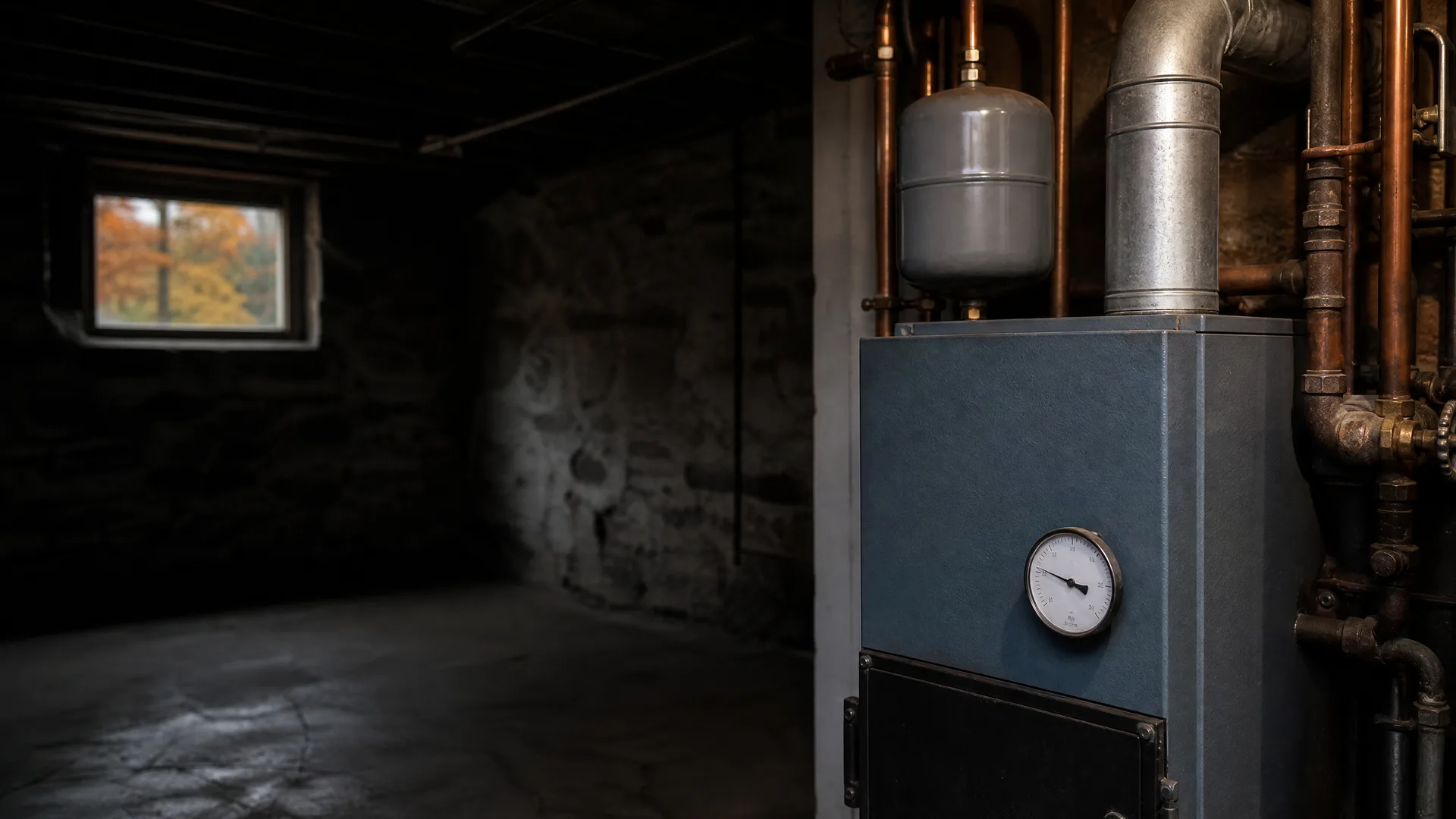
A dark basement with stone walls and a concrete floor, showing a blue-gray boiler with a round pressure gauge, an expansion tank, and copper and metal pipes on the right, and a small window with orange autumn foliage outside on the left.

You go down to check the boiler before the first hard freeze. It's an October morning, the basement cold enough to see your breath near the window well. The pressure gauge sits at the bottom of its arc, needle resting just under the 12 mark instead of up near 15. You tap the glass out of habit. It doesn't move. Upstairs the radiators were lukewarm last night, not the kind of heat you'd want once the temperature outside drops into the single digits. You stand there a minute, running through whether this is something you can bleed and refill yourself or whether it's the kind of low reading that comes back the next week no matter what you do.


A woman stands in the open doorway of a white stucco house holding the dark door, facing a man in a black cap and shirt seen from behind in the blurred foreground, with a potted flowering plant beside the entry.

What the aquastat is actually doing

The aquastat is the control that decides when your boiler fires, and it's working off the temperature of the water, not the air in your house. You set a target, the water drops below it, the burner kicks on, the water climbs back past it, the burner shuts off. The thermostat on your wall just tells the system a room is cold. It's the aquastat that tells the boiler how hard to work to fix that. Most have a high limit and a differential, and the gap between the two is what decides how often your burner is cycling on a January night.

A boiler set wrong doesn't fail outright. It runs longer than it should, or it short cycles, and either way something wears faster than it needs to: the burner, the circulator pump, the heat exchanger. That kind of wear doesn't show up on the gauge. It shows up months later as a repair call, or it doesn't show up until the coldest week of the year, which is the worst time to find out. A maintenance visit is where someone actually checks the aquastat against what your system and your radiators call for, instead of leaving it at whatever the last person set.

A dark ceramic mug on a round wooden table beside a light grey sofa with a woven cushion and knit throw, with a window, potted plant, floor lamp and wooden cabinet blurred in the background.
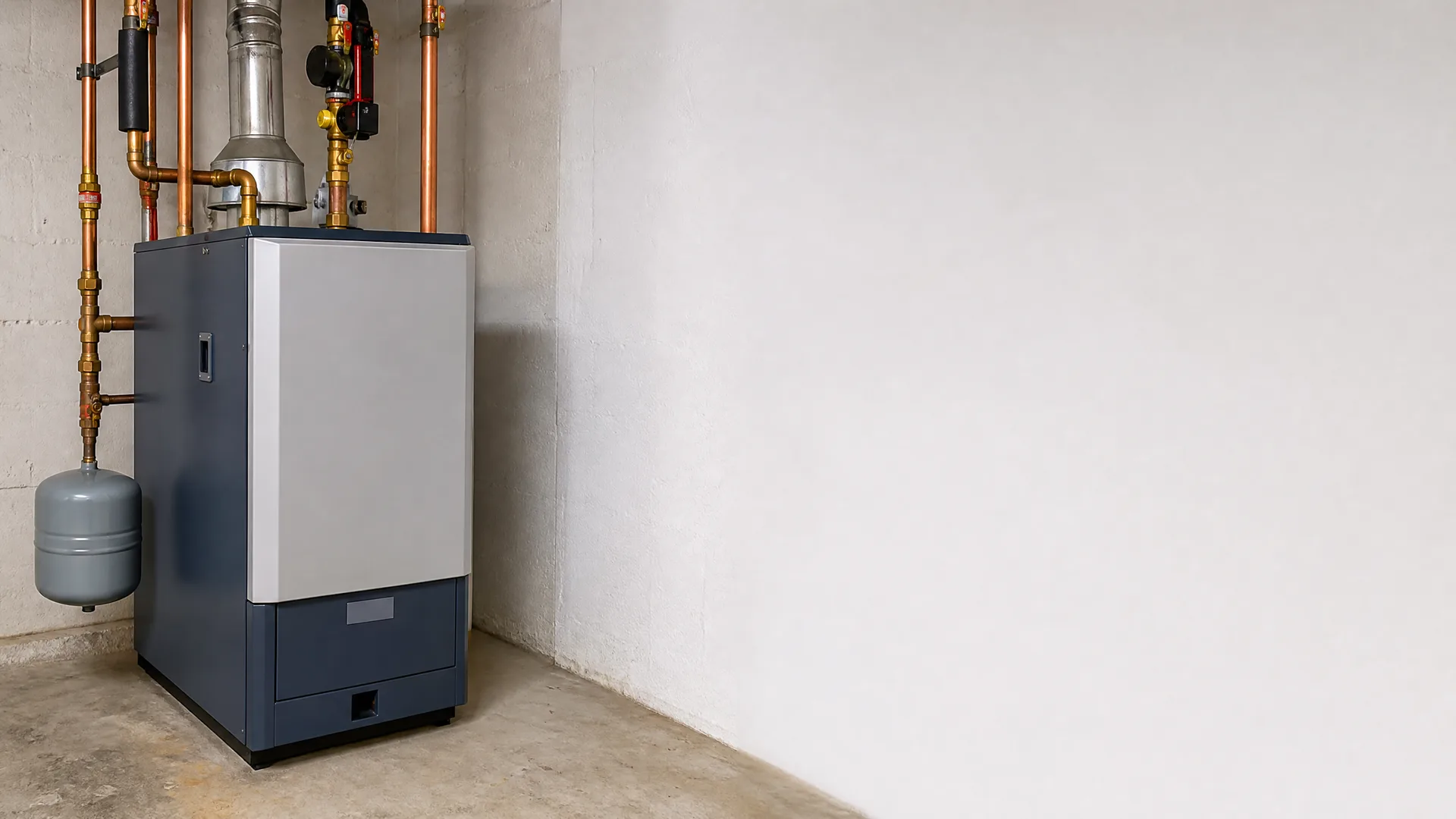
A gray and dark blue floor-standing boiler with copper pipes, a flue, and a small expansion tank stands in a basement corner with painted walls and a concrete floor.

Why outdoor reset changes the number

A lot of boilers running here now use outdoor reset, which raises or lowers the water temperature automatically as the outside air changes. On a mild October day near 40 degrees, the boiler might only send out 120 degree water. Drop to 20 below in January and it'll push closer to 180. The 140 to 160 range is a fixed setpoint for boilers without reset. If yours has it, check the curve instead of one number.

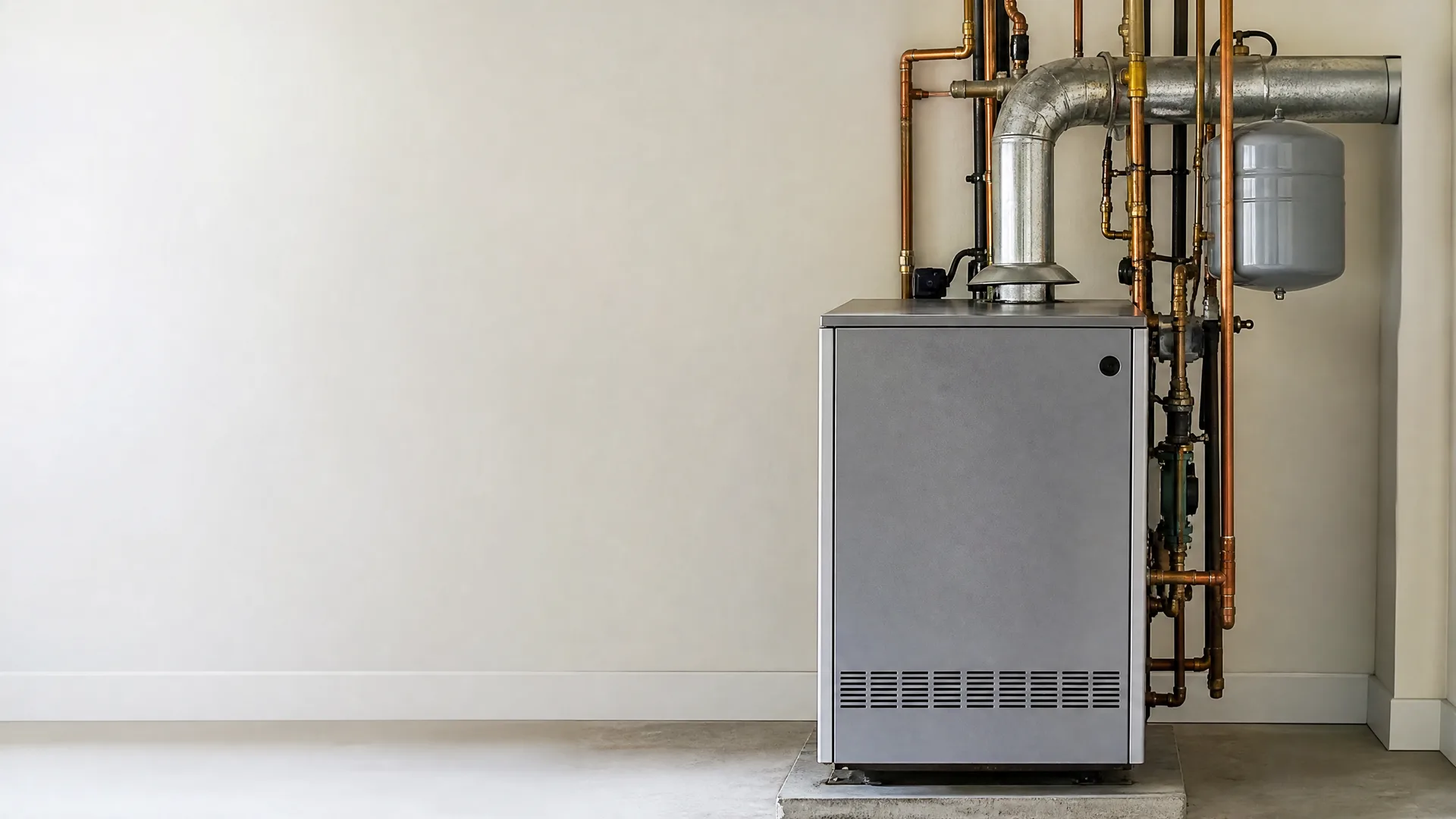
A grey floor-standing boiler with a vented front panel stands against a plain light wall, connected to copper and galvanised pipework, a metal flue, and a cylindrical expansion vessel above.

What happens if you set it too high

Running water hotter than your system needs doesn't heat the house faster. It just means the boiler short cycles, firing up and shutting off again before the house actually calls for more heat. Short cycling wears on the ignition components and the circulator pump, and with power costs what they are up here, you're paying for cycles that aren't doing useful work. The right setpoint keeps the burner running longer, steadier stretches instead.

Why does my heat feel uneven this winter

You notice it room to room. The living room near the radiator is warm enough, but the bedroom down the hall stays cool no matter how long the boiler runs. Or the whole house heats slowly, taking most of the morning to catch up after an overnight setback, and your gas use climbs along with it. Sometimes it's a knocking sound in the pipes when the burner first fires, or a radiator that's hot at the bottom and barely warm up top. These are signs the water temperature or the system's balance is off for what your house actually needs. Left alone through a full Alaska winter, that mismatch means higher gas bills for heat you're not fully getting, and more strain on a boiler that's working harder than it should to keep up.

A gray-haired bearded man in a dark coat and scarf dusted with snow stands smiling in a dimly lit entryway with a white front door, a side table with a lit lamp, an oval mirror, and a patterned rug.
An older bearded man in a dark snow-dusted coat and gray scarf stands just inside a dimly lit home entry, with a framed picture, lit table lamp, and an adjoining room with a fireplace behind him, and snow visible through the open door.
A gray-haired, bearded man in a dark snow-dusted coat stands smiling in a dimly lit entry hall with a staircase, a lit table lamp, a framed picture, and a living room visible through a doorway.
An older man with gray hair and a beard, wearing a dark jacket dusted with snow, stands smiling in a dimly lit hallway with lamps and a living room visible behind him.

A local pro for your boiler maintenance

Skip calling around to set up a boiler tune-up.

No fee to send it, and nothing to sign.

Set the water temperature high and the boiler answers every cold snap fast. A -20 night outside doesn't leave the house catching up, and rooms farthest from the boiler still get enough heat to feel it.

Run it that high all season and you're paying for heat you don't need on the warmer days, and the boiler short cycles more, turning on and off instead of running a long, steady burn. Power here already costs enough without wasting it.

Winter nights average 9°F statewide

At 9°F, an overnight low like that is the average across the whole state, not a cold snap. Your boiler is built to answer that most nights of the winter, not just a few. That's the case for running it high enough to keep up without waiting until a hard freeze forces the issue.

NOAA nClimDiv 1991-2020 county normals weighted by homes

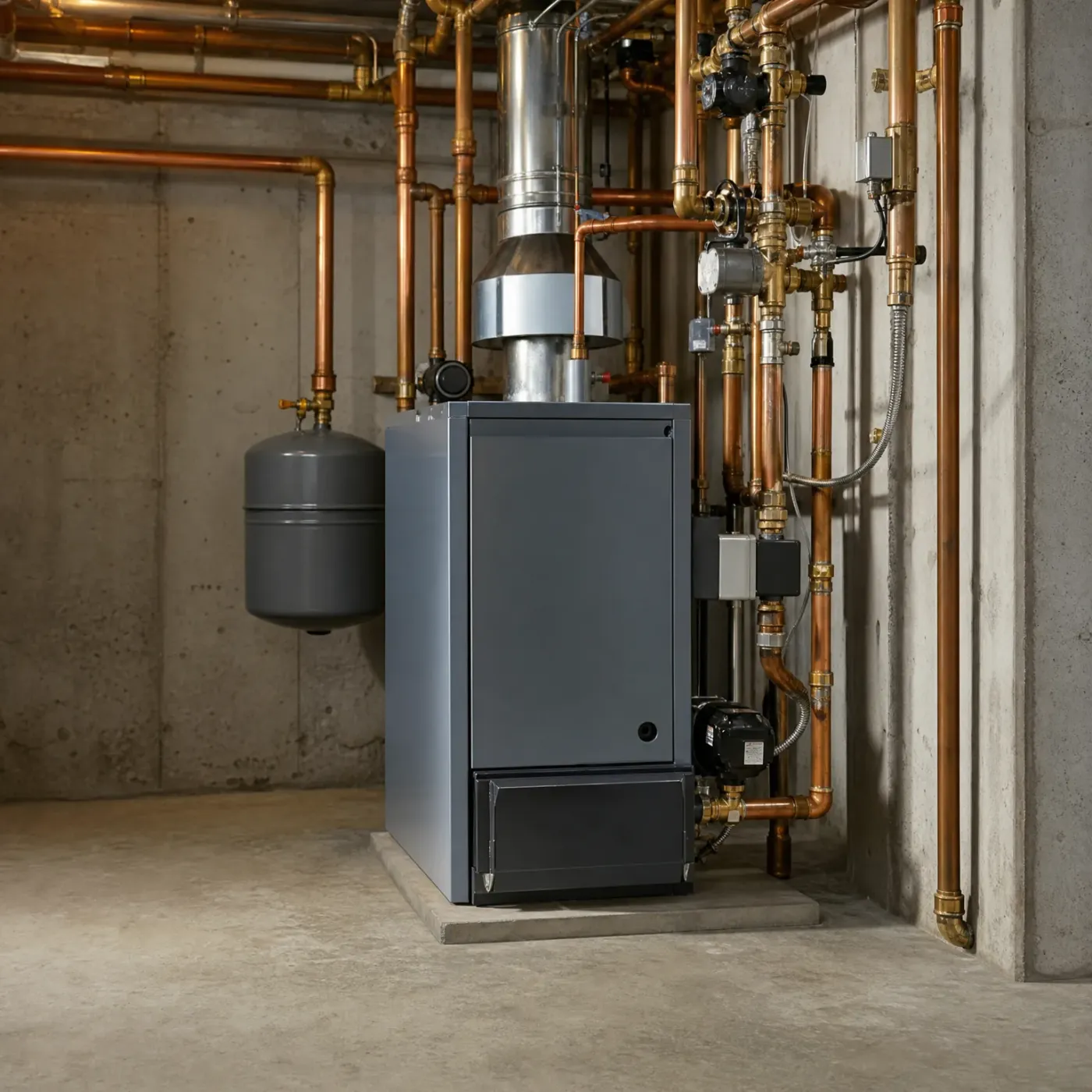
A gray boiler on a concrete pad in a basement, connected to copper piping, valves, circulator pumps, a metal flue, and a wall-mounted expansion tank.

What a boiler running right looks like

Water moves through the pipes and pumps at a steady pace, the flue draws clean, and the expansion tank holds its pressure. Nothing here is straining. A boiler like this is getting looked at before winter, not after something fails.

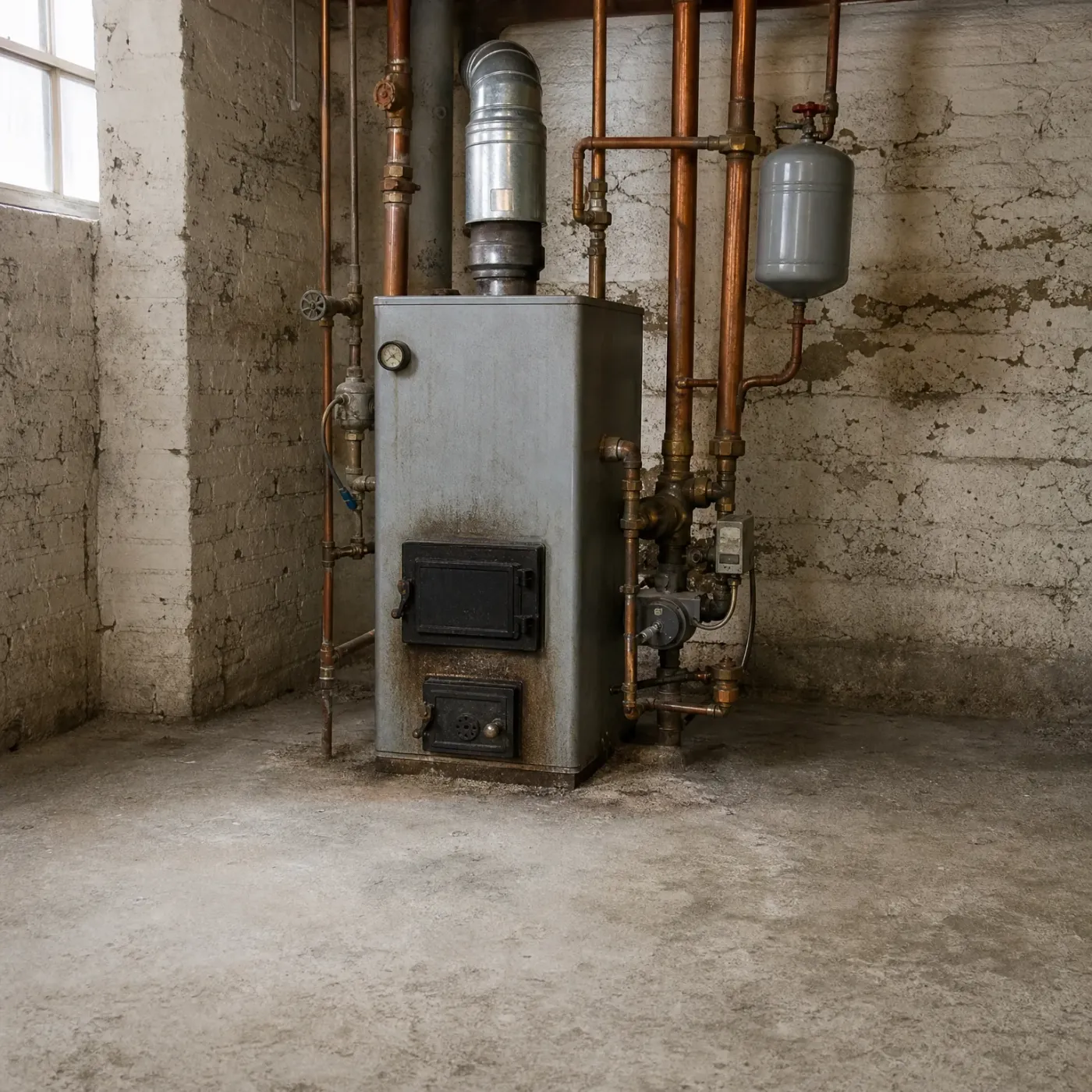
An old gray boiler with copper piping, a flue duct, pressure gauge and an expansion tank stands in the corner of a basement with painted masonry walls and a bare concrete floor.

What a boiler in trouble looks like

An old cast iron boiler like this has likely run long past when anyone last serviced it. Bare concrete, no sign of upkeep around it. By the time it struggles to hold temperature on a cold night, whatever's wrong has usually been building for a while.

A woman wrapped in a thick beige fleece blanket sits on a sofa with an open book on her lap, beside a lit table lamp, with a frost-covered window behind her.
A bearded man in a plaid flannel shirt stands indoors looking out a frost-covered window, with a steaming dark blue mug on the wooden sill and snow-covered trees outside.

Where your boiler should sit

  • Most Alaska boilers hold steady somewhere between 140 and 160 degrees, with the right number set by your radiators and your setup, not a guess.
  • Cast iron radiators usually run toward the higher end of that range, while baseboard or outdoor reset systems often settle lower.
  • A boiler sized and maintained right keeps up with a -20 night and a 9 degree average low without needing to be pushed past what it's set for.
  • Uneven heat room to room points to a setup problem, not a reason to raise the temperature past what the system needs.
  • Checking the aquastat setting, the pressure gauge, and the expansion tank before winter catches what a number alone won't show.
  • Finding a contractor who knows Alaska heating, instead of calling around and explaining your boiler from scratch to each one, is the part that doesn't have to be work.

The number itself isn't complicated. Somewhere between 140 and 160 degrees covers most boilers here, and where you land in that range comes down to what's moving the heat through your house. Cast iron radiators want the higher end. Baseboard or a system running outdoor reset can usually sit lower and still keep every room warm through a 9 degree night. The setting matters less than whether the rest of the system backs it up. A boiler with the right pressure, a clean flue, and an expansion tank holding steady can answer a -20 stretch at the number it's already set to. One that's losing pressure or short on maintenance gets pushed higher to make up for it, and that's money spent covering for a problem instead of fixing it. If your heat feels uneven from room to room, that's not something a higher setting solves. It's something a contractor needs to look at directly. Getting that checked before the cold sets in means someone looks at the aquastat, the pressure gauge, and the radiators together, not just the thermostat on the wall. Right now that means searching around for who works on boilers in your area, calling a few, explaining your setup and what's going on each time, then sitting with quotes trying to compare them against each other. None of that tells you anything about your actual boiler. Getting matched with someone who already knows Alaska heating and has them reach out to you skips straight past that part, so what's left is the part that actually matters: someone looking at your system and telling you where it stands.

A modern two-story house with dark siding and stone base at dusk, with lit soffit lights, a path of large rectangular pavers set in dark gravel, planting beds, a lawn, and an orange and blue sunset sky above distant trees and water.

Boiler Maintenance

Get the right pro for your boiler

Step 1 of 3: Equipment
  • A corner of a room with an upholstered wood-framed armchair holding a floral pillow, a round side table with a ceramic lamp, books and a vase of greenery, a framed landscape painting on the wall, a patterned rug, and a sunlit multi-pane window.
    • Describe your boiler job, and a local pro who handles it gets in touch.
  • Interior corner with a wood-framed window showing green foliage outside, a framed landscape print on a beige wall, and a rounded stone vase of leafy branches on a wooden cabinet.
    • Send it once and finding someone is no longer on you.
    • Send the form and the boiler tune-up stops being something to remember.
  • A pale ceramic vase holding olive branches sits on a dark wooden countertop beside a carved wooden dough bowl, next to a wood-framed window and a light painted plank wall.
    • Fill out one form instead of calling around for a boiler tune-up.
    • Skip searching for a boiler pro and answer a few questions instead.
  • A dark wood round side table holding a brass lamp with a cream shade, a blue-and-white patterned bowl, and a white textured pot of greenery, beside an upholstered chair with a gray patterned cushion and a white-framed window showing green trees and flowering shrubs.
    • A licensed local pro takes the request for your boiler tune-up.
    • Only one pro gets your request, so you hear from one company.