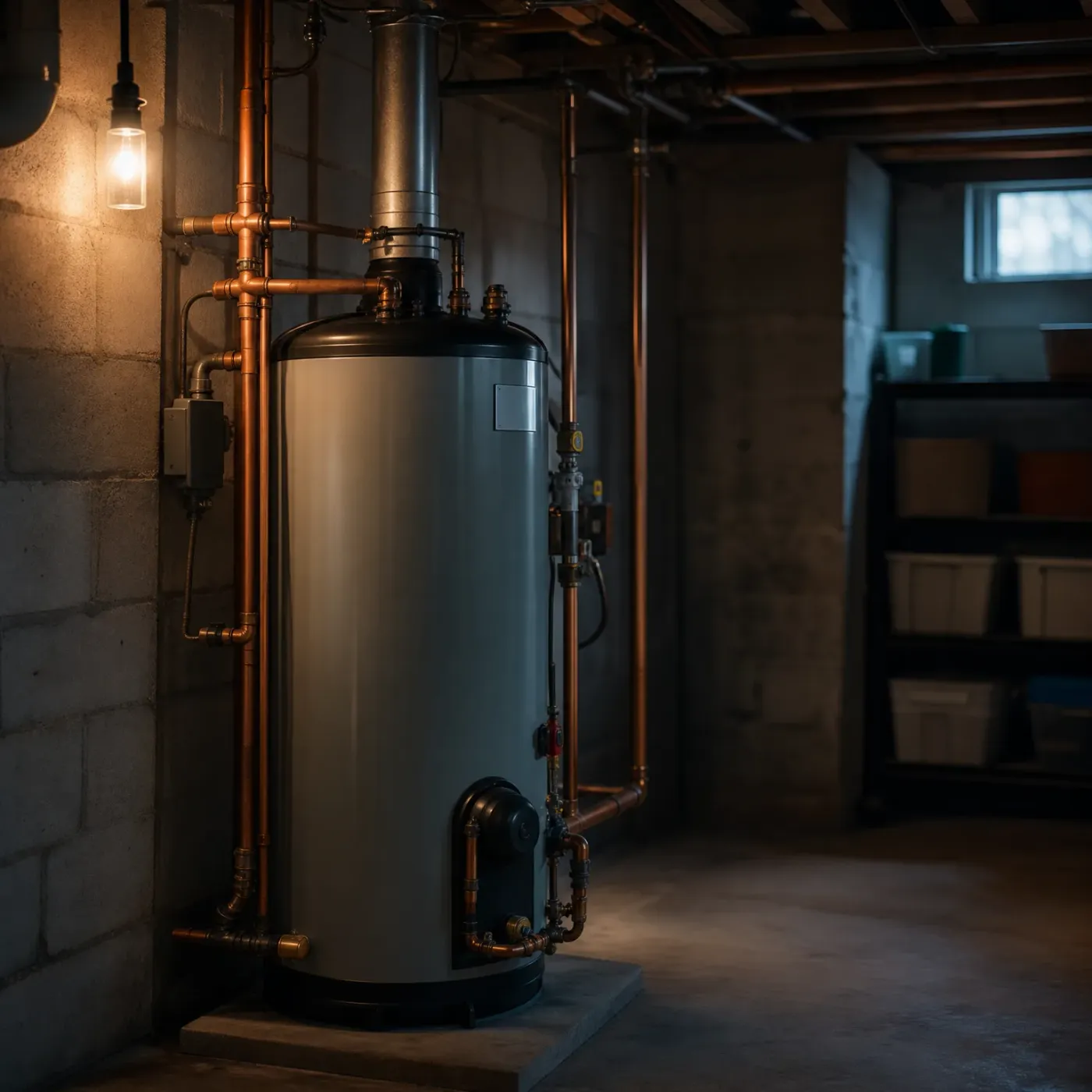
A cylindrical water heater or boiler with a flue pipe and copper piping stands on a concrete pad in a dim basement with concrete block walls, a hanging bulb at left and a shelving unit with bins at right.

Explain it one time

How long a boiler lasts in Alaska

A boiler in Alaska doesn't run like one down south. It's working through a long, hard winter every year, and power here isn't cheap when a backup element has to kick in. This page gets into how many years you can expect before replacement makes more sense than another repair, and when it's time, you won't need to spend your evenings calling boiler installers around the state and repeating the same story to each one.

Start one form

A boiler in Alaska usually lasts 15 to 20 years. Most homes here heat with gas, and a gas boiler that's sized right and maintained each year tends to reach the far end of that range. What shortens it is how hard the thing works. Winters here run long, and a boiler here can be firing almost nonstop for months at a time, far more hours a year than one in a milder state ever sees. That kind of steady run time wears on the heat exchanger and the burner components faster than age alone would. So the number that matters for you isn't just how old your boiler is, it's how many winters of heavy firing it's already been through. A boiler installed when the house was built can be nearing the end even if it looks fine, and once it starts needing repairs most winters, replacing it usually costs less over time than keeping it going.

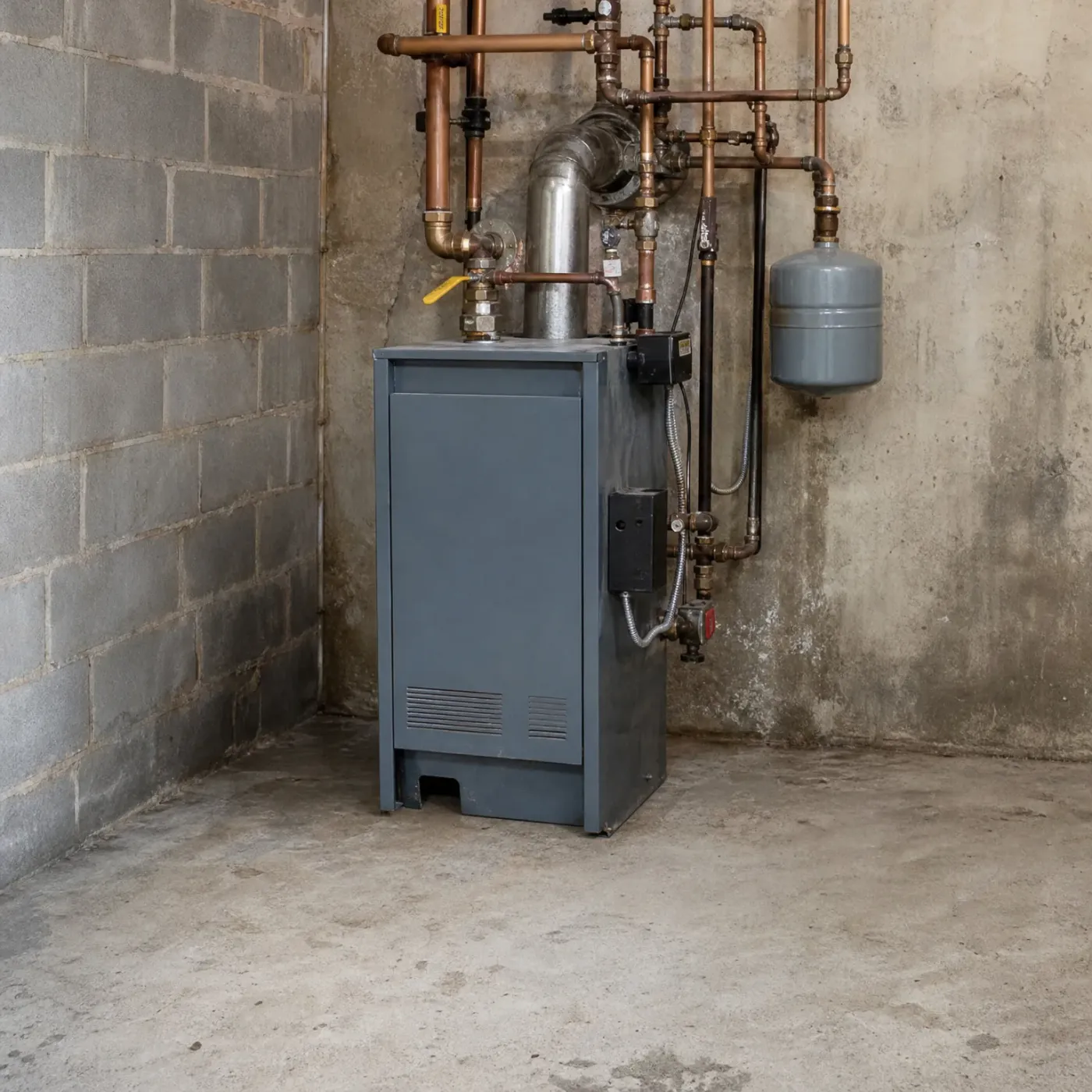
A gray boiler unit on a concrete pad in a basement corner, connected to copper piping, circulator pumps, and a ceiling-mounted expansion tank against bare concrete walls.

Running the way it should

This is what a boiler looks like when it's keeping up: steady pressure, clean copper lines, a pump that isn't straining. At this stage it's heating the house without working harder than it has to, and the gas bill reflects that.

A blue oil-fired boiler with a pressure gauge, burner unit and metal flue sits on a concrete pad in a basement corner, surrounded by copper and black pipes against bare concrete walls.

Running past its years

An older unit like this one is carrying more than it used to. The gauge drifts, the burner cycles more to hold the same temperature, and a long Alaska winter asks it to do that for months. This is where a yearly checkup starts catching what a quick look would miss.

Why is the house taking so long to warm up?

A boiler slowing down shows up in how the house feels before it shows up anywhere else. Rooms that used to warm fast now take a while, or the far end of the house stays cooler than the rest. You might hear it running longer stretches than it used to, or catch a popping or banging sound from the tank as it fires. Water around the base, a pressure gauge that won't hold steady, or rust at the fittings are signs the inside is wearing out. Left alone, a boiler in that shape works harder to do less, and your heating bill climbs along with it. If it fails outright in January, the house goes cold fast, and that's not something to find out the hard way with kids or older family members at home.

A woman in a gray sweatshirt with her hair pinned up sits in a living room looking off to the side, with a pale sectional sofa, cushions, a potted plant, framed wall art and a large window behind her.
A woman with long wavy brown hair in a gray top and dark cardigan stands near a window, looking to the side, with a living room, fireplace and round mirror blurred behind her.
A woman with curly dark hair in a grey long-sleeved top sits on a grey couch with patterned cushions, looking off to the side in a softly lit living room.
A woman in a gray knit sweater with her hair in a bun sits on a couch indoors, smiling and looking off to the side, with a dining area and framed picture blurred in the background.

A boiler doesn't heat air the way a furnace does. It heats water in a sealed loop and sends it out to radiators or a heat exchanger, and that water does the work of warming each room. The aquastat is what tells the burner when to fire, reading the water temperature and calling for heat as it drops. If that part sticks or drifts out of calibration, the burner ends up cycling more than it should, and you'll see that on the gas bill before you see it anywhere else. A circulator pump pushes the hot water out to the radiators, so when one room stays cold while the rest of the house is fine, that pump is usually the reason. Low pressure causes its own shutdown, tripping a switch that cuts the burner even though the gas and power are working. Inside the heat exchanger, mineral buildup makes the burner run longer to hit the same temperature, and the expansion tank, once it's waterlogged, lets pressure swing in a way that wears down everything connected to it.

How a Boiler Actually Heats Your House

  • A boiler heats water in a sealed loop and pushes it through pipes to radiators or a heat exchanger, rather than heating air directly like a furnace does.
  • The aquastat reads the water temperature and tells the burner when to fire, so a stuck or miscalibrated aquastat makes the burner cycle more than it needs to.
  • Low water pressure trips a pressure switch that shuts the burner off, which is often why a boiler stops firing even though the gas and power are fine.
  • A circulator pump moves the hot water out to the radiators, and a failing pump is why some rooms stay warm while others don't heat at all.
  • Mineral buildup inside the heat exchanger forces the burner to run longer to reach the same water temperature, which is part of why an aging boiler drives up the gas bill before anything actually fails.
  • The expansion tank absorbs the water's expansion as it heats, and a waterlogged tank lets pressure spike and drop in a way that wears on the whole system.
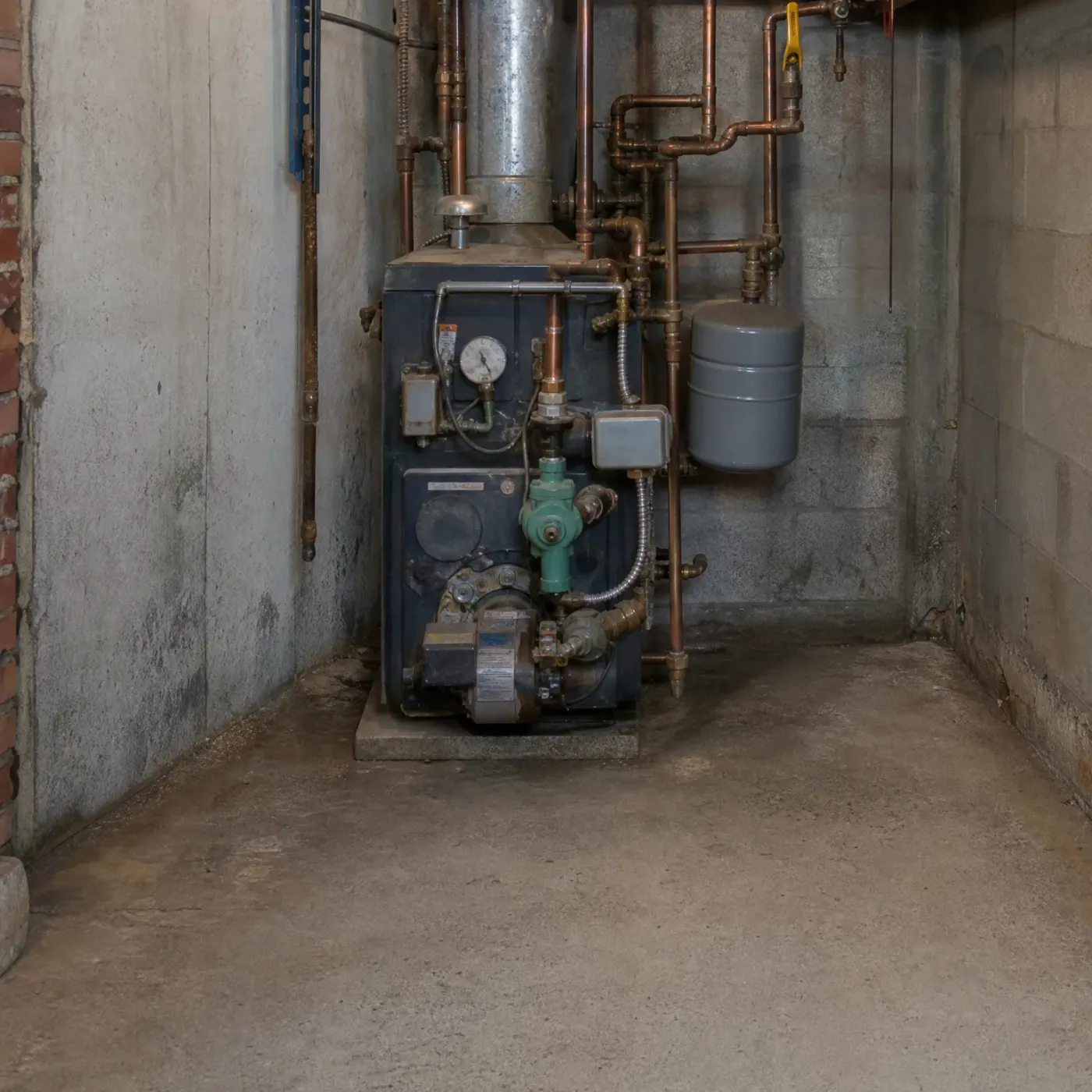
A dark cast-iron boiler with copper piping, pressure gauge, and a gray expansion tank sits on a concrete pad in a basement corner with concrete block and brick walls.
Before you get your boiler installation
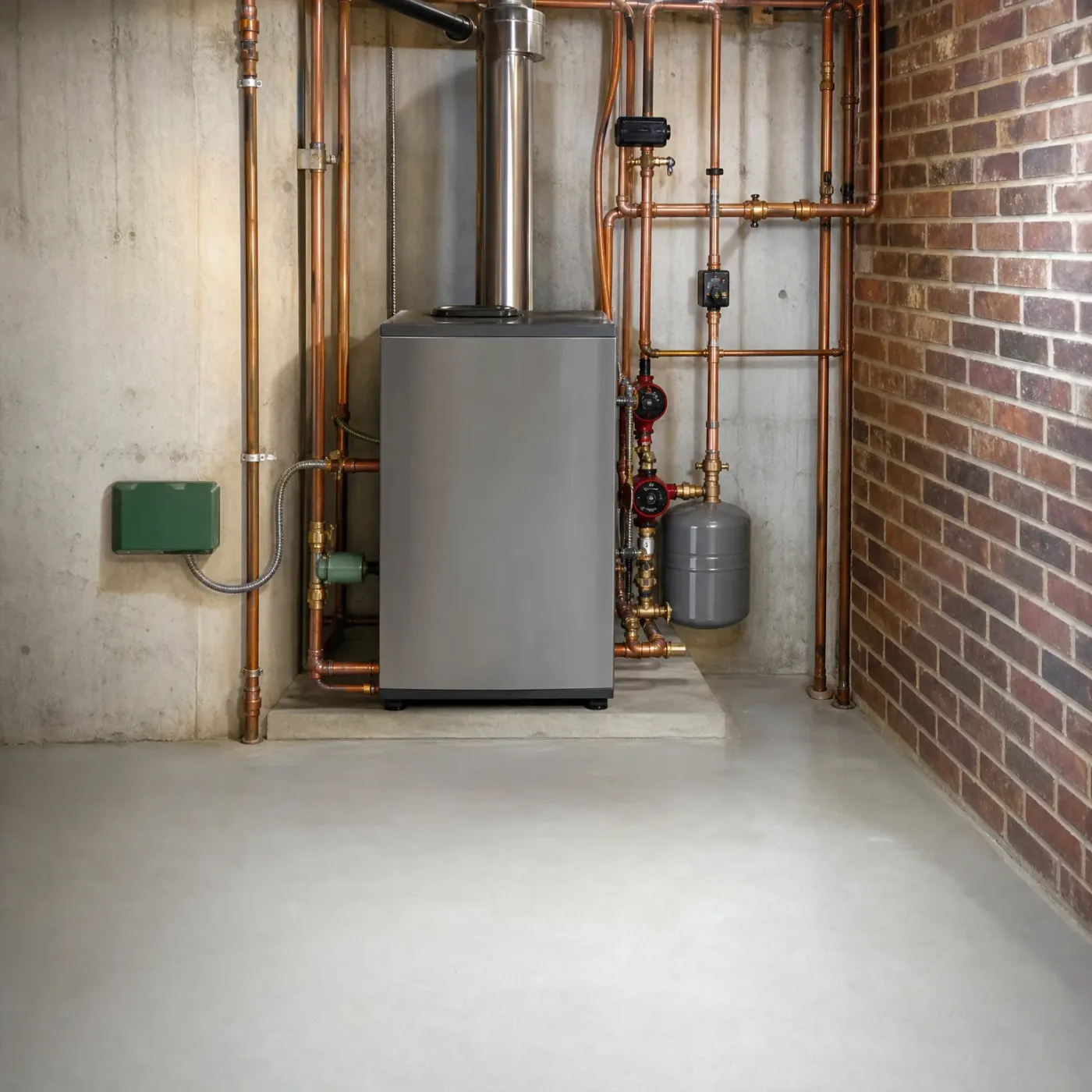
A gray boiler on a concrete pad in a basement, connected to copper piping, valves, pumps and a gray expansion tank, with a concrete wall on the left and a brick wall on the right.
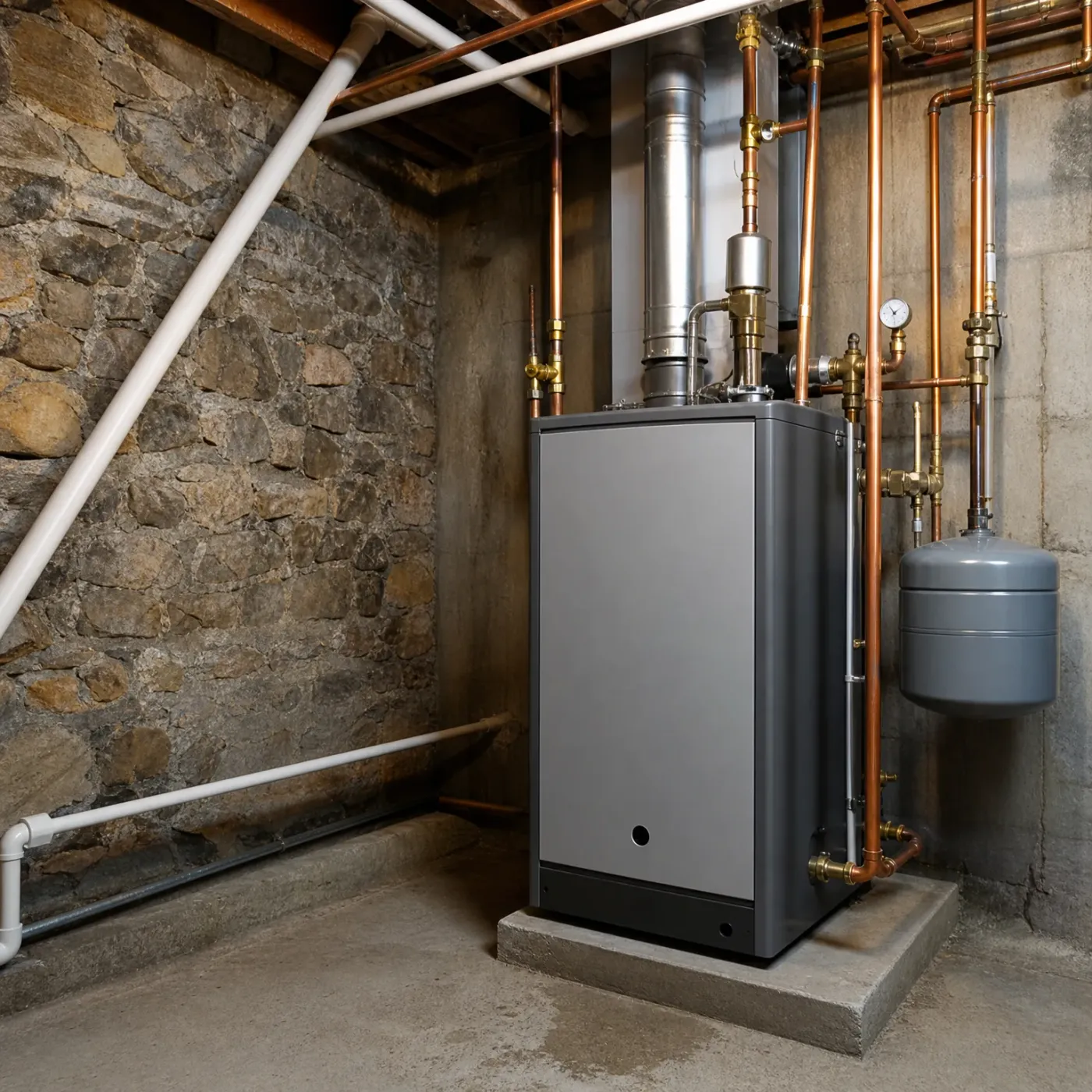
After you get your boiler installation
A gray floor-standing boiler on a concrete pad in a basement, connected to copper piping, a metal flue, a gauge, and a gray expansion tank, beside a stone wall and white insulated pipes.

No quotes to chase

One installer gets your project, so there's no bidding war over it.

Skip collecting and comparing quotes for the new boiler.

Find a licensed pro

You only hire the pro if you want to.

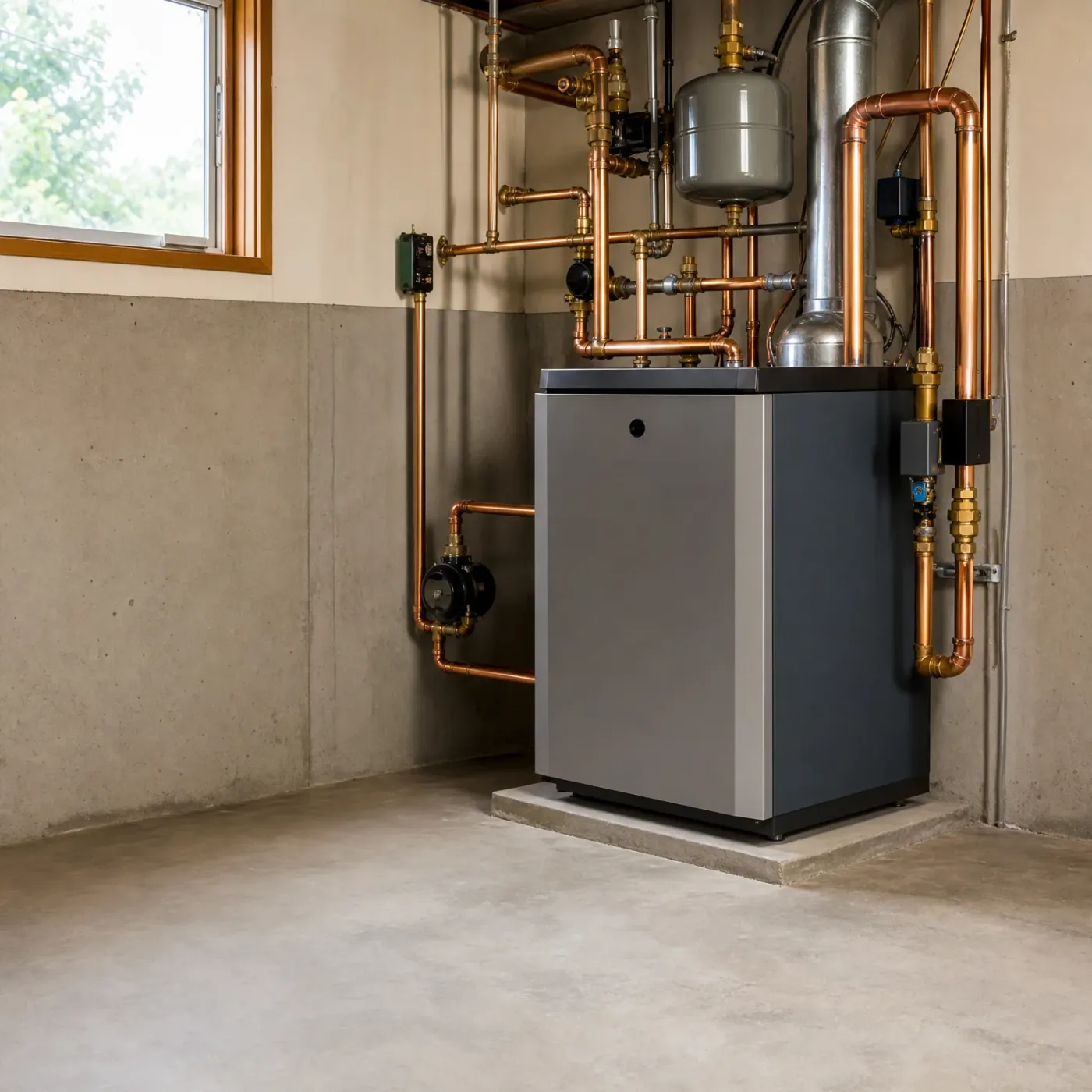
A gray floor-standing boiler on a concrete pad in a basement corner, connected to copper piping, brass valves, a circulator pump, an expansion tank, and a metal flue, with a window at upper left.
A boiler in good shape holds steady pressure and even heat, and the copper lines stay clean with no sign of scale or drip.
A gray floor-standing boiler in a basement corner with copper and black piping above it, a flue vent, and a gray expansion tank mounted on the concrete wall beside a concrete block wall.
Mineral buildup on an old expansion tank or a corroded fitting like this is what pushes a boiler past the point of repair.

How does a boiler know when to shut off and how does that affect how long it lasts?

You've probably noticed the boiler doesn't just run until the house feels warm. It cycles off on its own, sometimes sooner than you'd expect, and you're wondering if that's normal or if it's a sign the thing is working harder than it should. With power rates what they are up here, you want to know the shutoff isn't happening at the wrong time and costing you.

The aquastat shuts the burner off once the water hits its set temperature

The aquastat is what makes that call. It reads the water temperature in the boiler and tells the burner to shut off once the water reaches the set point, usually somewhere around 180 degrees. When the water drops a bit, it fires the burner again. That cycling is normal and it's how a boiler is supposed to run. What shortens a boiler's life is when the aquastat drifts out of calibration, firing the burner more often than the house actually needs, or holding the temperature too high. That extra cycling wears on the burner and the pump years before it should, and on a system running hard through an Alaska winter, that wear adds up faster than it would somewhere milder.

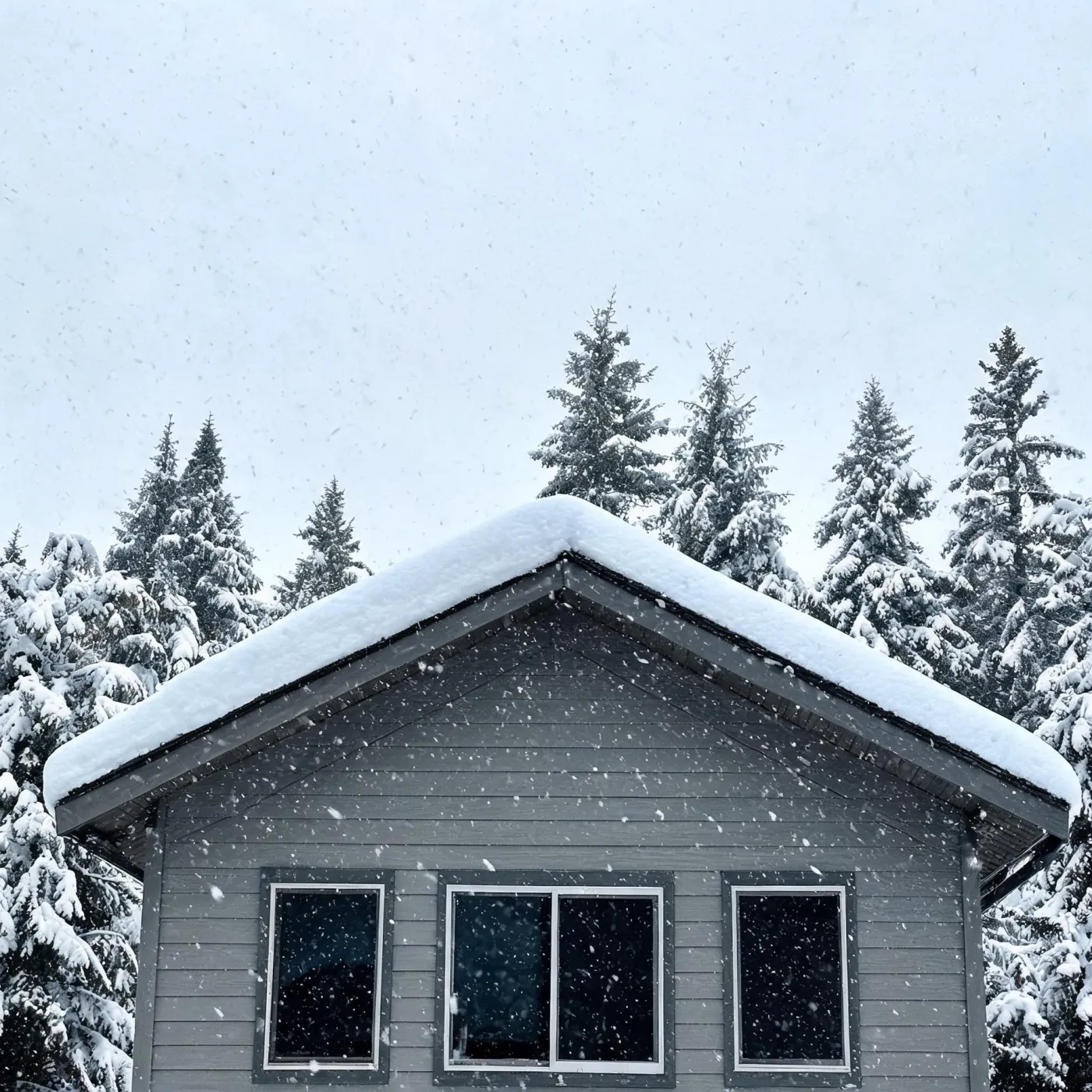
Gable end of a gray horizontal-siding house with three dark windows, its roof covered in thick snow, surrounded by snow-laden conifers under a pale sky with falling snowflakes.

Winter nights average 9°F across Alaska, according to the National Weather Service. That's the kind of cold your boiler is firing against for months at a stretch, not just on the worst night of the year. The burner is running longer and more often to hold the house at temperature, and the pump and aquastat are cycling harder right along with it. Over a winter like that, the wear adds up faster than it would somewhere milder. You'll notice it as a boiler that seems to run more than it used to, or one where the house takes longer to feel warm even though nothing's obviously broken yet.

NOAA nClimDiv 1991-2020 county normals weighted by homes

A closed silver laptop and a glazed ceramic mug on a wooden table, with a blurred kitchen counter, potted plant, cutting board and window in the background.

15 to 20 years, less if the winters here don't let up

A boiler in Alaska lasts 15 to 20 years when it's sized right and looked at every year. Push past that and you're watching for the same signs covered above: slow rooms, short cycling, a pump working harder than it should. Once those show up, you're the one deciding whether another repair is worth it or whether it's time to replace the thing outright.

That decision is easier when you're not also hunting for someone to make the call with. You'd otherwise be searching for a contractor who actually works on boilers instead of furnaces, calling around to see who can get out to your place, and explaining the same symptoms to three different companies before anyone gives you a straight answer. This connects you with one local contractor who works on boilers through winters like the ones Alaska gets every year, so you're talking to someone who already knows what tends to fail first in a system that's run this long.

Interior corner of a dining room with a round wooden table, a ceramic vase holding olive branches, a dark spindle-back chair near a curtained window, and a sideboard with a lamp against beige walls.
A woman with dark hair in a bun sits wrapped in a chunky knit blanket on a couch with a child resting his head on her shoulder, eyes closed, beside a lit lamp and bookshelf indoors.
A smiling older woman with gray hair in a cream knit sweater stands in a dimly lit kitchen beside a window showing snow outside, with a round loaf of bread on the counter in the foreground.

Boiler Installation

Skip the calls to every shop

The pro who reaches out is licensed in Alaska.

A black-framed smartphone standing upright against a plain light gray background, its screen filled with solid green.
Step 1 of 3: Equipment