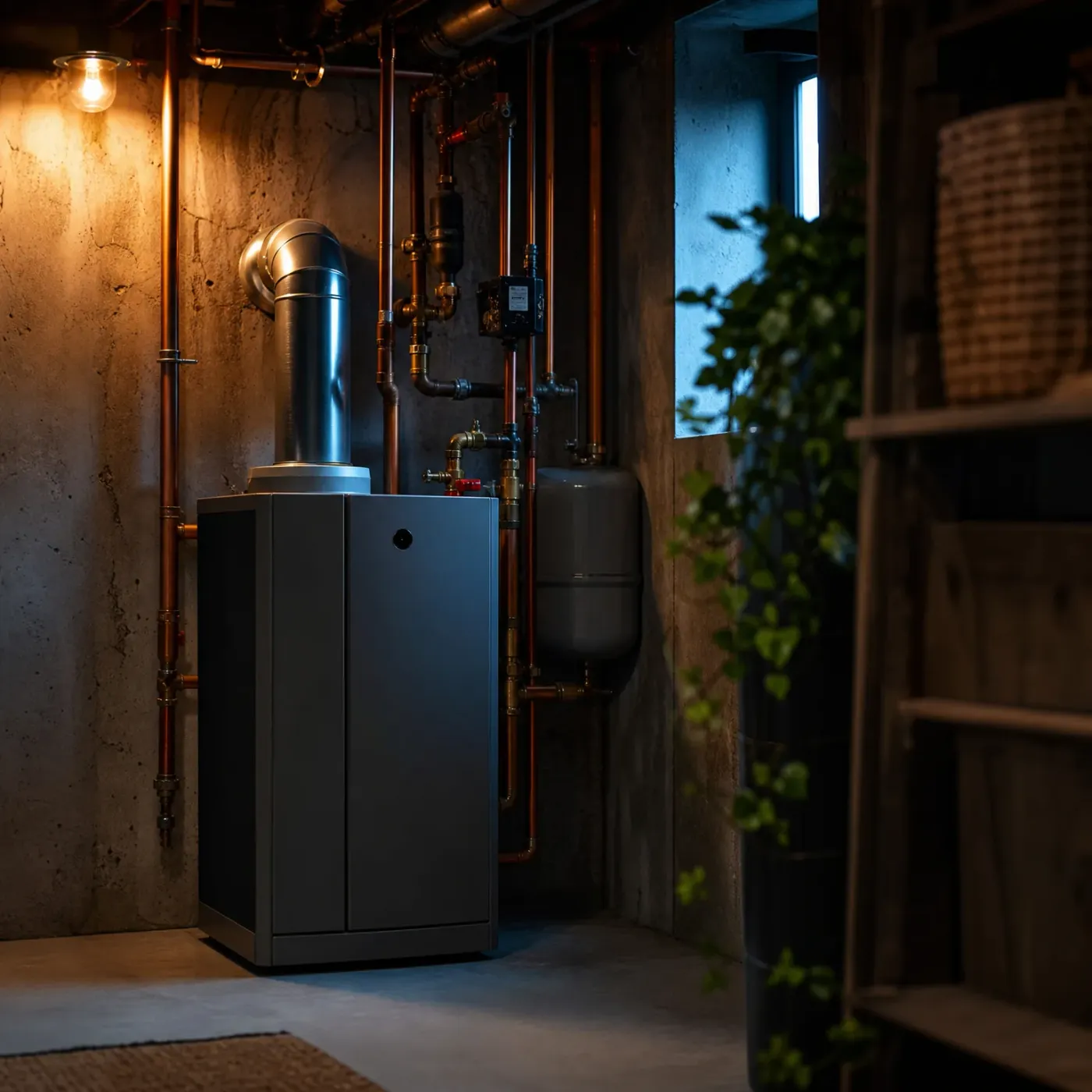


A dark grey floor-standing boiler with a metal flue stands against a concrete basement wall, surrounded by copper pipework, valves and a wall-mounted expansion tank, with ivy and a shelving unit at right.

Send one request and you're done looking

How to bleed radiators before an Alaska winter

Cold spots in some rooms and a boiler that runs longer than it should usually mean air trapped in the radiators. Bleeding them before the cold sets in gets heat moving through the whole house again. Below is how to find the valve, what to listen for, and when it's worth having a boiler tech look at the system instead of working through it room by room yourself.

Hand it off

You bleed a radiator by opening the small valve at its end with a radiator key until the hissing air stops and water starts to dribble out, then closing it again. Air gets into the system over the summer, when the boiler sits idle for months, and it collects at the top of each radiator, keeping hot water from filling the whole thing. That's why one room runs cold while the rest of the house is fine, and why the boiler keeps firing without the house catching up. In Alaska, where the heat has to carry you from October clear through April, a radiator working at half its capacity means the boiler runs that much longer for the same warmth, and with power costs what they are here, that adds up fast. Doing this before the cold really sets in, rather than after you've already noticed a cold room, means every radiator is pulling its full weight once you actually need it.

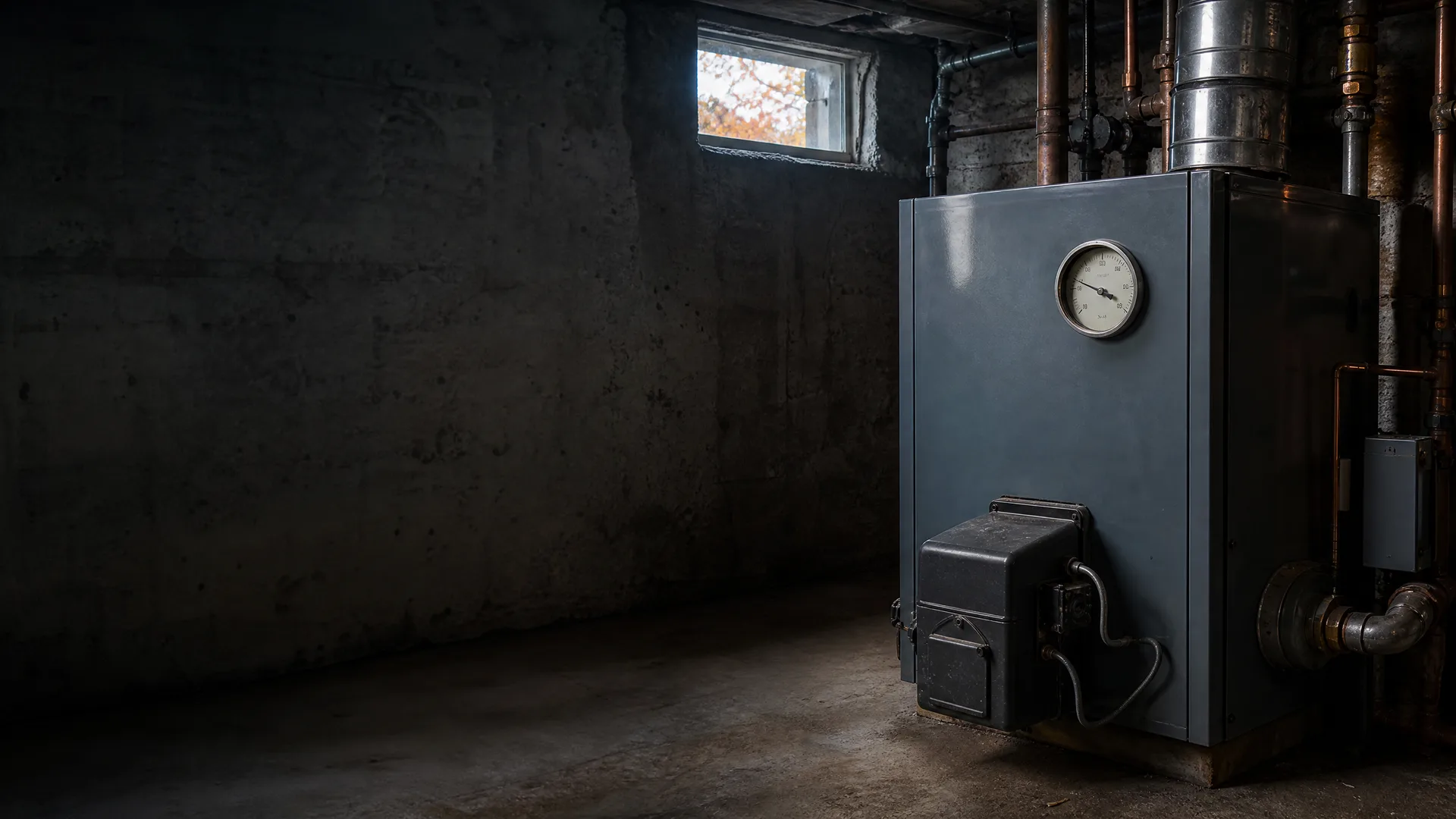
A gray boiler with a round pressure gauge and copper and metal pipes stands in a dim concrete basement lit by a small window.

You go down to check the boiler before the first hard freeze. It's late September, the gauge mounted on the front reads low, the needle sitting under where it usually sits. Upstairs the back bedroom never got warm last week, even with the thermostat turned up. You've got the radiator key in your coat pocket from last year. The basement smells like the furnace filter, a little dusty from sitting unused since May. You crouch by the radiator in the corner, key in hand, waiting to hear whether it hisses or just sits there quiet, which would mean something else is wrong.

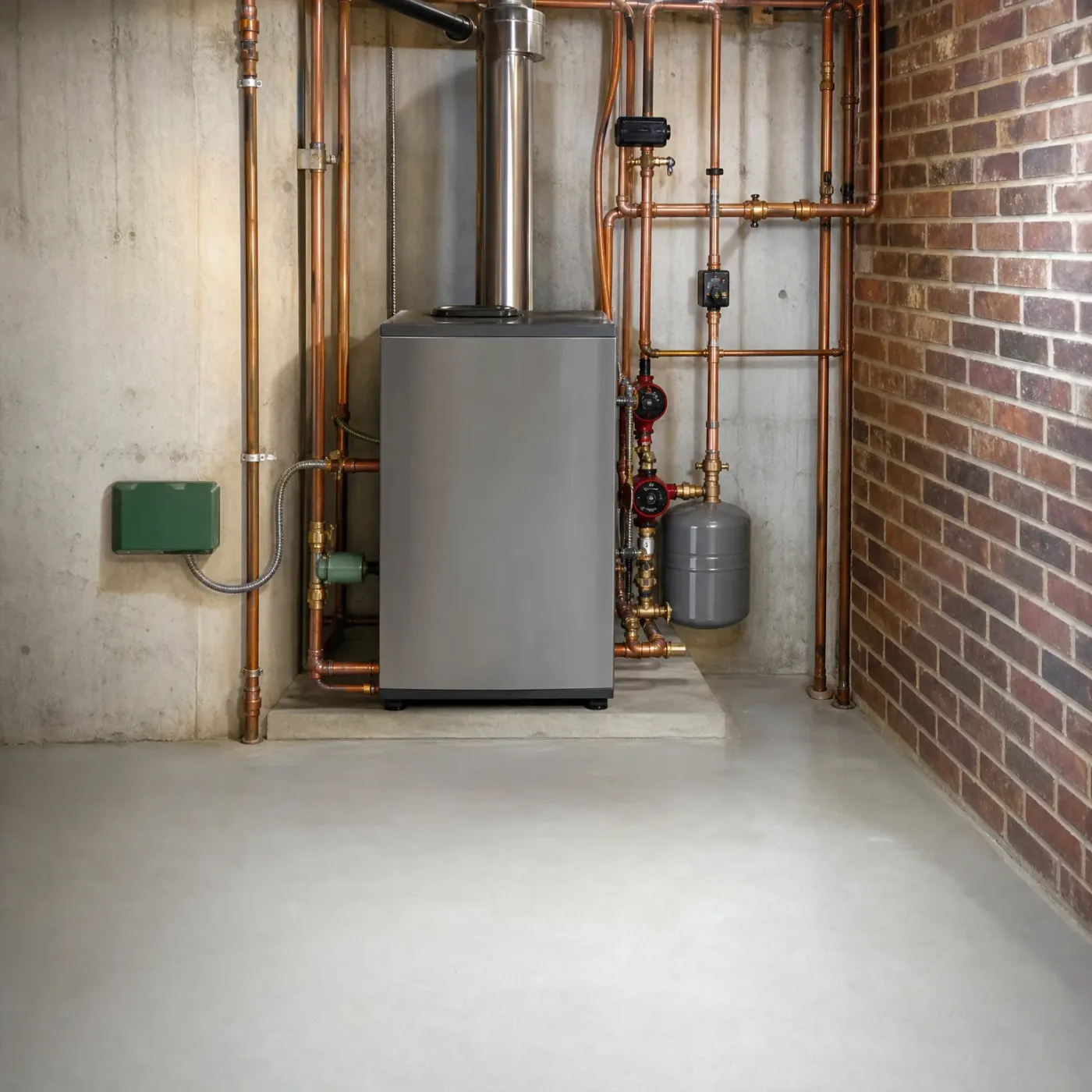
A gray boiler unit on a concrete pad in a basement corner, connected to copper piping, circulator pumps, and a ceiling-mounted expansion tank against bare concrete walls.
A boiler that is bled runs quiet, full pressure on the gauge, heat reaching every radiator in the house before the hard freeze hits.
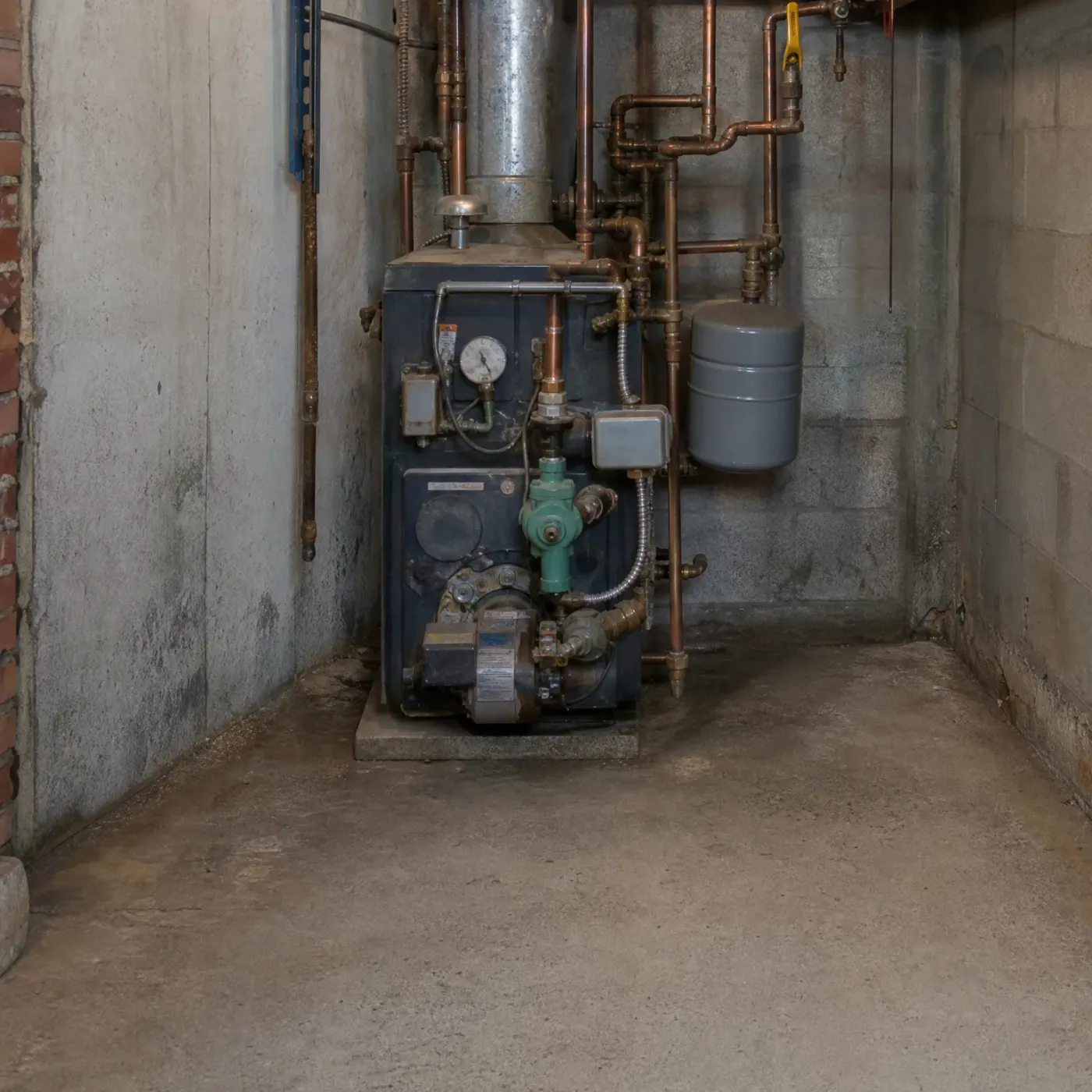
A blue oil-fired boiler with a pressure gauge, burner unit and metal flue sits on a concrete pad in a basement corner, surrounded by copper and black pipes against bare concrete walls.
A boiler losing pressure to trapped air works harder for less heat, and the gauge keeps drifting down no matter how often you top it off.

Air finds the top of each radiator because it's lighter than the water around it, which is why the valve is up at the corner instead of down at the floor. The circulator pump that moves hot water through the loop can't push through a pocket of trapped air, so the radiators farthest from the boiler often run coldest. Start with that farthest radiator and work back toward the boiler, following the direction the air already wants to move. A radiator key fits the square pin in the valve and only needs a quarter turn, since the hole is cut small to keep the water from coming out too fast once it reaches the opening. What you hear first is air hissing out under pressure, and that sound cuts off the second water shows up at the valve. After each radiator, check the gauge on the boiler itself. Letting air out drops the system pressure a bit every time, and by the last radiator on the list, it may need topping off before the boiler can hold heat the way it should.

How Air Moves Through The Loop

  • Trapped air rises to the top of each radiator, which is why the bleed valve sits at the top corner, not the bottom.
  • The boiler's circulator pump pushes water through the loop, and air pockets block that flow right where you need heat most.
  • Work the radiator farthest from the boiler first, then move closer, so you're chasing air in the direction it naturally travels.
  • A radiator key turns the square pin inside the valve a quarter turn at most, since the opening is small on purpose.
  • The hiss you hear is air escaping under system pressure, and it stops the moment water reaches the valve.
  • Check the boiler's pressure gauge after bleeding every radiator, because each one you open lets pressure drop a little more.
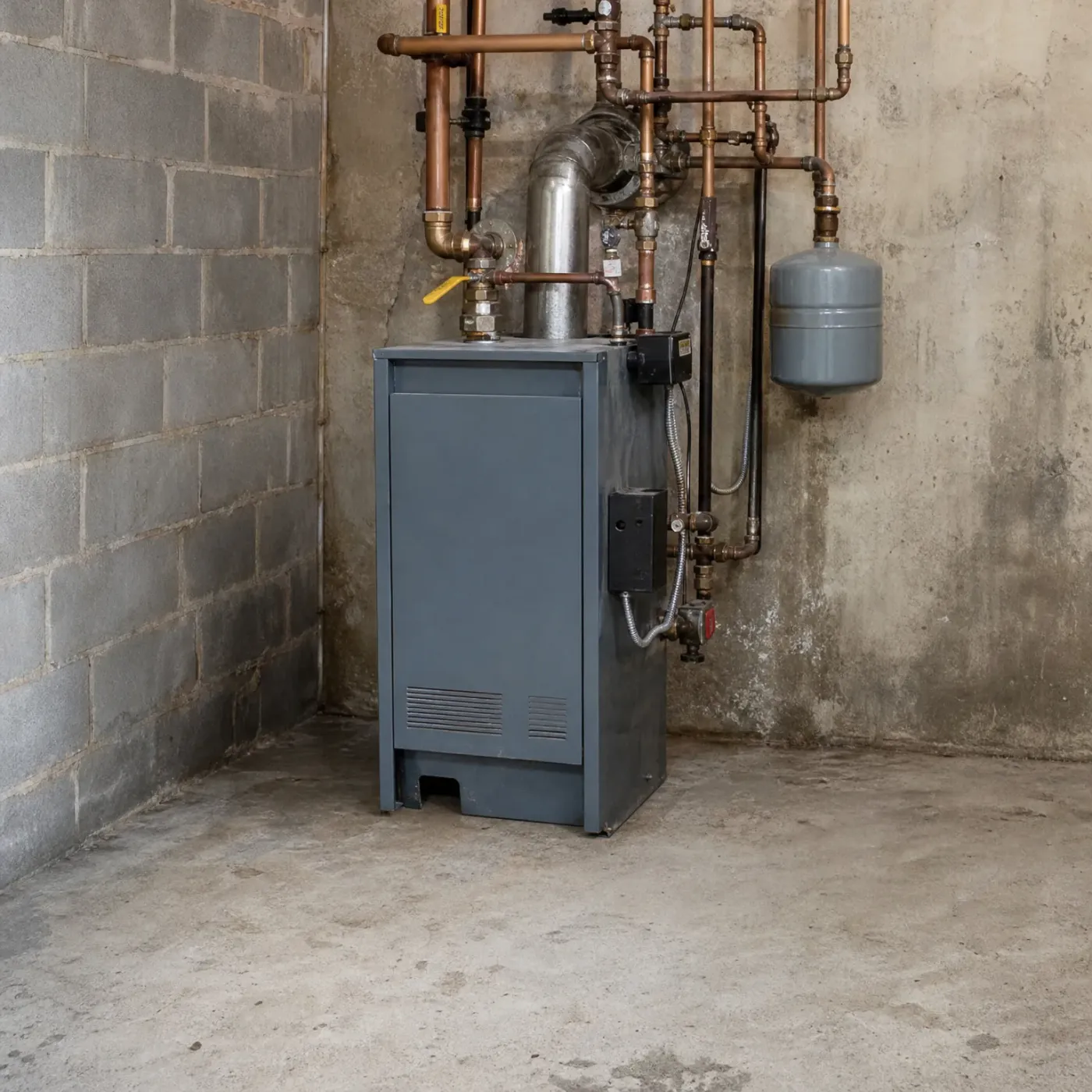
A dark cast-iron boiler with copper piping, pressure gauge, and a gray expansion tank sits on a concrete pad in a basement corner with concrete block and brick walls.
Before you get your boiler maintenance
A gray boiler on a concrete pad in a basement, connected to copper piping, valves, pumps and a gray expansion tank, with a concrete wall on the left and a brick wall on the right.
After you get your boiler maintenance

Finding a pro stops being your job

You already know what this costs you if you let it ride: another trip down to the boiler room with a wrench and a towel, another cold bedroom, another week of the gauge creeping down while the boiler runs longer to make less heat. Bleeding the radiators yourself is one thing. Getting a boiler looked at before a hard freeze sets in, when every contractor in the state is getting the same call, is another. That's the part worth handing off. Instead of working the phone, explaining the same low gauge reading and the same cold back bedroom to one company after another, then sitting with a stack of quotes trying to tell them apart, you send the request once. Someone who works on boilers for a living takes it from there. With power costs what they are up here, a boiler working harder than it needs to isn't cheap to ignore, and winter doesn't wait for you to get around to it.

Why pressure keeps dropping

Every radiator you bleed lets a little water out along with the air, and that water has to be made up somewhere. Most boilers do this on their own through an automatic feed valve, topping the loop back up to its normal pressure. If yours doesn't feed automatically, the gauge will sit low after bleeding until you add water at the filling loop by hand. Either way, check the gauge again an hour or so after bleeding. A loop that holds steady found its air. One that keeps sliding back down has a leak somewhere else in the system, and no amount of bleeding fixes that.


What the boiler is doing

A gas boiler heats water and sends it out through the loop, then pulls it back to reheat and send out again, all winter without stopping. Trapped air doesn't just sit in one radiator. It moves a little with every cycle, which is why a room that heated fine in October can go cold in December as a pocket finally settles at the top of that radiator's loop. Bleeding one room doesn't guarantee the others are clear. Going round to every radiator in the house is the only way to know the whole loop is actually moving water, not air.

A smiling man in a dark navy sweater sits on a light sofa in a living room, with a glass bowl of popcorn on a wooden coffee table and bookshelves behind him.
A smiling man in a dark green sweater sits on a tan leather sofa in a dimly lit living room, with a bowl of popcorn in the foreground and a kitchen area blurred behind him.
A smiling middle-aged man in a dark shirt sits on a gray sofa in a living room, with a bowl of popcorn on a side table and shelves, a window and kitchen area behind him.
A smiling bearded man in a dark gray t-shirt sits on a gray couch in a living room, with a large glass bowl of popcorn on a wooden table in the foreground.

You can bleed every radiator in the house yourself with a key and twenty minutes, and most of the time that is all a cold bedroom in October needs.

If the pressure keeps dropping after you have bled the system twice in a month, something else is letting air or water out, and that is a boiler problem a key won't fix.

Winter nights average 9°F statewide

Statewide, winter nights average 9°F. At that temperature a boiler running on trapped air is working against a lot more than a chilly room, and a few degrees of lost pressure show up fast as a cold spot. Bleeding the radiators now means the boiler isn't fighting both the air and the cold at once.

NOAA nClimDiv 1991-2020 county normals weighted by homes

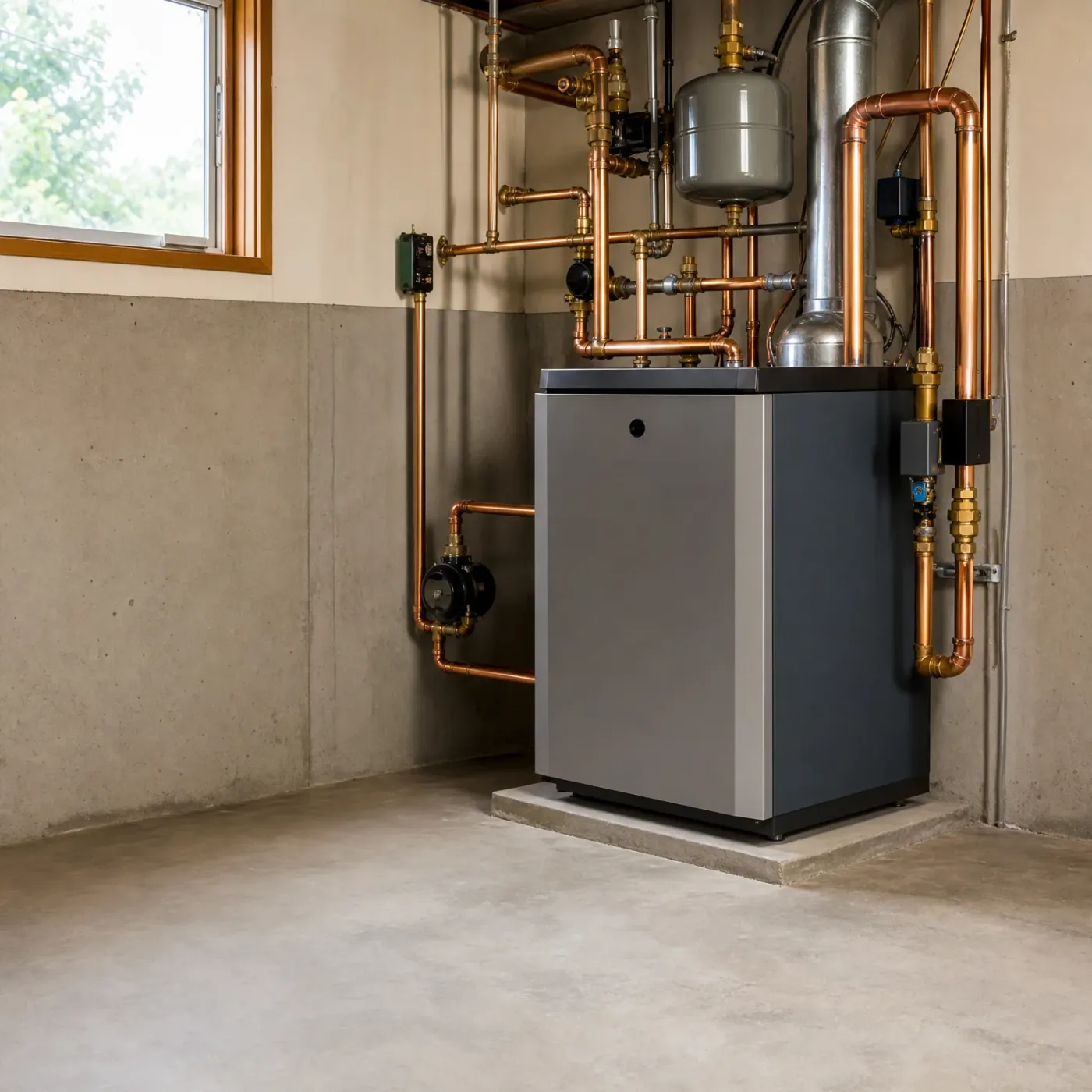
A gray floor-standing boiler on a concrete pad in a basement corner, connected to copper piping, brass valves, a circulator pump, an expansion tank, and a metal flue, with a window at upper left.

Running right

Pressure holds steady on the gauge and the circulator pump moves water through every line without a fight. Heat reaches the far end of the house the same as the near end, and the boiler shuts off instead of running straight through the night.

A gray floor-standing boiler in a basement corner with copper and black piping above it, a flue vent, and a gray expansion tank mounted on the concrete wall beside a concrete block wall.

Working against itself

The same boiler, the same pipes, but air pockets sit where water should be moving. The pump pushes against them instead of through them, so the gauge drifts down and some rooms stay cold no matter how long the burner runs.

A woman with dark hair in a bun reclines on a sofa with her eyes closed, wrapped in a cream fleece blanket, a closed blue hardcover book resting in front of her, with a lit lamp and a vase of dried flowers in the background.
A smiling bearded man in a navy sweater sits at a candlelit dinner table with a glass of red wine, a bowl of salad, and plates of food in the foreground.
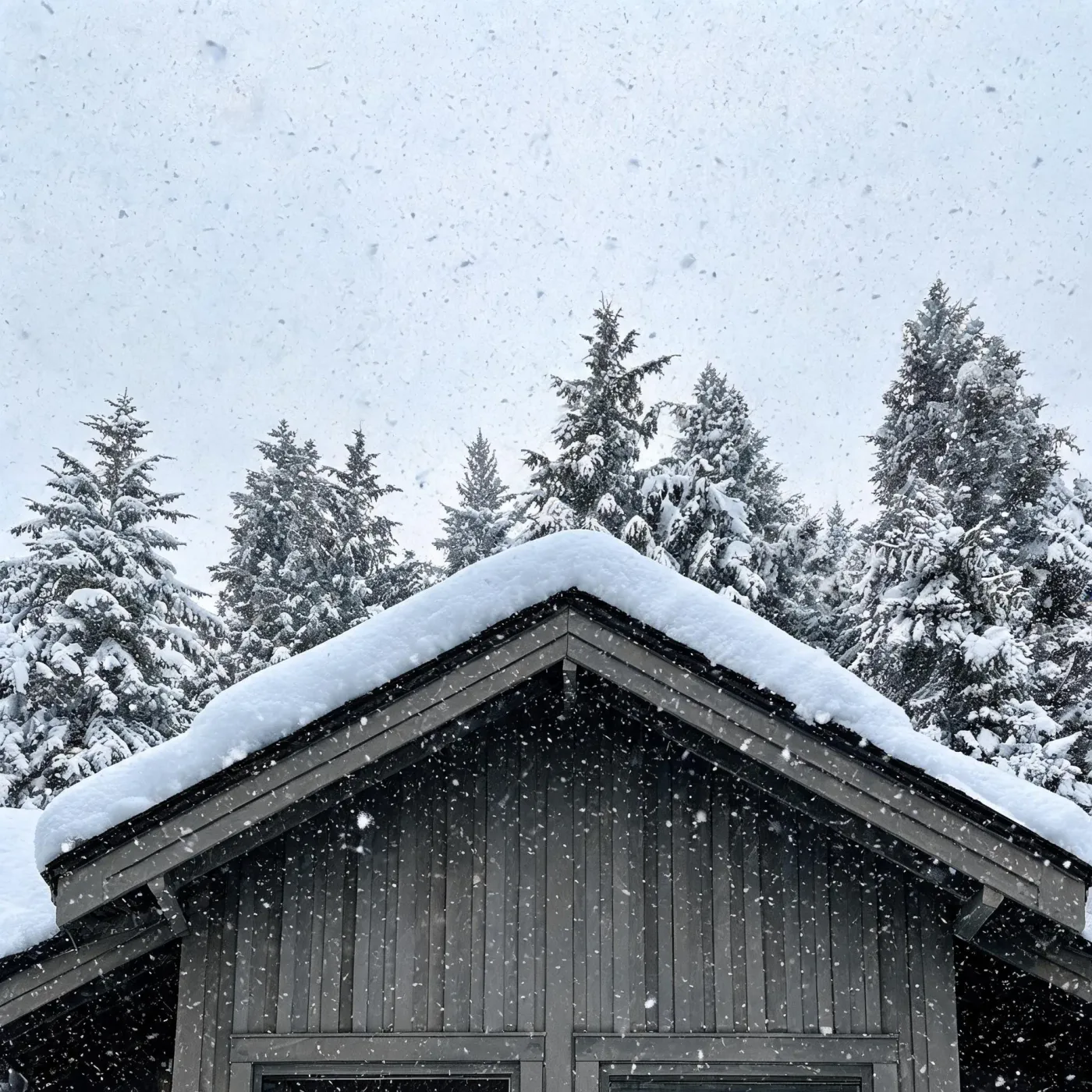
The gable end of a dark wood-clad building with a thick layer of snow on its roof, with snow-covered conifers and falling snowflakes behind it under a pale sky.

Statewide, winter nights average 9°F. At that temperature your boiler isn't just heating the house, it's fighting the ground losing heat to the outside all night long, and it needs full pressure to keep up. Air trapped in a radiator cuts into that pressure, so the circulator pump moves less water and the far rooms get less heat for the same run time. You'll notice it as a bedroom that stays cool no matter where the thermostat is set, or a boiler that's still running at 3 a.m. instead of cycling off. Bleeding the radiators before the cold sets in means the boiler is only fighting the weather outside, not air it's carrying inside its own pipes.

Source: National Weather Service

NOAA nClimDiv 1991-2020 county normals weighted by homes

A closed silver laptop and a ceramic mug of dark coffee sit on a wooden table in front of two chair backs, with a kitchen counter, tiled backsplash, wooden cutting boards, a vase of greenery and a potted plant by a window behind.

Bleed them now, before the hard freeze

A radiator key and twenty minutes tells you most of what you need to know. If the hissing stops and water dribbles out, and the gauge holds steady afterward, the system just needed the air out of it. If the pressure keeps sliding back down after you've done this twice, that's a different job, one for someone who can find where the water is actually going.

Either way, you don't have to spend your evening finding out who does that kind of work. No calling around to ask if anyone's taking new jobs this time of year, no explaining the gauge and the cold bedroom to three different people, no sitting with a stack of quotes trying to guess which one is fair. Send the form and that part of it is off your plate. What's left is a boiler holding pressure through an Alaska winter, which is the thing you wanted in the first place.

A living room corner with a light beige sofa holding a textured taupe cushion, a large ceramic vase of olive branches by a window, a framed neutral artwork on the wall, and a dark bowl with stacked books in the foreground.
At dusk, a dark board-and-batten house with a standing-seam metal roof and lit entry walkway of stone pavers, with two large outdoor heat pump units on a stone-walled pad at right and trees and hills in the background.

Boiler Maintenance

Let someone else find the pro

Step 1 of 3: Equipment
  • A dimly lit living room corner with a beige upholstered sofa holding a dark green cushion and a chunky knit throw, beside a wooden sideboard with a lit ceramic table lamp, a small potted plant, and a wooden bowl, with a framed artwork on the wall and a mug on a book in the foreground.
    • A local pro who knows boilers gets your details and gets in touch.
    • A local pro who services boilers gets in touch about the tune-up.
  • A round wooden coffee table holding a round stone vase of green foliage, a lit candle in a glass container, and a small dark bowl, with a beige sofa, cushions and knit throw behind and a window at left.
    • Send the form, and lining up the boiler tune-up stops being yours to chase.
    • Send the request and finding a pro stops being your problem.
  • Sunlit living room with a wooden coffee table holding a ceramic vase of leafy branches and a carved wooden tray with two stacked books, in front of a beige sofa with tan and green cushions and a potted plant near a window.
    • Skip searching for a boiler pro and answer a few questions instead.
    • One form replaces the calls you'd make to find a boiler pro.
  • Interior corner with a lit ceramic table lamp and wooden bowl on a wood sideboard, a framed picture and branch-filled vase behind, a knit throw over an upholstered chair, and a lit candle in a glass holder, stoneware mug and round planter of green foliage on a wooden table in the foreground.
    • Your request stays with one local pro.
    • A licensed local pro takes the request for your boiler tune-up.