It's off your list after this
Repair or replace an old boiler in Alaska
A boiler struggling through an Alaska winter is not something to sit on. This page gets into what tells you a repair will hold and what tells you it's time to replace, so you can stop guessing and get a straight answer. Send the form and the search for who does the work is off your plate.
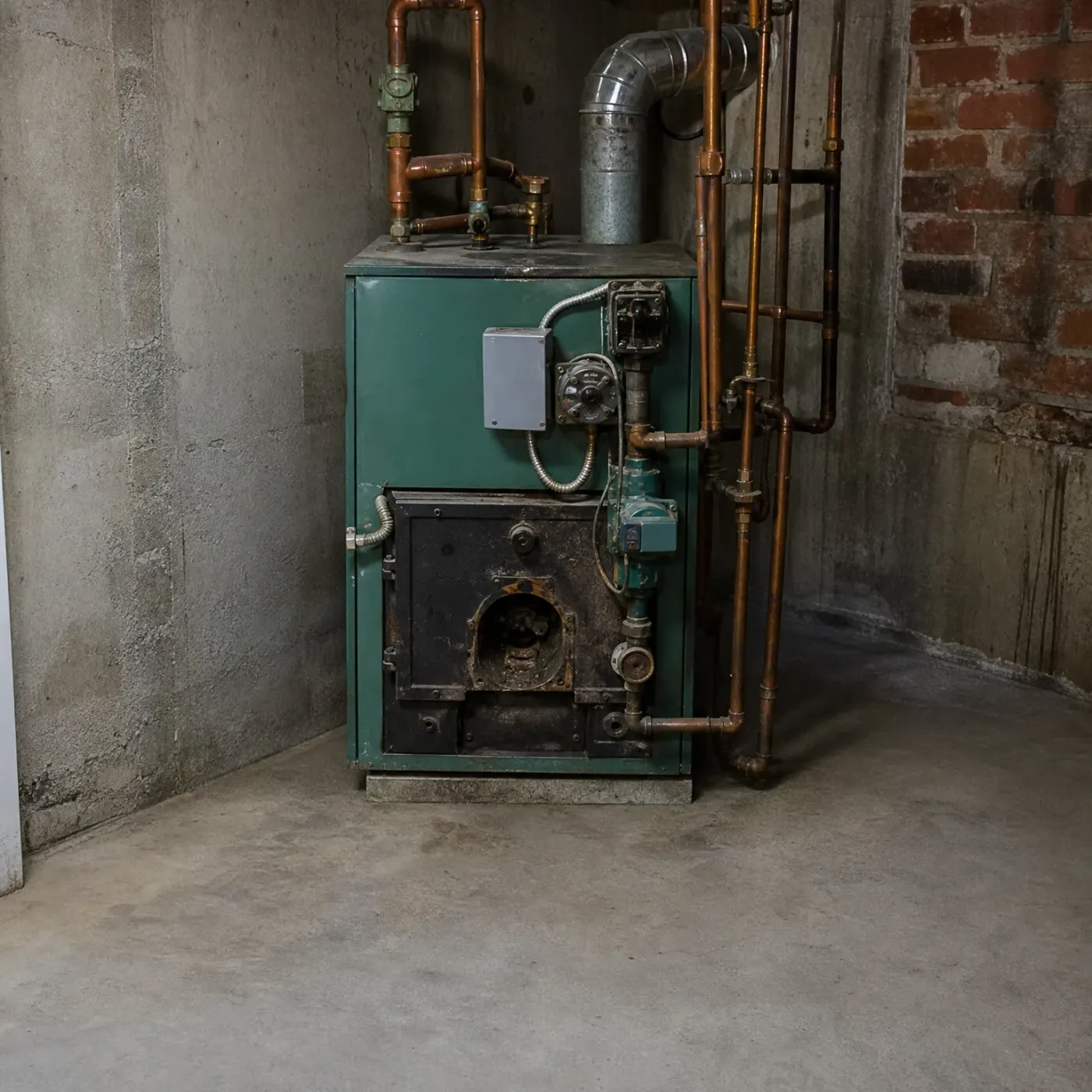
I'm done searchingWhether to repair or replace an old boiler usually comes down to its age and what's already gone wrong with it. A boiler past 15 years old is working harder to do the same job, and parts like the heat exchanger or circulator pump get more expensive to keep fixing one at a time. In Alaska, that boiler runs most of the year, not just a few cold months, so a unit on its way out gets pushed hard and tends to fail at the worst time, in the middle of winter when you need it most. If yours is newer and the problem is a single part, a repair makes sense. If it's old and this isn't the first repair, replacing it now means you choose the timing instead of the boiler choosing it for you.


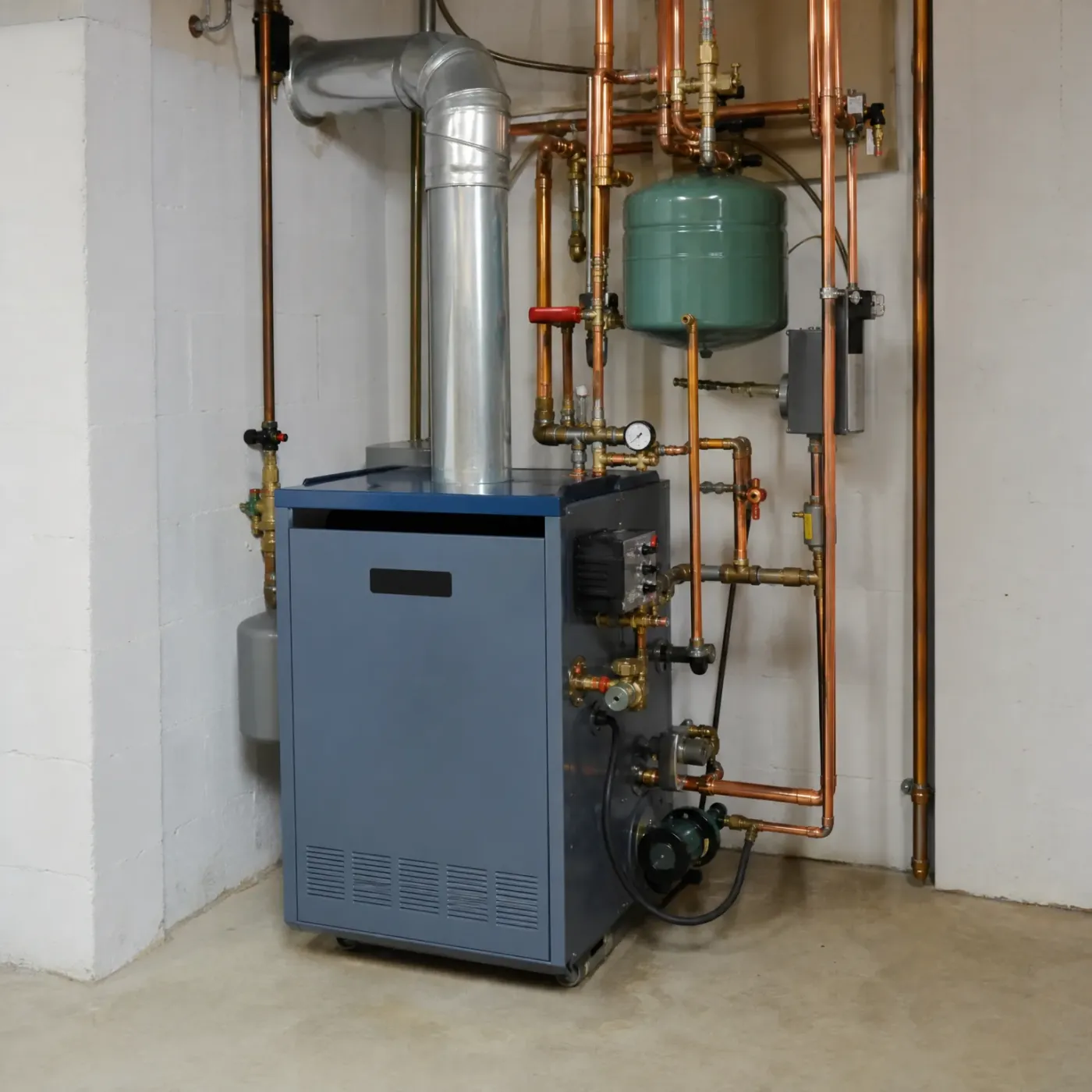
Most boiler trouble traces back to a handful of parts, and each one fails in its own way. Short cycling, where the boiler fires and shuts off over and over, usually means the aquastat is misreading the water temperature or the heat exchanger has enough buildup that heat isn't transferring the way it should. That rumbling sound some boilers make, called kettling, is scale trapping steam against the heat exchanger wall. A flame that won't stay lit is often the flame sensor, not the gas valve, since the sensor's job is to confirm the flame is burning before it lets gas keep flowing. If the circulator pump hums without moving water through the pipes, the motor has seized even though it's still pulling power. Corrosion near the pressure relief valve usually means the valve is working, releasing pressure that built up because something else, often the expansion tank, let it get too high. And a boiler that handles mild days fine but falls behind in a hard cold snap is telling you it's undersized or losing efficiency where the heat exchanger does its work.
What's Actually Going Wrong Inside
- A boiler that short cycles, firing on and off every few minutes, usually has a failing aquastat or a clogged heat exchanger making it think the water is hotter than it is.
- Kettling, the rumbling or banging sound from inside the boiler, means scale has built up around the heat exchanger and is trapping steam pockets against the metal.
- A pilot or igniter that won't hold a flame often points to a dirty flame sensor rather than the gas valve itself, since the sensor reads the flame to keep the gas open.
- If the circulator pump hums but the pipes stay cold, the pump motor has likely seized even though it's still drawing power.
- Corrosion around the pressure relief valve usually means it's doing its job and releasing because something upstream, like a faulty expansion tank, is letting pressure build too high.
- A boiler that runs fine on mild days but can't keep up when it's well below freezing is undersized or losing efficiency inside the heat exchanger, not just working harder.




Stop chasing a boiler pro
A boiler that's down in January isn't a problem you want sitting in your inbox while you call around. Here, where gas heat runs the furnace most of the year and the power to run a backup system costs more than almost anywhere else, a boiler that's failing or already out needs someone who can look at it this week, not whenever a callback comes through. Sending this request puts it in front of one licensed contractor who works on boilers in Alaska homes all winter and knows the difference between an aquastat that needs adjusting and a heat exchanger that's done. You're not fielding five quotes or explaining your situation five times. You send it once, and the work of finding the right person for your boiler stops being something you have to manage yourself.
Why age drives the cost math
A gas boiler fires over and over through a winter that runs long here, and every cycle adds wear to the heat exchanger and the circulator pump. Past 15 years, those parts have usually taken enough cycles that they're closer to failing than not. A new heat exchanger on an old boiler can run close to what you'd put toward a chunk of a new system, and a contractor pricing that repair knows it. That's why the age of the unit matters as much as what's actually broken on it right now. Two boilers with the same symptom can get different advice if one is 8 years old and the other is 18.
What a newer boiler changes
Gas heats most homes in Alaska, and a boiler that's sized and installed right for your house runs fewer long cycles to hold the same temperature. That matters here because electricity costs more than almost anywhere else in the country, so the parts of your system that do run on power, the circulator pump, the igniter, the control board, are worth keeping efficient rather than propping up. A newer boiler also means parts that are still in production, instead of a contractor hunting down an aquastat or a circulator for a model that's been out of production for years.
Winter nights average 9°F statewide
At 9°F overnight, your boiler is running almost nonstop to keep the house warm while everyone's asleep. An old heat exchanger or a weak circulator pump has a lot less room to struggle at that temperature before you notice cold rooms by morning.
NOAA nClimDiv 1991-2020 county normals weighted by homes
Where that leaves your boiler
- An old boiler worth repairing keeps its cost down to one part; an old boiler worth replacing is the one that's asked for two or three in the last year or two.
- The age and the symptoms together tell you which side of that line your boiler is on, not either one alone.
- A licensed contractor local to Alaska who works on boilers every winter here knows which failures show up again within a season and which ones don't.
- Sending one request means one contractor looking at your boiler, not a string of calls from companies bidding for the job.
- Getting a straight answer now, before the next cold stretch, means the heat in your home isn't riding on a guess.
A boiler earns a repair when it's old but has only asked for one part, and it earns a replacement when it's asked for two or three in the last year or two. Age alone doesn't decide it. A ten-year-old boiler that just needed a new aquastat is a different situation than a sixteen-year-old boiler on its third circulator pump. Put the age next to what's actually failed and you know which side of that line you're on.
What you don't have to do is work that out alone. A contractor who's licensed in Alaska and spends every winter here has seen which failures come back within a season and which ones genuinely fix the problem. That's the difference between someone guessing at your boiler and someone who already knows what a clogged heat exchanger or a cracked firebox usually means for a system like yours.
Sending one request puts one contractor on your boiler, not a handful of companies calling to bid against each other. You get someone looking at the actual unit in your house, not a phone tree.
Cold doesn't wait for a convenient week to show up, and neither does a boiler that's already given you two repairs this year. Getting a straight read on it now, before the next stretch of single digits, means the heat in your home isn't riding on a guess about a part that might or might not hold.
Send one request and you're done looking
Only one pro gets your request, so you hear from one company.