








What a boiler tune-up covers before an Alaska winter

Send the form and the boiler tune-up stops being something to remember.

Hand it off

What does a boiler tune-up check before winter in Alaska?

You're thinking about the cold months ahead, not scrambling in the middle of them. Before Alaska winter sets in, you want to know what a boiler tune-up is actually supposed to catch, not just that it's a good idea to schedule one. A boiler running on gas in freezing temperatures for months straight has to be checked in specific places, not just looked over in general.

It checks the parts that cause breakdowns and the parts that waste gas

A tune-up covers combustion, pressure, and the water side of the system. A technician tests the burner flame and checks for soot or poor combustion, since a boiler burning gas inefficiently costs more to run all winter and can point to a venting problem. They check system pressure and look for leaks at valves and fittings, since a boiler that's lost pressure won't heat evenly. They bleed air from the radiators or lines, inspect the pilot or ignition system, and test the safety controls that shut the boiler down if something goes wrong. In Alaska, where a boiler runs almost nonstop from fall through spring, a problem left unchecked in October doesn't wait for a convenient week in January to show up.

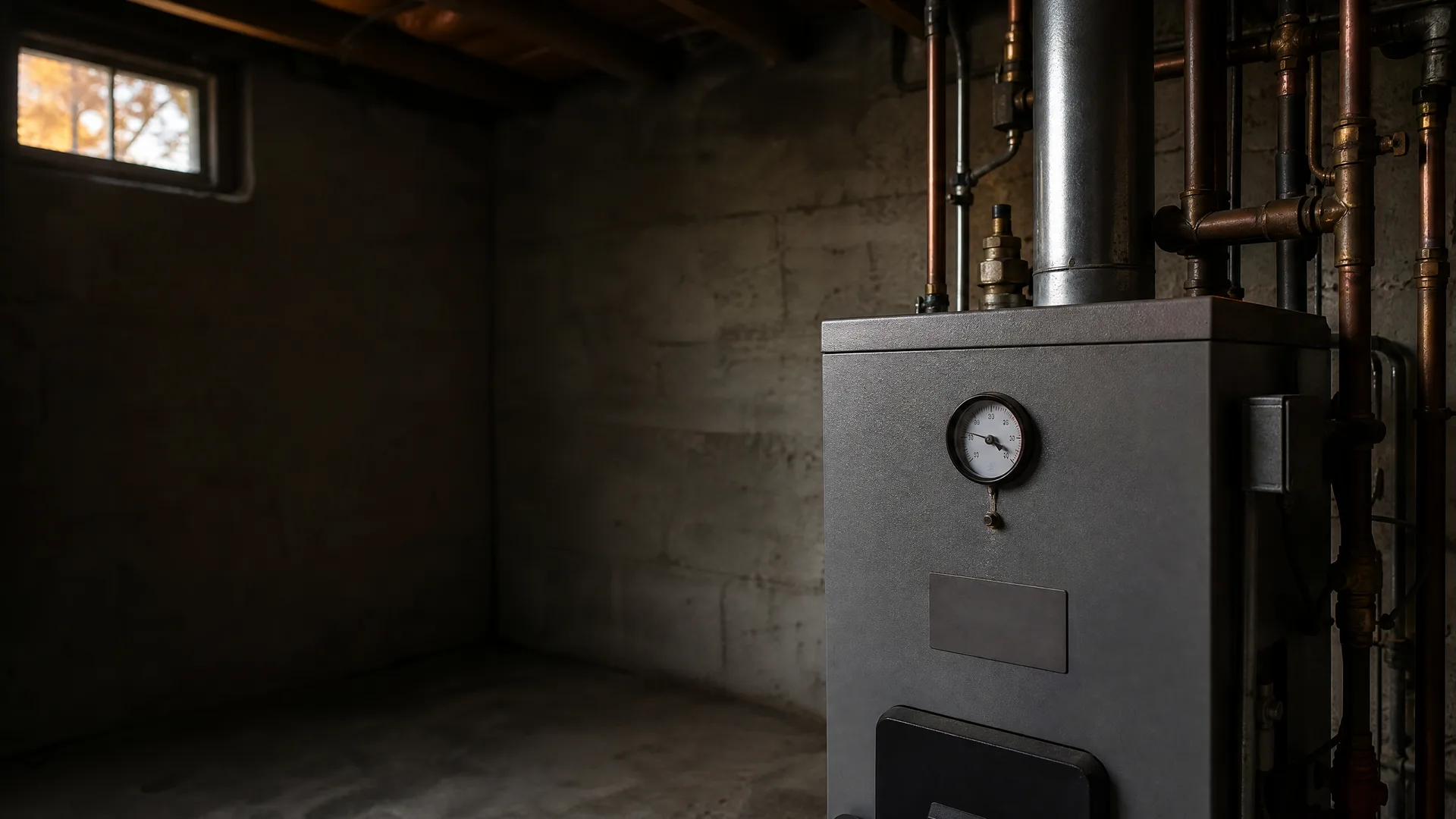
A gray boiler with a round pressure gauge and copper piping stands in a dim concrete basement lit by a small window showing yellow foliage.

You're down in the basement on a dry October afternoon, checking the woodpile stacked against the far wall before the snow starts. You pass the boiler and catch the pressure gauge out of the corner of your eye. The needle sits low, under where it usually rests. You crouch and tap the glass, thinking it might be stuck. It isn't. Upstairs the house is still warm enough that you haven't noticed anything wrong, no cold rooms, no strange noise from the pipes. But you know what low pressure usually means by January, when the burner short-cycles and the upstairs bedroom never quite gets warm. You straighten up, make a mental note, and head back upstairs, the number still sitting in your mind.

Why does the boiler room smell off lately

You might notice a faint burning smell near the boiler when it first fires in the morning, or a sooty smell that wasn't there last winter. Maybe the burner flame looks more orange than blue, or you hear a rumble or kettle-like noise from the tank that wasn't there before. Short cycling, where it kicks on and off more than it used to, is another one. Some of this comes down to dust burning off after months of sitting idle through a dry Alaska summer. But a sooty smell or a yellow flame can mean incomplete combustion, and left alone through a hard winter, that risks carbon monoxide building up in a closed-up house.

A gray floor-standing boiler with a black flue pipe stands on concrete blocks in a corner, connected to copper pipes, a green circulation pump, and a gray expansion tank on the wall.

What the combustion check catches

A technician pulls a reading on the flue gas with a combustion analyzer, checking the mix of oxygen and carbon monoxide coming off the burner. A flame burning orange instead of blue is already a clue something's off, but the analyzer gives an actual number to work from. If the mix is wrong, the boiler is burning more gas than it needs to for the same heat, and some of what it's producing is going up the flue instead of into your rooms.

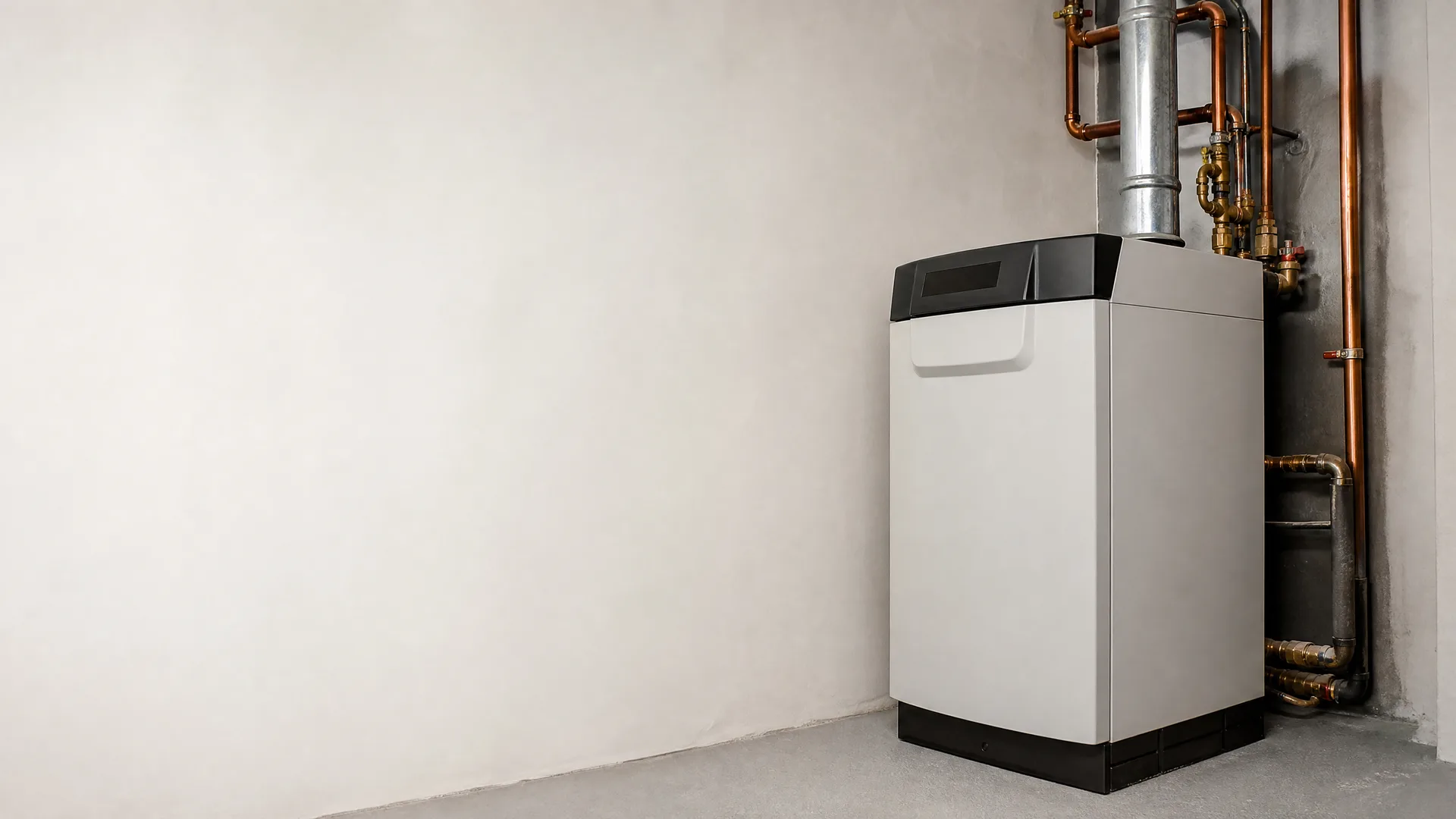
A white and black floor-standing boiler in the corner of a bare plastered room, with copper and metal pipes running up the wall behind it.

Why the pressure gets reset

Boilers lose a little water pressure over months without a leak anywhere, just from air working its way out of the system over time. A tune-up means bleeding the radiators or baseboard loops and topping the pressure back up to where the manufacturer set it. Low pressure makes the boiler cycle more to hold a temperature, and in a house that leans on this boiler for heat from October through the coldest part of winter, that extra cycling adds up on a power bill that's already steep.

Winter nights average 9°F statewide

Nine degrees is the average overnight low across your state in December, January and February. That's not a cold snap, that's a normal Tuesday night. Your boiler runs for hours at a stretch to hold the house against that, and it does that every night for three months straight.

NOAA nClimDiv 1991-2020 county normals weighted by homes

A man in a gray sweater reclines in a brown leather armchair with his eyes closed, beside a wooden side table holding a mug, a folded newspaper and a potted plant, with a bookshelf and sunlit window behind him.
A man with greying hair and a dark sweater leans back on an armchair with his eyes closed and a slight smile, in a living room with a bookshelf, plant, folded newspaper and mug on a wooden table.
A man in a gray fleece jacket sits reclined in a leather chair with his eyes closed, in a room with bookshelves, a table lamp, a window, and a desk holding a folded newspaper and a dark mug.
A bearded man in a gray fleece pullover sits with eyes closed in a brown leather armchair in a living room, with a floor lamp, bookshelf, potted plants, a side table holding newspapers and a dark mug, and a bright window behind him.
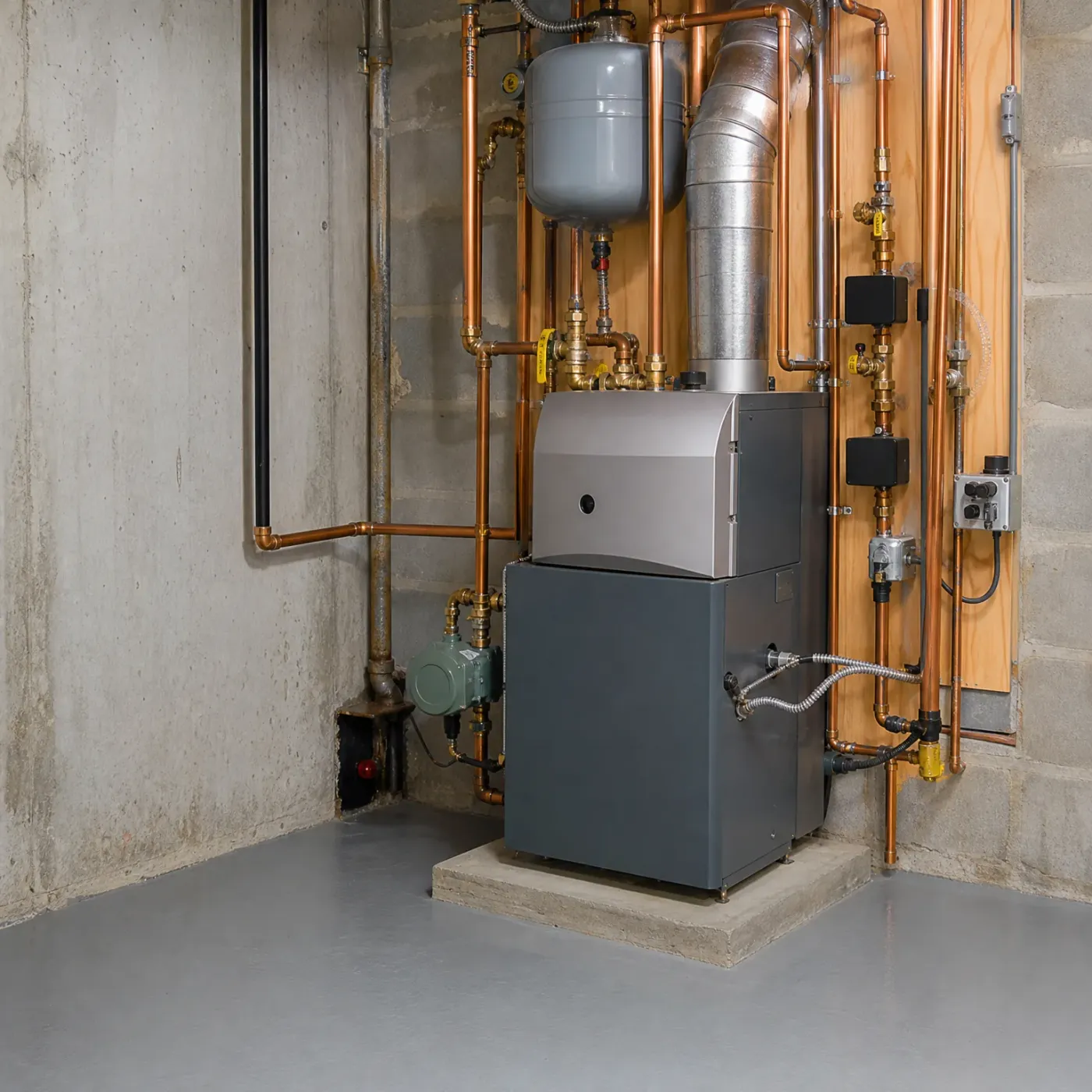
A gray residential boiler on a concrete pad in a basement corner, connected to copper piping, an expansion tank, circulator pumps and insulated flue ducting against concrete and plywood walls.
A boiler that's been serviced runs quiet, holds pressure steady, and circulates heat through clean copper without a fight.
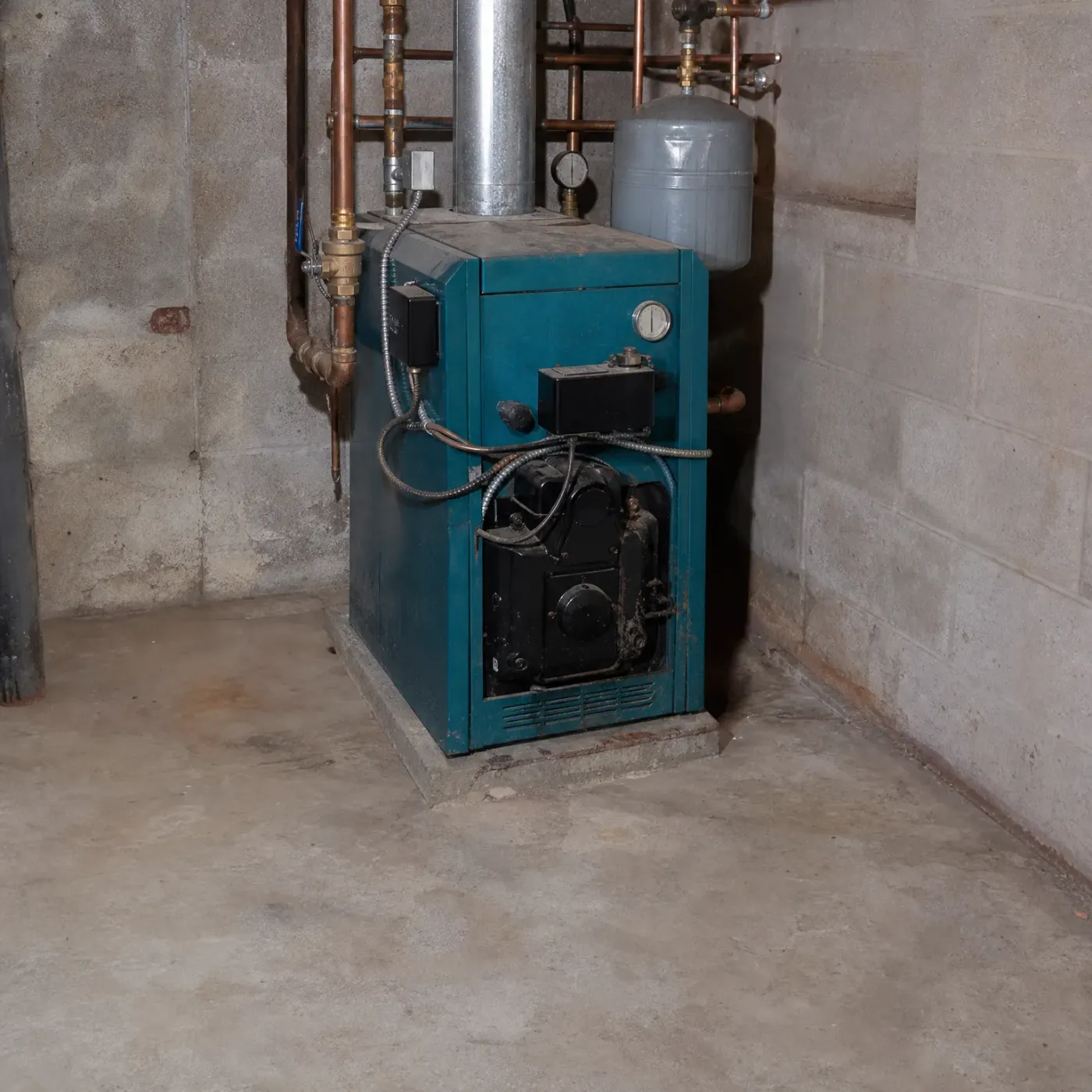
A teal boiler with a pressure gauge and black burner unit sits on a concrete pad in a basement corner, with copper pipes, a flue vent, and a gray expansion tank above against concrete block walls.
A boiler left alone through the summer can sit with a tired expansion tank and corroded fittings, waiting to fail on the coldest night.
An older man with gray hair and a beard leans back on a beige sofa with his eyes closed, in a sunlit room with potted plants, a wicker chair and large windows behind him.
A woman in a cream knit sweater sits in an armchair with her eyes closed and a slight smile, beside an open window showing orange autumn foliage, with a mug, books and a lit candle on a small side table.

Finding a pro stops being your job

Skip calling around to set up a boiler tune-up.

There's no charge for the request.

Waiting until it quits

Nothing about a boiler tells you it's failing until it stops. You notice when the house goes cold, and that's usually a night when every other boiler in town picks the same time to fail, because the cold snap that got yours got theirs too. Now you're calling around in the dark, explaining the same problem to three different answering services, trying to find someone who can get to you before the pipes freeze. Every call is the same story over again, and the wait is longer because everyone else is waiting too.
Getting it looked at now

You send one form while the boiler is still off for the season, no cold rooms, no leak on the floor. Someone qualified gets matched to you, and the search that usually eats an afternoon of calling around is done. A tune-up now means whatever's wrong gets caught with the boiler cold and the basement dry, not in January with a houseful of relatives and a thermostat that won't climb past 58. You're not explaining the problem twice to two different companies. You already know what's ahead before the snow does.

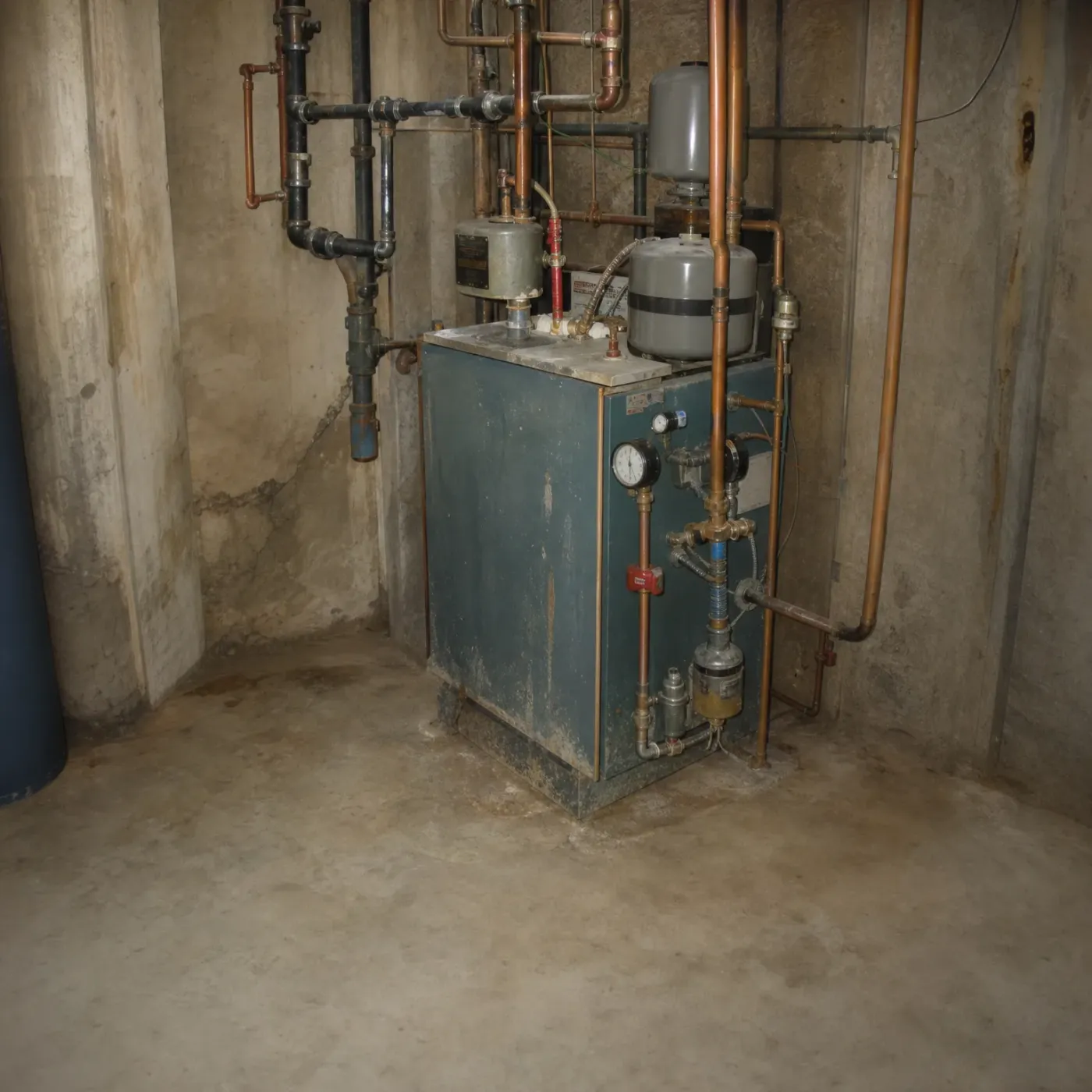
A green metal boiler with pressure gauge stands in a concrete basement corner, surrounded by copper and black iron pipes and two tank-shaped vessels.
Before you get your boiler maintenance
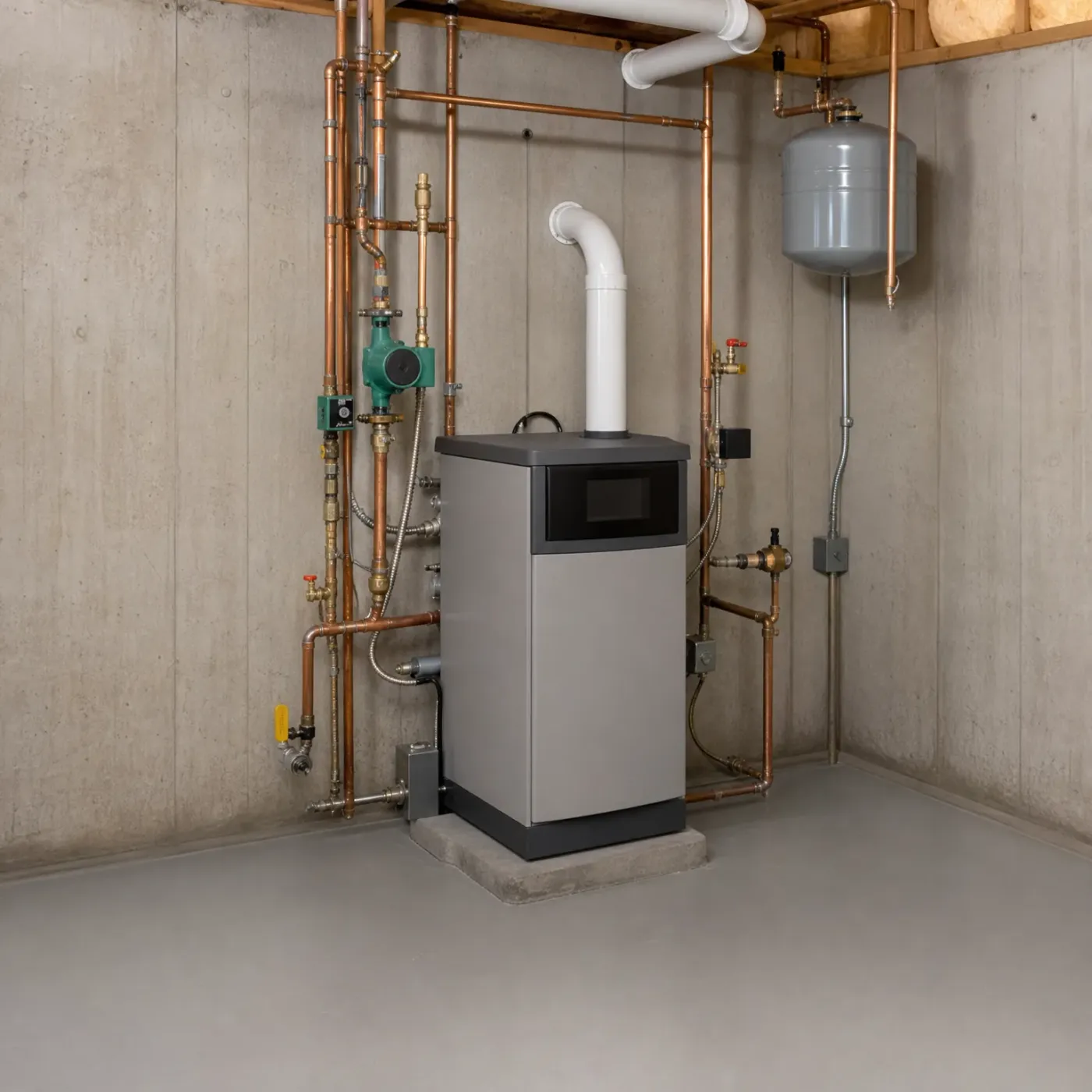
A gray floor-standing boiler on a concrete pad in a basement corner, with copper piping, a circulator pump, a white PVC flue, and a gray expansion tank mounted on the wall.
After you get your boiler maintenance
A gray boiler unit with a flue pipe stands on a concrete pad in a basement, surrounded by copper piping, a circulator pump, an expansion tank mounted on a stone wall, and an electrical outlet.

Serviced and holding steady

This is what a boiler looks like when it's been gone over before the cold hits. The expansion tank is holding, the copper runs clean, and the pump moves heat through the house without strain. Nothing here is fighting itself.

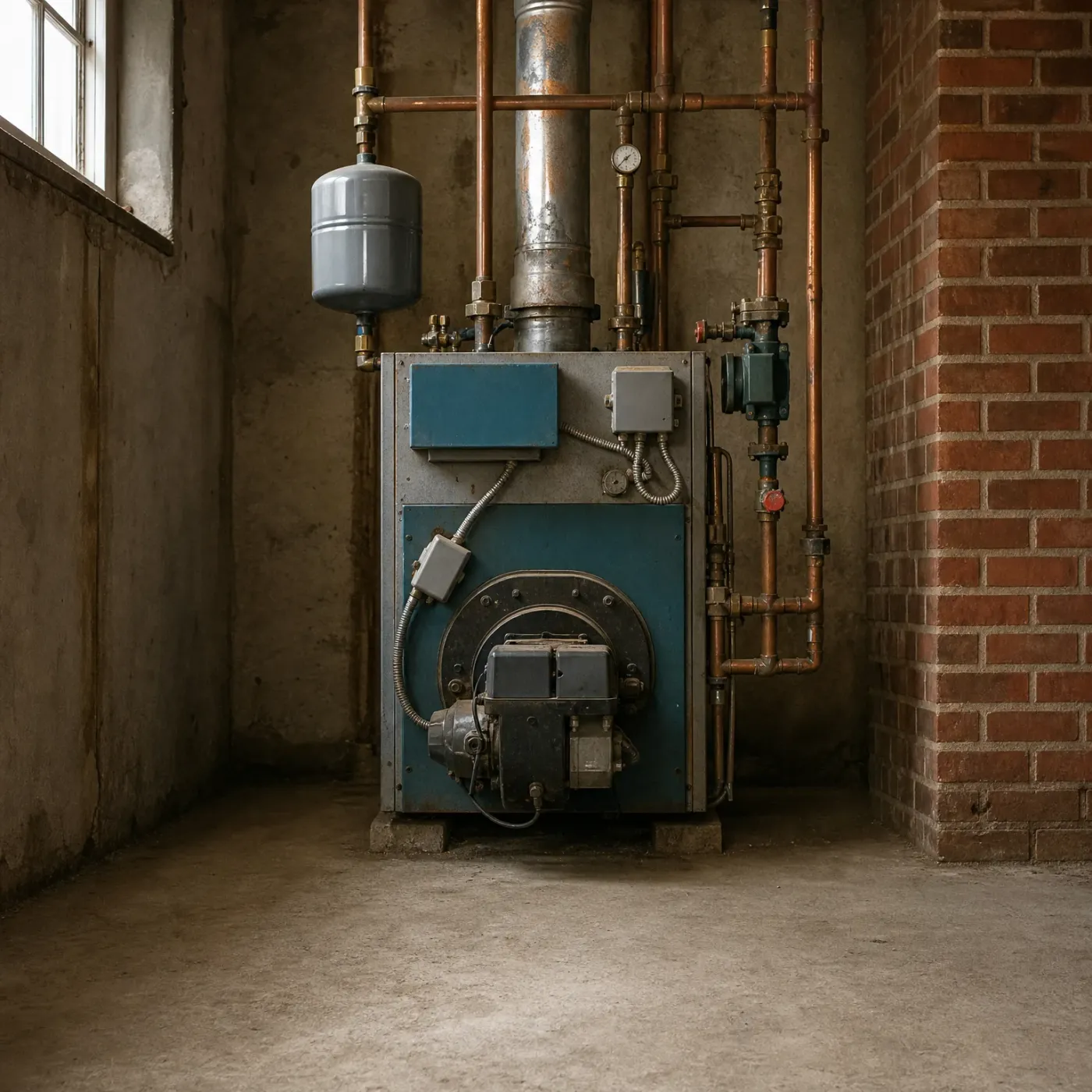
A blue cast-iron boiler with a burner unit, gauges and copper piping stands in a concrete-floored basement room beside a red brick pillar and a window.

Left alone since spring

This is the same kind of unit after a summer nobody checked on it. The gauge, the valves, the stack, all original, all aging quietly in the corner. Nothing's failed yet. That's the only thing it has going for it right now.

A boiler tune-up before winter checks the same things every time: pressure, combustion, the expansion tank, the venting, the pump. Catching a weak spot in October costs you an afternoon. Catching it in January costs you heat, and maybe a frozen pipe while you wait for someone to show up. You could spend the next few days calling around, explaining the same thing to three different shops, waiting on quotes that come back at different prices for what's supposed to be the same job. Or you could send one form and let someone else sort out who's available and who's any good, while you get back to stacking wood or whatever else October in Alaska has you doing. The boiler doesn't care which way you get there. It just runs better, longer, and quieter when someone's looked at it before the cold asks it to prove itself.

A single-story stucco house at dusk with a lit paver walkway lined by low path lights, desert plants and boulders in front, and distant mountains under an orange and blue sky.

Boiler Maintenance

Let someone else find the pro

Step 1 of 3: Equipment
  • A brown leather and wood armchair with a cream knit throw sits in a corner beside a woven basket holding a dark cushion, under a framed mountain photograph, with a wood-trimmed window showing yellow and green foliage.
    • A local pro who services boilers gets in touch about the tune-up.
    • Say what's going on with your boiler, and a pro who works on them reaches out.
  • A dark wood dresser against a pale wall holds a ceramic vase of eucalyptus branches, a stack of books with a wooden bowl, and a woven basket, with a framed landscape painting above and a woven basket holding a knit blanket on the floor beside a window.
    • Send the request and finding a pro stops being your problem.
    • After this form, you can stop searching for a boiler pro.
  • A window seat with beige linen and brown textured cushions, a chunky knit blanket, and an open book, beside a window showing blurred yellow autumn foliage.
    • Fill out one form instead of calling around for a boiler tune-up.
    • Skip searching for a boiler pro and answer a few questions instead.
  • A cream upholstered armchair with a rust-colored pillow and knit fringed throw sits beside a window with a ceramic vase of orange-leafed branches on the sill, overlooking autumn trees and leaf-covered ground.
    • A licensed local pro takes the request for your boiler tune-up.
    • The pro who reaches out is licensed in Alaska.