Profile view of a bearded man wearing a dark green baseball cap and a dark gray T-shirt against a plain light background.

What size boiler an Alaska home needs

Step 1 of 3: Equipment

What size boiler do I need for my Alaska home?

You want a boiler that keeps the house warm when it's well below zero outside, without paying to run one that's bigger than the house needs. There's no single number that fits every home, because the right size comes from how much heat your house actually loses on the coldest days, not its square footage alone.

It comes from a heat loss calculation, not square footage

A contractor sizes your boiler by figuring out how fast your house loses heat at your coldest outdoor temperatures, then matches the BTU output to that number. Square footage alone leaves out your insulation, your windows, and how the house is built, so two homes the same size can need different boilers. Getting this right matters more in Alaska than almost anywhere else. A boiler sized too small will run constantly and still fall behind on the coldest nights. One sized too large will short cycle, wearing out parts faster and burning more gas than it should. With power this expensive, a boiler that's the wrong size costs you twice, once in gas and again when parts fail early.

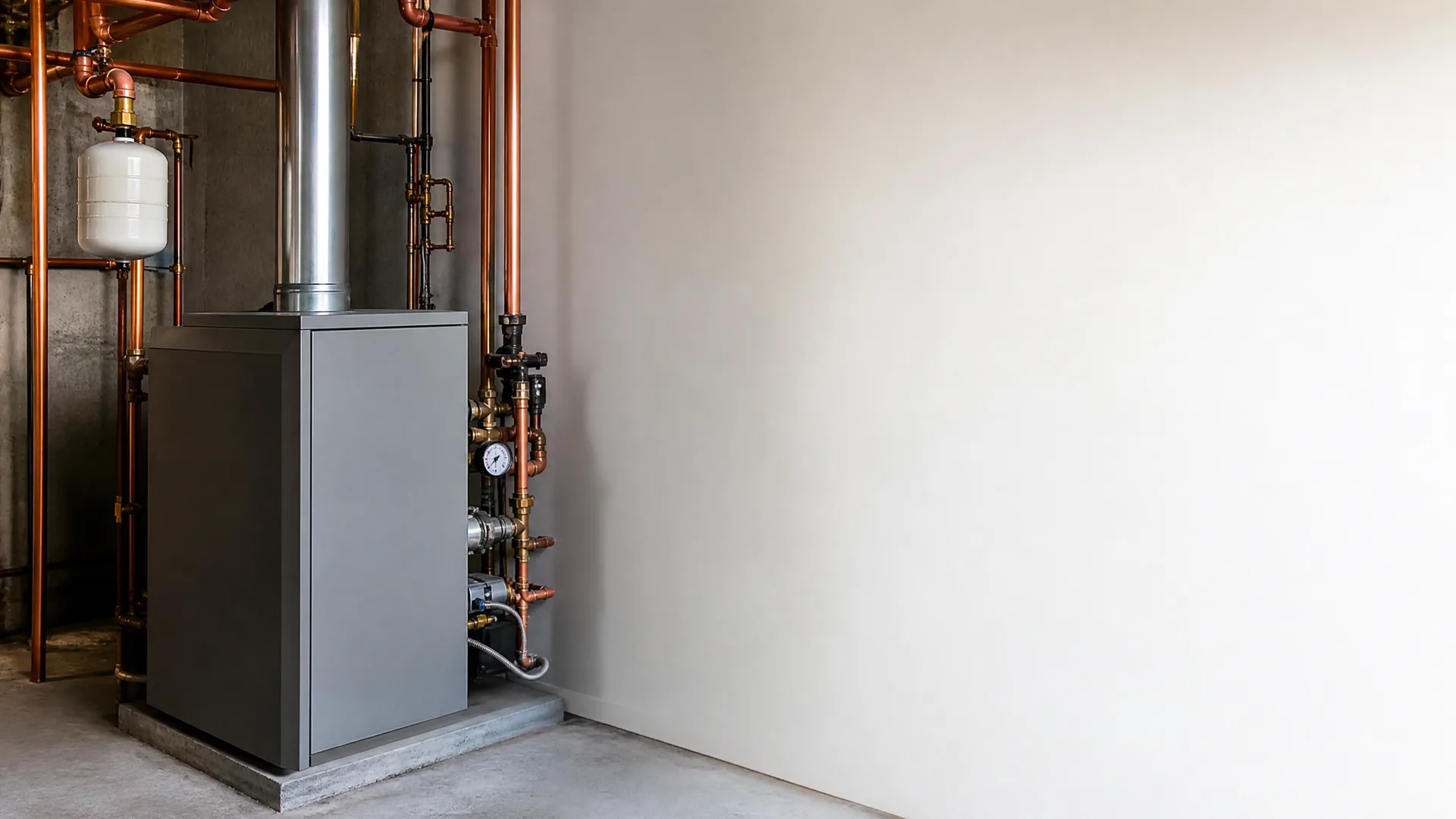
A grey floor-standing boiler with a metal flue and copper pipework, valves and a pressure gauge stands in the corner of a room with plain light walls and a concrete floor.

Why bigger isn't better

A boiler too large for the house will short cycle, firing on and off instead of running a steady, longer burn. That wears the igniter and the pump sooner and leaves rooms uneven, some warm, some not. Sizing is based on a heat loss calculation that looks at the square footage, the windows, and how the house is insulated, not just a guess at tonnage. The right size runs longer at a lower fire, which is how a boiler is meant to work.

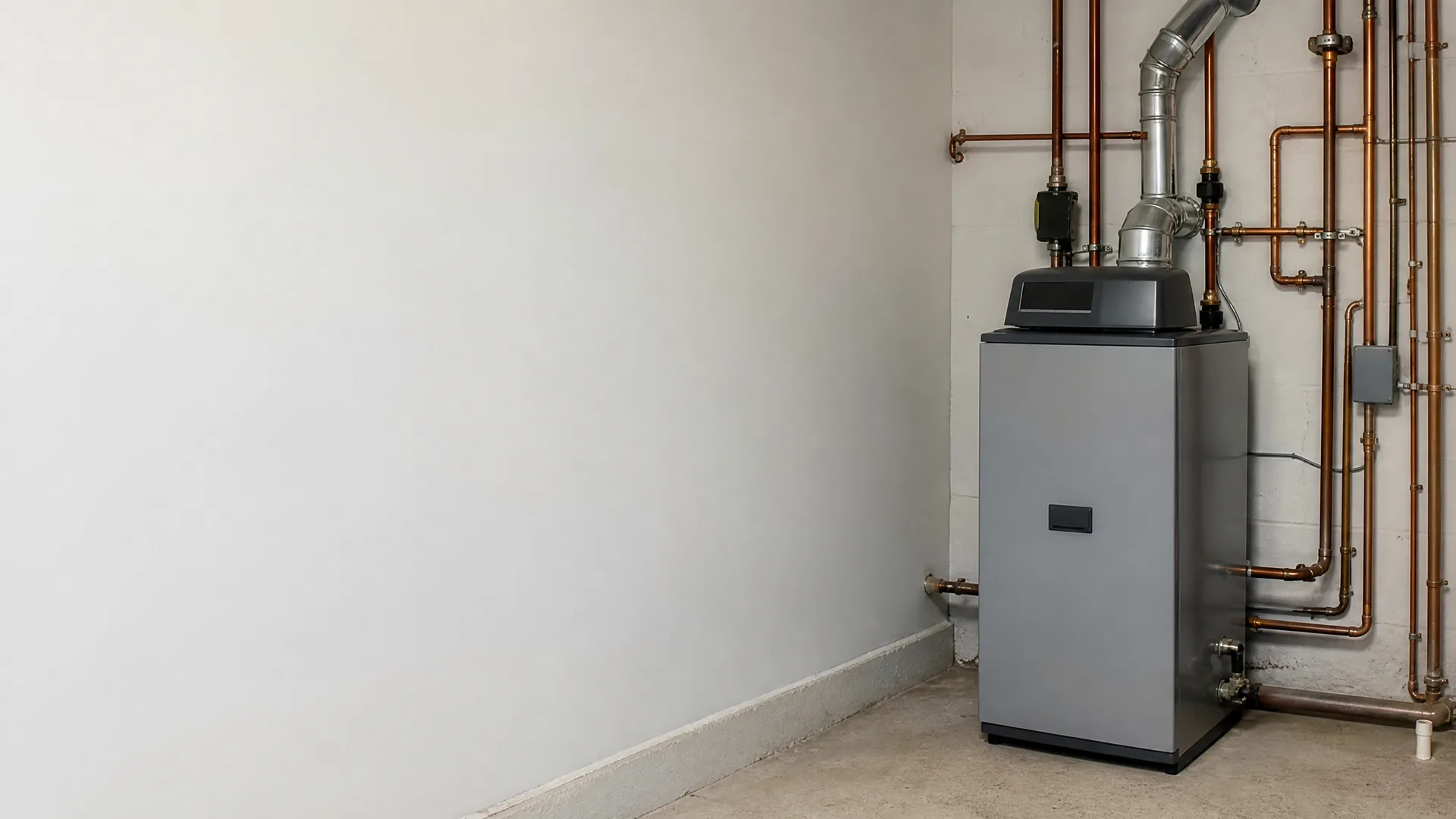
A gray floor-standing boiler with a metal flue pipe stands in the corner of a plain painted basement room, connected to copper pipes running along the wall.

What a low temperature changes

A boiler sized for a mild climate falls behind once the outside temperature drops well below zero for days at a stretch. The heat loss calculation accounts for that design temperature, not just an average winter day. That's why a contractor doing the load calculation needs the coldest stretch your area sees, not just the typical low. Undersized, the boiler runs constantly and still can't hold the thermostat setting when a cold snap sets in.

Undersized vs. Oversized Boiler

Undersized

  • It runs flat out during a cold snap and still can't get every room to temperature.
  • The boiler almost never shuts off on the coldest days, so it's working hardest when electricity and gas cost the most to run.
  • Rooms farthest from the boiler or on the north side of the house fall behind first.
  • It may hold up fine most of the year and only show its limits once it drops well below zero.
  • A boiler sized too small has no reserve for a stretch of hard cold, so there's nothing left to call on when you need it most.

Oversized

  • It short cycles, firing on and off instead of settling into a steady burn.
  • That on-off cycling wears the igniter and the pump faster than a boiler running at a steady rate.
  • Rooms heat unevenly because the burner satisfies the thermostat before heat has worked its way through the house.
  • It costs more to install than a correctly sized unit, since a bigger boiler is a bigger purchase.
  • A boiler sized too large for the house finishes its cycle quickly, so it's firing more often rather than running longer and steadier.
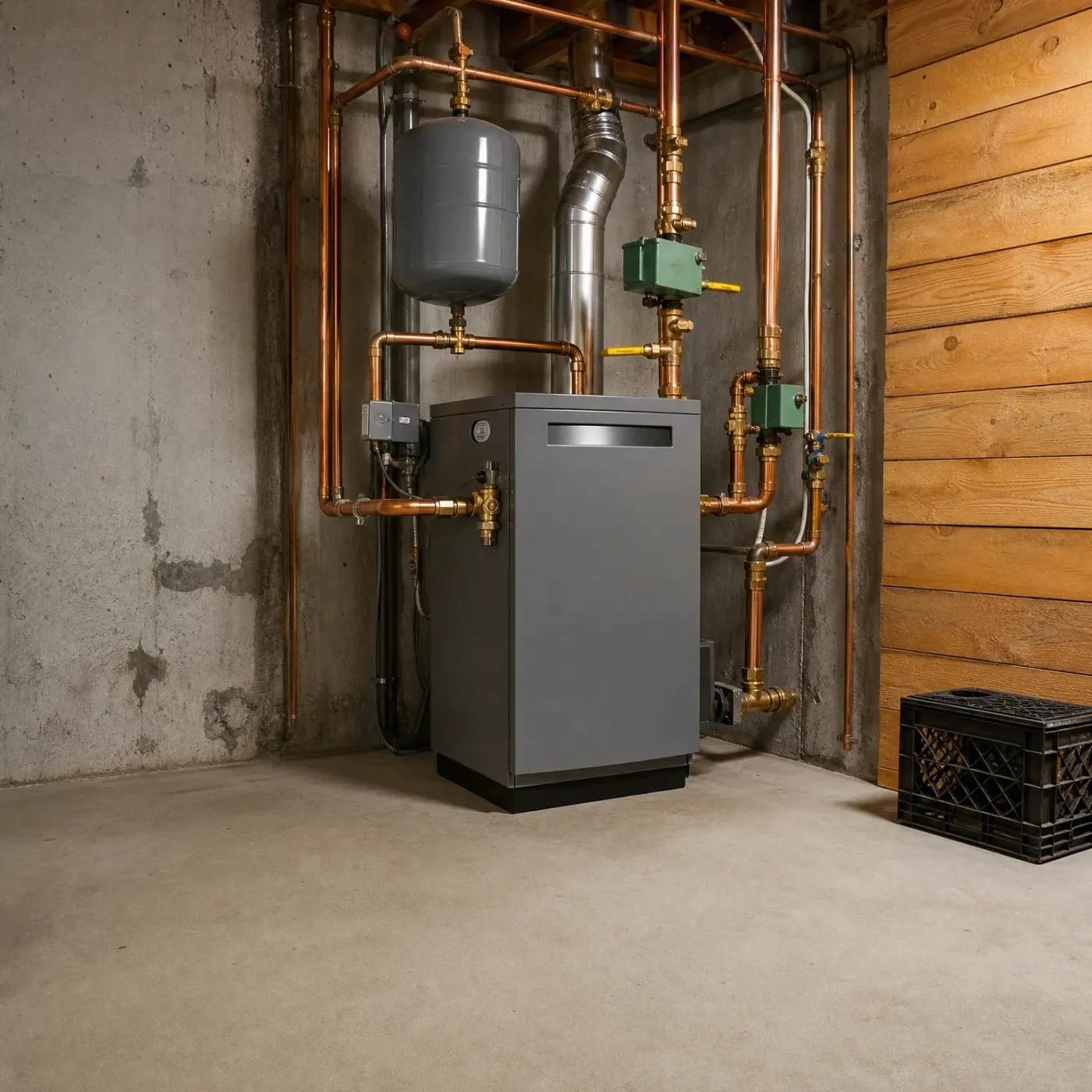
A gray boiler unit in a basement corner with copper piping, brass valves, a gray expansion tank, a metal flue duct, concrete walls and a wood-paneled wall, with a black plastic crate on the floor at right.

Sized right, running clean

This is a boiler set up to match the house. The zone valves split heat where it's needed instead of pushing everything through one loop, and the expansion tank keeps pressure steady as the water heats. Nothing here is working harder than it has to.
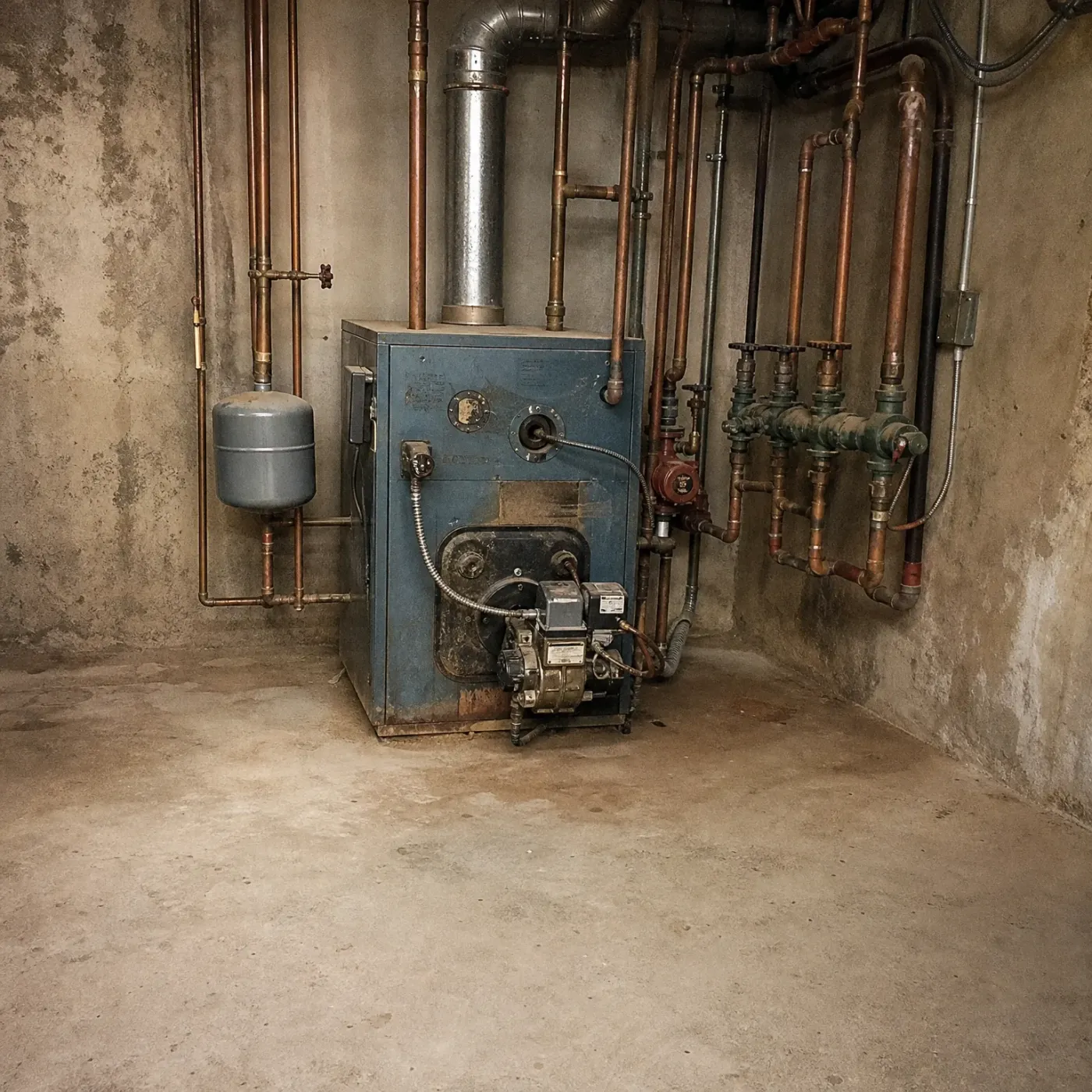

An older blue boiler with a burner unit stands in a concrete basement corner, connected to copper and steel piping, valves and a gray expansion tank on the wall.

Old, undersized, and showing it

This oil-fired boiler is doing a job it was never sized for. The galvanized flue and aging piping are original to a different era, and the zone valves and circulators crowded onto that manifold are trying to cover ground the unit can't keep up with anymore.

A man in a blue sweatshirt reclines with closed eyes in a brown leather armchair in a living room with a bookshelf, houseplant, sofa, window, and a side table holding newspapers and a dark mug.
A bearded man in a gray pullover reclines with closed eyes on a brown leather sofa in a sunlit room with a window, framed picture, potted plant, and a wooden cabinet holding papers and a dark mug.
A man in a gray sweater leans back with closed eyes in a brown leather armchair beside a wooden side table holding a dark mug and a folded newspaper, with bookshelves and a window seat behind him.
A man in a green sweater reclines in an armchair with his eyes closed and a slight smile, beside a window with plants, a small table holding a mug and folded newspaper, and bookshelves behind him.

One request and it's handed off

A heat loss calculation is the only way to know the right size for your house, and that math is a job for someone who does it on homes like yours, not a chart on a website. A boiler sized off a guess either can't keep up when it's well below zero or short cycles and wears out early, and the fix for both starts with someone standing in your house with the right tools. Submit the form and your request goes to one licensed contractor working in Alaska, someone who installs boilers in homes dealing with the same cold and the same gas and electric rates you are. That's different from calling around and fielding bids from a handful of companies that don't know your house. With power costs what they are here, getting the size right the first time matters more than it would somewhere mild. Send the request and that part of the work moves off your plate.

How the sizing math works

  • A Manual J heat loss calculation adds up the BTUs your walls, windows, and ceilings lose at your area's design temperature.
  • Square footage alone misses insulation levels, window count, and ceiling height, so two similar-sized homes can need different output.
  • The contractor measures each room separately, since a boiler also has to match how heat gets distributed through the zones.
  • Boiler output is rated in BTUs per hour, and that number has to land close to the calculated loss, not just above it.
  • A domestic hot water coil or indirect tank adds to the sizing math if the boiler also heats your water.
  • Altitude and local design temperature both factor into the load calculation, and Alaska's numbers run colder than most of the country's.

A heat loss calculation starts with your design temperature, the coldest outdoor reading the house is expected to hold against, and that number is lower here than almost anywhere else in the country. From there the contractor works room by room. Walls get measured for insulation, windows get counted and rated for how much they leak, ceilings get checked for height and what's above them. Each room gives up a BTU per hour figure, and those figures add up to the total load the boiler has to cover. Square footage never enters into it directly, because a 1,800 square foot home with old single-pane windows loses heat faster than a 1,800 square foot home with newer ones, even sitting on the same street. The zones matter too. A boiler feeding three zones through separate loops has to deliver enough output to each one, not just a sum that works on paper. If the boiler also runs a domestic hot water coil or an indirect tank off the same unit, that draw gets added into the sizing before a model gets picked, not after. The output rating on the boiler itself, in BTUs per hour, then gets matched against the calculated number. Close is the goal. A unit rated well past what the house actually loses just cycles more than it needs to, and one rated short of it runs flat out and still falls behind once it's well below zero outside.

A gray and blue floor-standing boiler in a basement corner, with a metal flue pipe and copper and black piping, valves, and a gray expansion tank mounted on an unfinished wood-framed wall beside a concrete wall.
A boiler running right cycles in long, steady burns and holds pressure through that whole network of copper and black iron without strain.
A green oil-fired boiler with a flue pipe, burner and circulator pumps sits on a concrete pad in a basement corner, surrounded by copper piping and an expansion tank against concrete walls.
A boiler worn past its sizing runs short bursts that stress the flue and joints instead of warming the house evenly.
  1. A contractor measures every wall, window, and ceiling for heat loss.

  2. That load is checked against Alaska's coldest design temperature.

  3. The BTU output is matched to the boiler, not the square footage.

  4. Zone valves and piping are sized to carry that output evenly.

Winter nights average 9°F statewide

Nine degrees is the average overnight low here in December, January and February, not the occasional cold snap. That's the load your boiler has to cover night after night for three straight months, which is exactly what the heat loss calculation needs to get right.

NOAA nClimDiv 1991-2020 county normals weighted by homes

The right size for your boiler comes from the heat loss number, not a guess, and that's the number a local contractor will work from. Someone who installs boilers in Alaska homes every winter has already seen what nine-degree nights do to systems sized wrong, both ways, and knows what usually needs correcting before the work starts. Send the request and it goes to one contractor, licensed and local, not a handful of companies calling you back at once. That's someone who works on this equipment in this climate as a matter of course, not someone guessing at what a house like yours needs. You've seen what a boiler too big or too small costs you in comfort and in dollars through a long cold season. The fix is a proper calculation, done by someone who knows how to read your house, and from there the sizing takes care of itself.

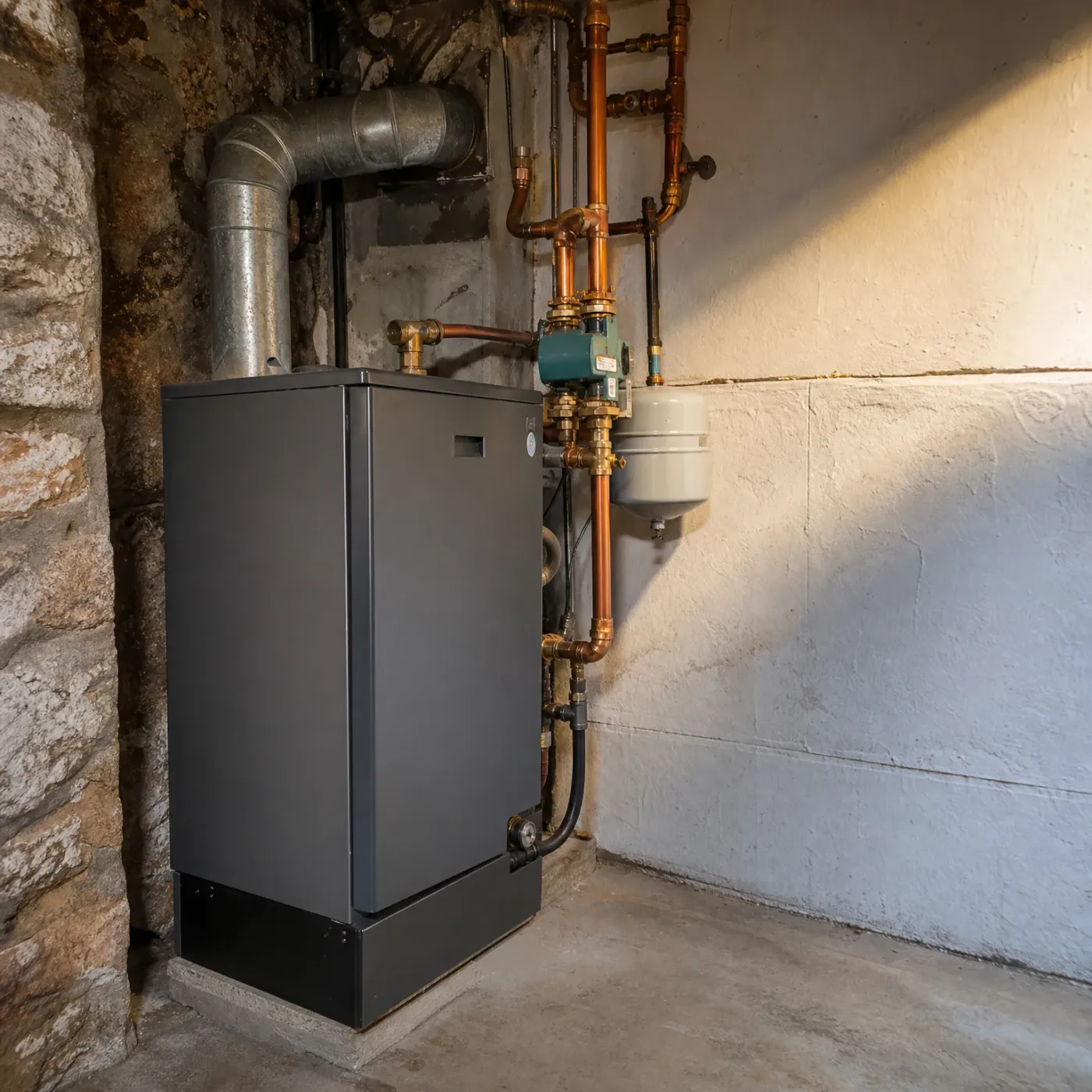
A dark gray boiler unit stands in a basement corner against a stone and painted concrete wall, connected to copper pipes, a circulator pump, an expansion tank, and a galvanized metal flue duct.

Done looking for a boiler pro

Find a local pro

One installer gets your project, so there's no bidding war over it.

You only hire the pro if you want to.