
What your boiler pressure should be in Alaska

Describe your boiler job, and a local pro who handles it gets in touch.

Match me with a pro

Your boiler pressure should read between 12 and 15 psi when the system is cold, and rise a bit once it's running and the water heats up. Most residential boilers mark this range right on the gauge, often in a red or green band, so you can check it at a glance. If the needle sits below 12, there's not enough water in the system, and the boiler may struggle to push heat through the radiators or baseboards. If it climbs past 20, the pressure relief valve can open and drip water, which is the system protecting itself from strain. Checking this once in a while, especially before the cold months set in, catches a slow leak or a failing valve while it's still a small fix. A boiler running outside its normal range night after night wears down parts faster than it should.

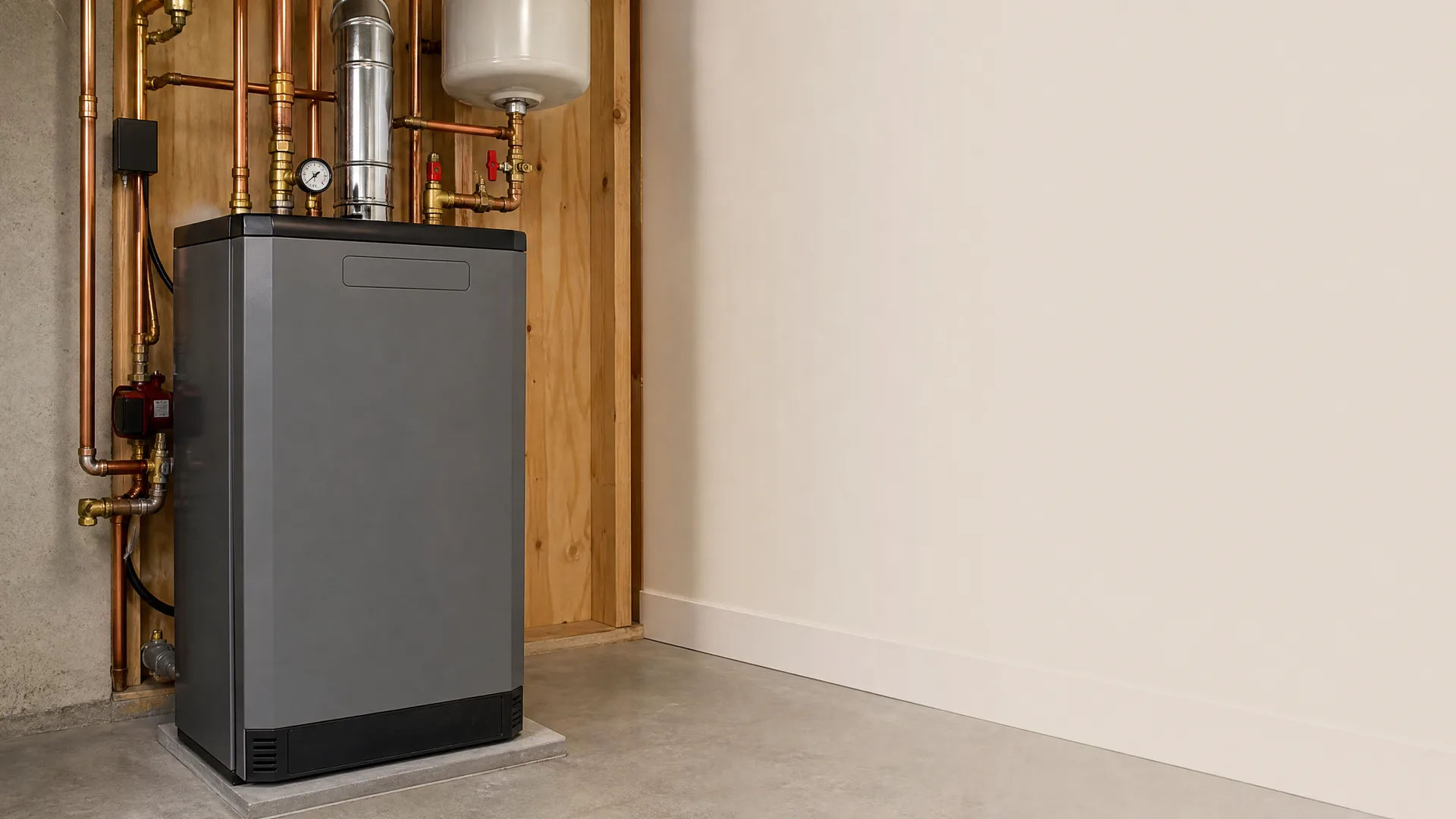
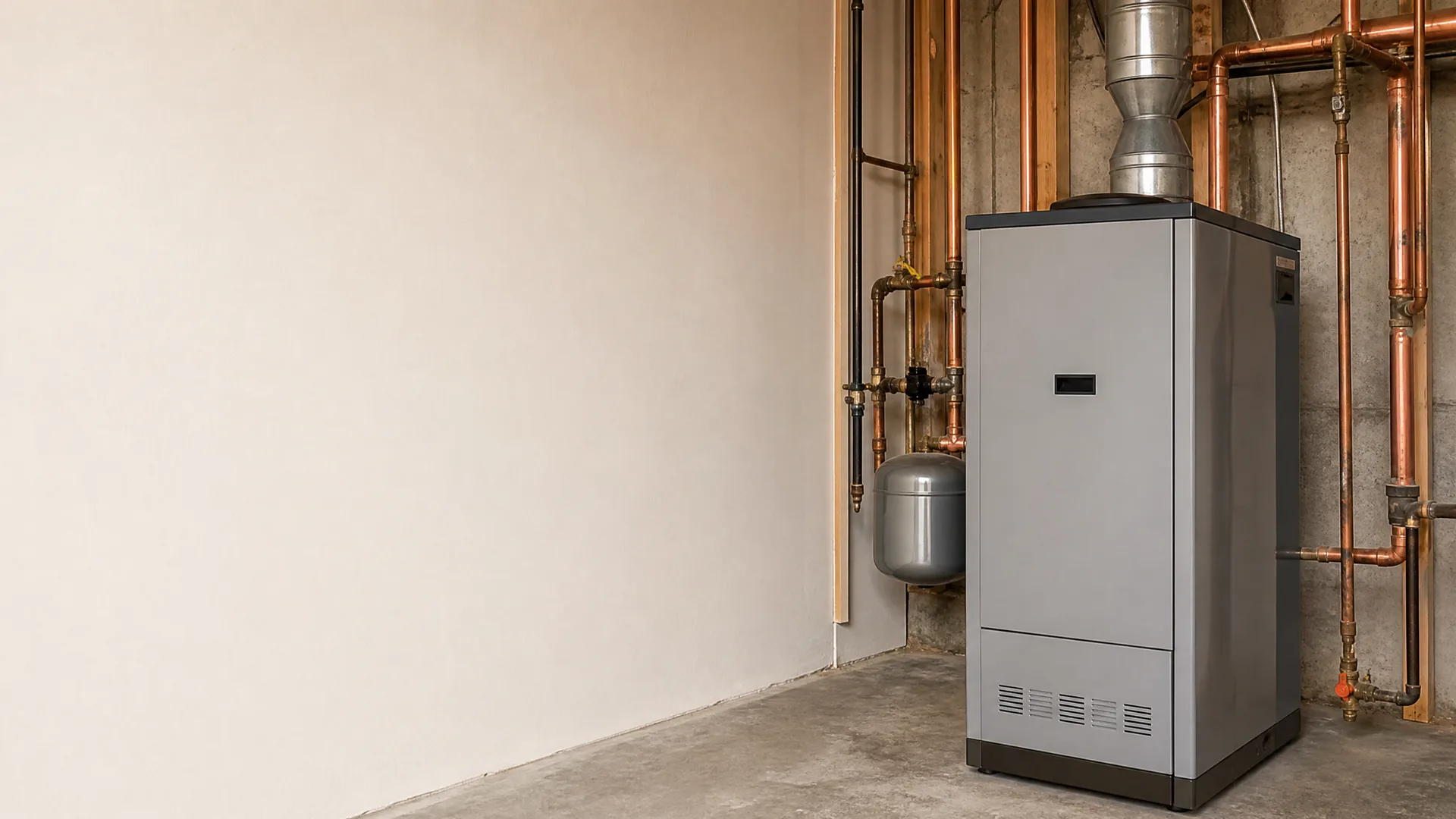
A dark grey floor-standing boiler on a concrete floor in front of a plywood wall, with copper pipes, valves, a pressure gauge, a flue pipe and a white expansion tank above it, beside a plain light-coloured wall.

Why pressure drops over time

A boiler loses a little water over months of running, through the automatic feed valve, a loose fitting, or a release through the pressure relief valve. As water leaves the system, pressure falls with it. If the gauge sits under 12 psi, the system needs water added back. Left alone, low pressure can cause the boiler to shut itself off or run poorly, which matters more here with gas prices tied to how long the burner has to run.

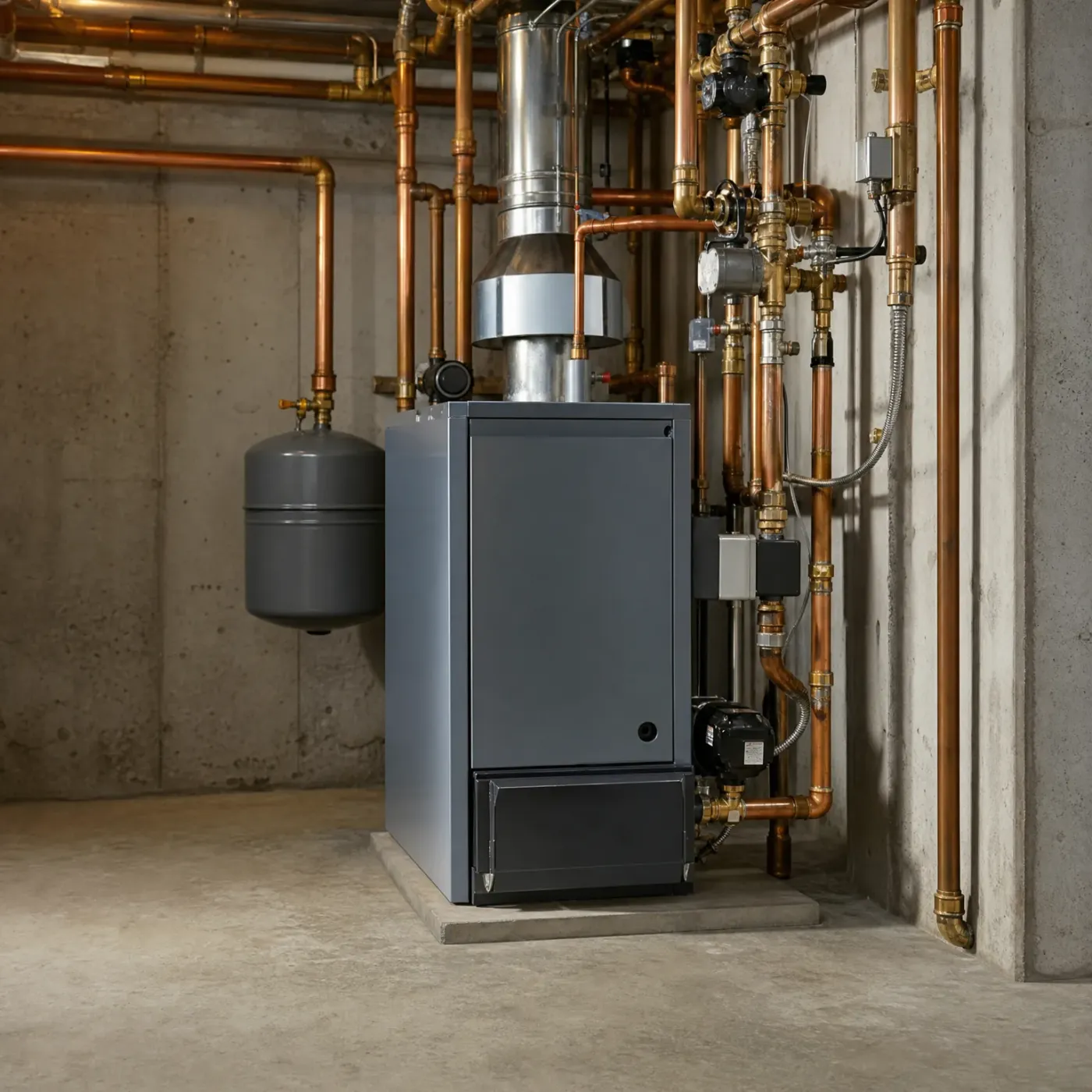
A gray boiler unit with a metal flue pipe stands in a basement corner, surrounded by copper piping and an expansion tank against a plain light wall and concrete floor.

What the gauge is actually reading

The gauge measures the pressure of the water filling the pipes and radiators, not the heat of the system. Cold water takes up less space than hot water, which is why pressure sits lower before the burner fires and climbs once the loop warms. A reading that creeps above 20 psi while running, or trips the relief valve, points to a feed valve stuck open or an expansion tank that isn't holding air the way it should.

Why does my boiler keep shutting off in the cold?

Low pressure trips the boiler before it can push heat through the house. You'll notice the radiators or baseboards staying cool, or the whole system cycling off within minutes of starting. Sometimes there's a fault code on the display, or a red light where there was a green one. Check the gauge. If the needle sits below 12 psi, that's why. Letting it ride low through an Alaska winter means the boiler works harder to satisfy the thermostat, and a house that heats with gas can't afford a boiler that's fighting itself to keep rooms warm when it's well below freezing outside.

A gray boiler on a concrete pad in a basement, connected to copper piping, valves, circulator pumps, a metal flue, and a wall-mounted expansion tank.

Pressure holding steady

The gauge sits in the marked range, the pump runs quiet, and every radiator in the house heats evenly. Water moves through the copper lines and fittings without a hiss or a drip anywhere along the run. This is what lets the system ride out an Alaska cold snap without a callback.
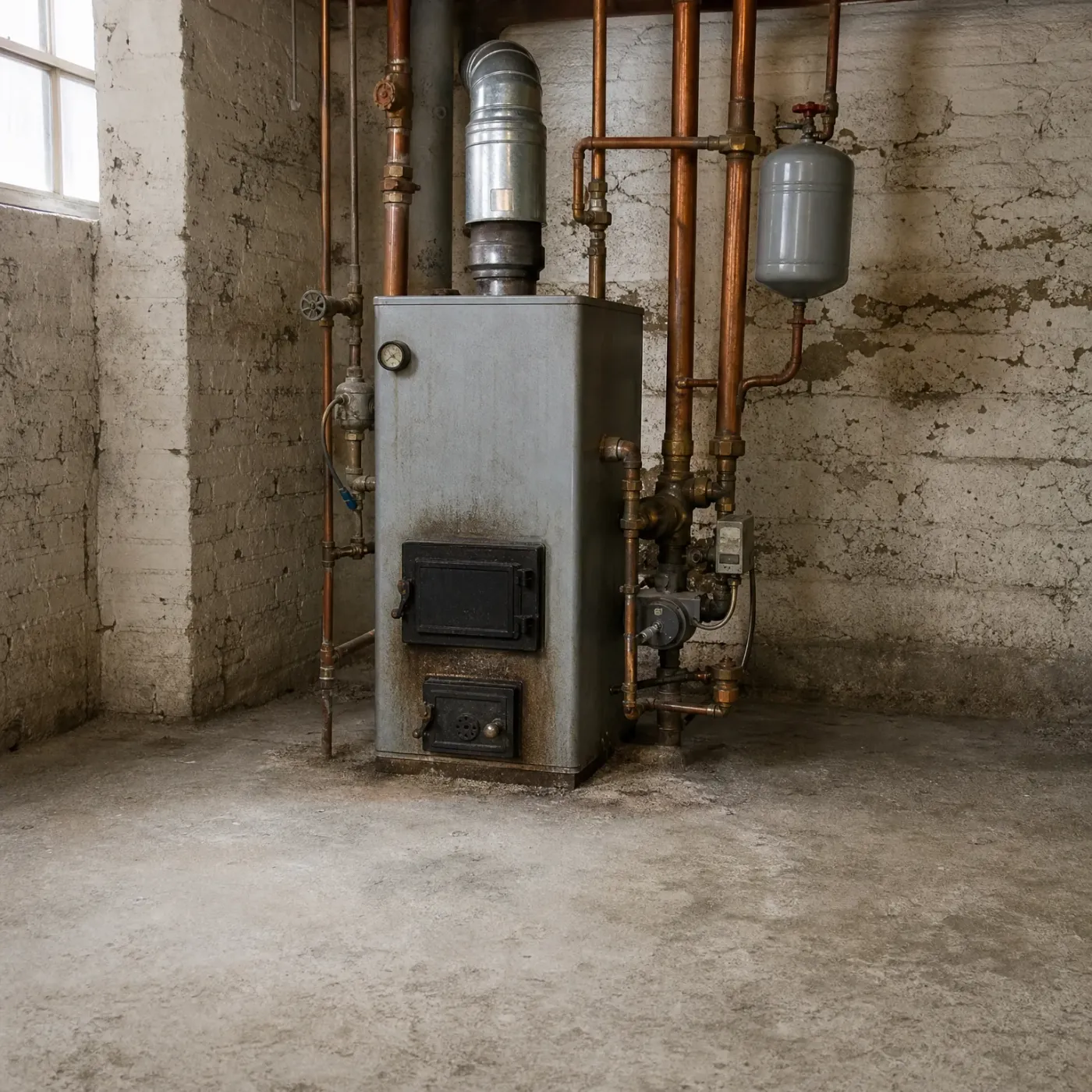

An old gray boiler with copper piping, a flue duct, pressure gauge and an expansion tank stands in the corner of a basement with painted masonry walls and a bare concrete floor.

Pressure falling off

The needle has slipped below the marked band and the boiler short-cycles or won't fire at all. A corner of the basement stays damp near a fitting or the relief valve, a sign of where the water's been going. Left alone, it's the kind of small loss that ends a cold night with no heat at all.

Low Pressure vs. High Pressure

Low pressure

  • The gauge reads below 12 psi cold, and the boiler may lock out before it fires at all.
  • Radiators near the top of the house, or the farthest from the boiler, stay cold while ones closer to it still warm up.
  • A drop of a few psi over a season is normal as a little water leaves through the feed valve or a fitting.
  • If the needle sits near zero, air has likely gotten into the system alongside the lost water, and the pump may run louder than usual.
  • Refilling through the feed valve brings the number back up, but if it falls again within weeks, something is still letting water out.

High pressure

  • A cold reading above 15 psi means the system is overfilled, and it will climb further once the boiler heats the water.
  • The pressure relief valve is built to open around 30 psi, and a reading that keeps pushing toward that line means it may discharge water onto the floor.
  • Overfilling usually happens right after someone bleeds a radiator or tops off the system and doesn't stop at the marked range.
  • A boiler running too high on pressure strains the seals and fittings over time, even if nothing fails outright that day.
  • Bleeding a little water out through a radiator valve brings the gauge back down, but it should settle and hold once you stop.
A woman in a gray turtleneck sweater stands by a window looking outside at snowy ground, with a dimly lit living room containing a sofa, shelves, lamp and a lit candle behind her.
A woman in a cream cable-knit turtleneck sweater stands in a warmly lit living room with a fireplace and shelves behind her, looking out a window toward snow-covered trees and a railed deck.
A woman in a cream knit turtleneck sweater stands by a window looking out at snow, with a lit fireplace, sofa and lamp in the room behind her.
A woman in a gray knit sweater sits by a window looking out at falling snow, with a dimly lit living room containing a sectional sofa, pillows, a lamp and houseplants behind her.

A pro who works on boilers

After this form, you can stop searching for a boiler pro.

Asking costs nothing, and the choice to hire stays yours.

Bleeding a radiator yourself

If one radiator stays cool at the top while the bottom heats up, there's air trapped inside it, and you can let that out with a radiator key in a few minutes. Turn off the boiler first, hold a cloth under the valve, and turn the key slowly until water comes out in a steady stream instead of a hiss. Each time you do this, you're releasing a little pressure along with the air, so the gauge will often read lower afterward. That's normal, and it's the reason a bleed is usually followed by topping off the system through the feed valve. Skip the bleed and that radiator stays half cold all winter, no matter what the pressure gauge says.

Repressurizing through the feed valve

Topping off the pressure is a separate step, done at the filling loop or feed valve near the bottom of the boiler. With the boiler cold, open the valve slowly and watch the gauge climb, then shut it the moment you hit 12 to 15 psi, since it's easy to overshoot. If the needle won't settle, or climbs past 15 and keeps going, that points to something past a simple top-off, maybe a feed valve that isn't sealing or a leak somewhere in the system. Alaska's gas rates and electric rates both run high, and a boiler that's cycling on low pressure or venting through the relief valve is burning fuel without heating the house.

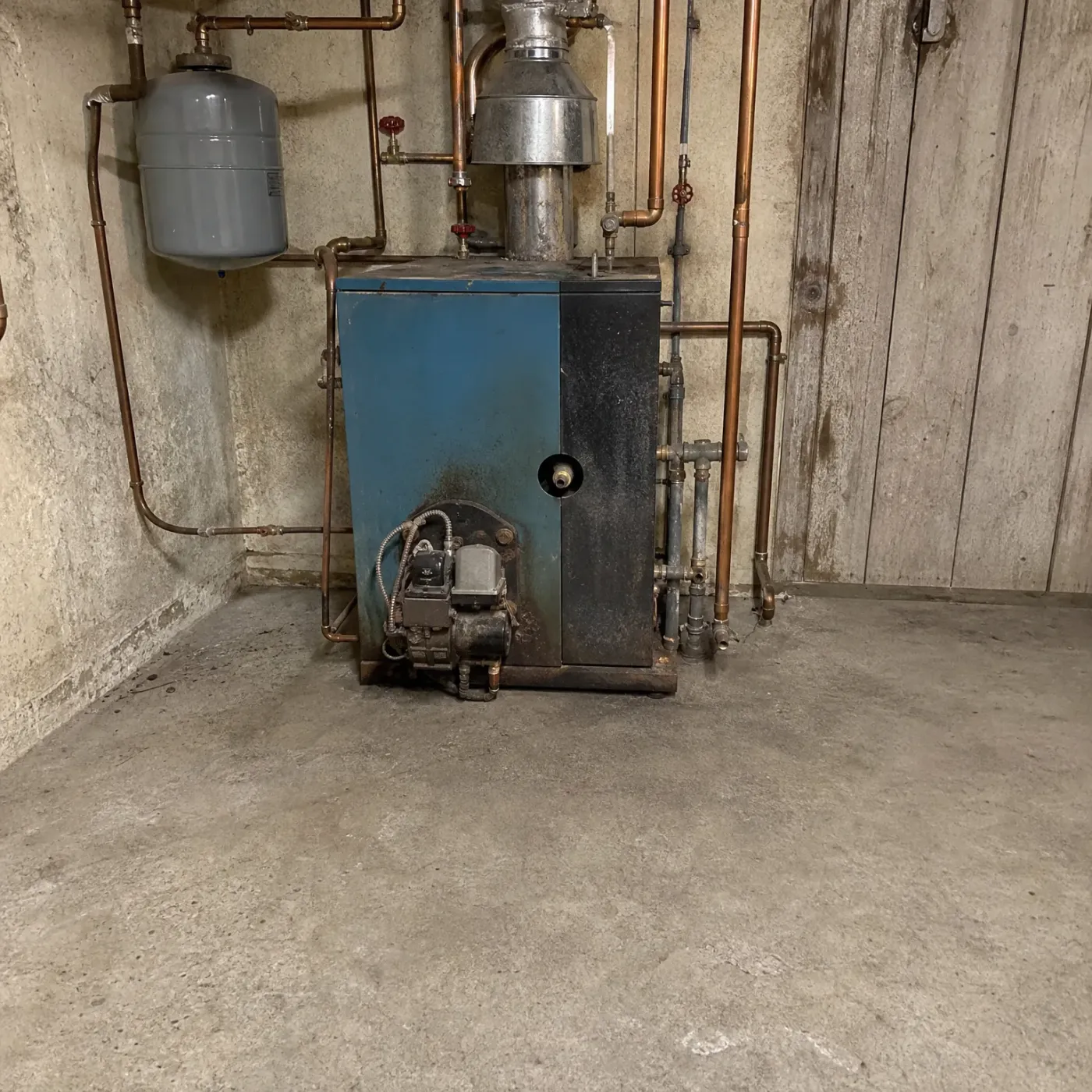
A blue and black boiler with a burner unit, flue, expansion tank and copper and steel piping stands on a concrete basement floor against a concrete wall and wooden plank partition.
Before you get your boiler maintenance
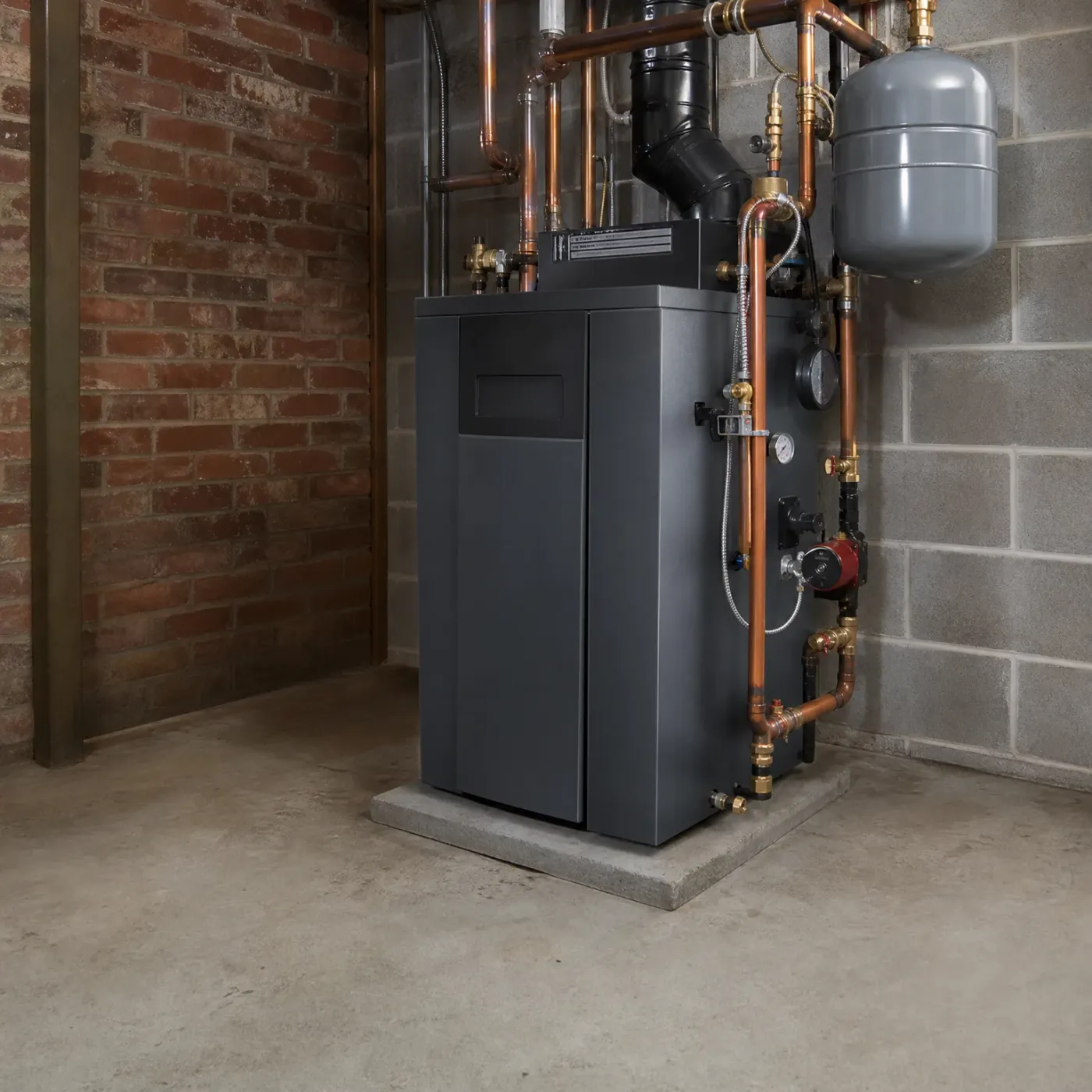
A dark gray floor-standing boiler on a concrete pad in a basement, connected to copper piping, valves, a circulator pump, a gauge, a black flue pipe, and a gray expansion tank, with a brick wall on the left and concrete block wall behind.
After you get your boiler maintenance

A pressure drop you caught early

You noticed the gauge creeping down and got it looked at before the boiler locked out. A quick top-up and a check of the valves, and the system runs the way it should the rest of the winter.

Get a boiler pro

A pressure drop you didn't catch

The gauge sat low for weeks before anyone noticed, and now a room or two won't heat at all. Finding the leak and refilling the system takes longer once it's gotten to this point.

Get a boiler pro

Winter nights average 9°F statewide

At 9°F on a winter night, your boiler is running long stretches without much of a break. That kind of steady run shows up any loss of pressure fast, since a system working that hard needs every radiator getting water. Worth a look at the gauge before the cold sets in for good.

NOAA nClimDiv 1991-2020 county normals weighted by homes

A woman in a cream cardigan and jeans stands with one hand raised facing an open front door of a gray horizontal-siding house, with a black lantern wall light, a potted shrub with yellow flowers, and a stone-faced porch column.

Keep an eye on the gauge, and you'll catch most problems before they start

12 to 15 psi cold, rising a little once the system runs. That's the number to remember, and checking it takes less time than making coffee. A boiler that holds that range through an Alaska winter is a boiler doing its job, and a glance at the gauge once a month is usually all it takes to know where you stand.

If yours is drifting, or you've already seen a radiator stay cold while the rest of the house warms up, you don't have to sort out whether it's a valve, a leak, or something at the feed line. Answer a few questions about your system and a contractor who works on boilers like yours in your area will follow up, so you're not the one tracking down who's available and who isn't.

Interior corner of a room with a window and sheer curtain at left, a gray upholstered sofa with a cushion at right, and a round wooden table holding stacked books and a round vase with an olive branch.
A gray boiler unit with a control panel sits on a concrete pad in a basement room with dark concrete block walls, connected to copper and metal piping, a gray expansion tank, and an insulated flue.

The right pro for this job

Send it once and finding someone is no longer on you.

Step 1 of 3: Equipment