Alaska Boiler Directory

Why your boiler is leaking water in Alaska

Step 1 of 3: Equipment

A leaking boiler usually comes down to pressure or a worn seal. Check the pressure relief valve first. If it's letting water out, the system pressure is too high, or the valve itself has gone bad and needs replacing. The expansion tank can also fail, which sends excess pressure straight to that valve. Another common spot is the circulator pump, where the seal wears out after years of running and starts weeping water around the pump housing. Fittings and valves loosen slightly as the system heats and cools through the winter, and a joint that was fine last year can start dripping this year. None of this is something to leave alone. Water pooling near the boiler can reach the electrical connections or the gas line, and a boiler losing water will lose pressure and eventually shut itself down or stop heating properly, which matters with how cold it gets here.

A woman in a cream cowl-neck sweater sits by a window with snow outside, in a dimly lit living room with a sofa, lit lamp, mirror, candles and a fireplace.
A woman in a gray turtleneck sweater sits beside a large window looking out at snow-covered evergreen trees, in a dimly lit living room with a lit fireplace, lamps, couch and houseplant.
A woman in a cream turtleneck sweater stands beside a large window with snow-covered ground and bare trees outside, in a dimly lit living room with lamps, a sofa and framed art.
A woman in a grey cowl-neck sweater stands indoors near a window, looking out at falling snow, with a lamp, framed picture and couch in the warmly lit room behind her.

Is the puddle near the boiler actually something to worry about

A damp spot on the floor, a drip from the pressure relief valve pipe, or rust forming around a fitting are all signs water is getting out somewhere it shouldn't. You might notice the boiler cycling more than it used to, or a faint mineral smell near the base of the unit. Sometimes it's just a few drops after the heat kicks on. Left alone, that small leak corrodes the fittings around it and can reach the electrical connections nearby. With gas heat and power costs what they are here, a boiler that keeps losing pressure also has to work harder to keep the house warm through winter, which shows up on the bill before anything else does.

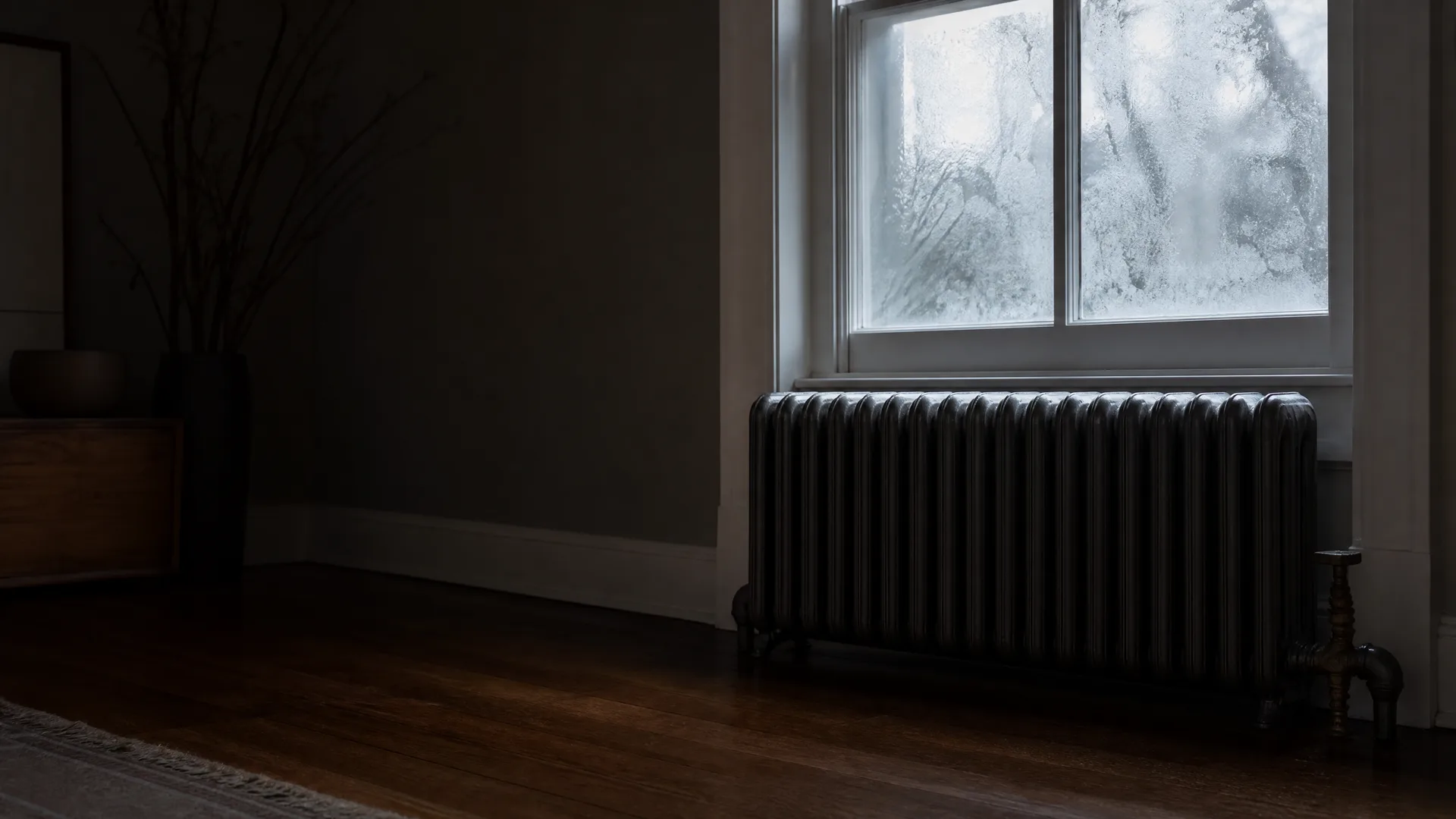
A cast-iron column radiator stands beneath a frosted window in a dim room with dark walls, a wood floor, and a vase of bare branches on a low cabinet at left.

You get up before the sun, the way you do all winter, and the living room is cold until the radiator starts to tick and knock under the window. That's when you see it: a thin skin of ice on the inside of the glass, and below the radiator, a dark ring spreading on the floor where water has been dripping down the leg. You crouch down and touch it. Still wet, not just old residue. The cast iron is warm on top but the fitting near the bottom is damp, a slow bead working loose and running down to the floor. Outside it's well below freezing. Losing pressure now, on the coldest morning of January, is not something you want to find out about by accident.


Valve Drip Or Tank Problem

Pressure Relief Valve

  • If the leak is steady and comes from the pipe near the valve, the valve is likely doing its job because the system pressure is too high.
  • A contractor can reset the pressure and check whether the valve reseats properly once it drops back to a normal range.
  • If the valve keeps dripping after the pressure is correct, the valve itself has worn out and needs to be swapped.
  • This is usually a quicker fix, since the valve threads into a known spot and the part is standard.
  • Left alone, a valve stuck open wastes water and can drop your system pressure low enough that the boiler won't fire.

Expansion Tank Or Seal

  • If the leak shows up as rust or a slow weep around a fitting, a seal or gasket inside the boiler has likely given out.
  • A waterlogged expansion tank can push pressure higher than the valve is meant to handle, which shows up as leaking even when the valve is fine.
  • Checking the tank means draining it and testing the air charge, not just looking at it from outside.
  • A worn seal often means part of the boiler has to come apart to reach it, which takes longer than a valve swap.
  • If the leak has been going on long enough to rust a fitting, the metal around it may need a closer look before anything gets sealed back up.
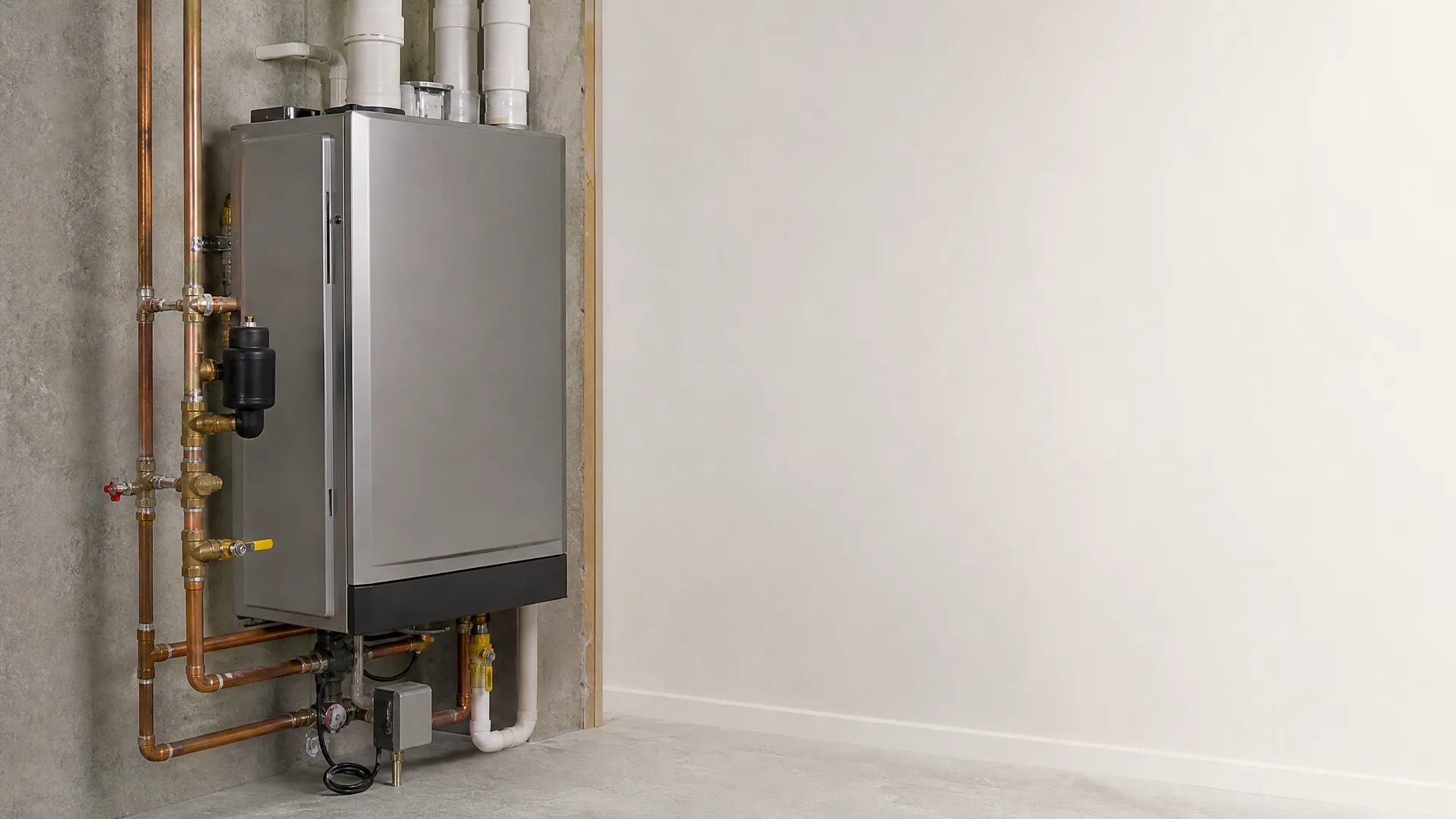
A wall-mounted grey boiler with copper pipework and white flue pipes installed against a concrete wall in an empty room with a plain pale wall to the right.

Why pressure builds in winter

A boiler that runs hard all winter cycles water through the same pipes and fittings night after night, and each cycle heats and cools the system. That expansion and contraction works at any joint that was never quite tight. A fitting that held fine in August can start to weep in January once the burner is firing for hours at a stretch. Alaska's long heating season puts more hours on a boiler than almost anywhere else, which is why slow leaks here tend to show up at the fittings first.

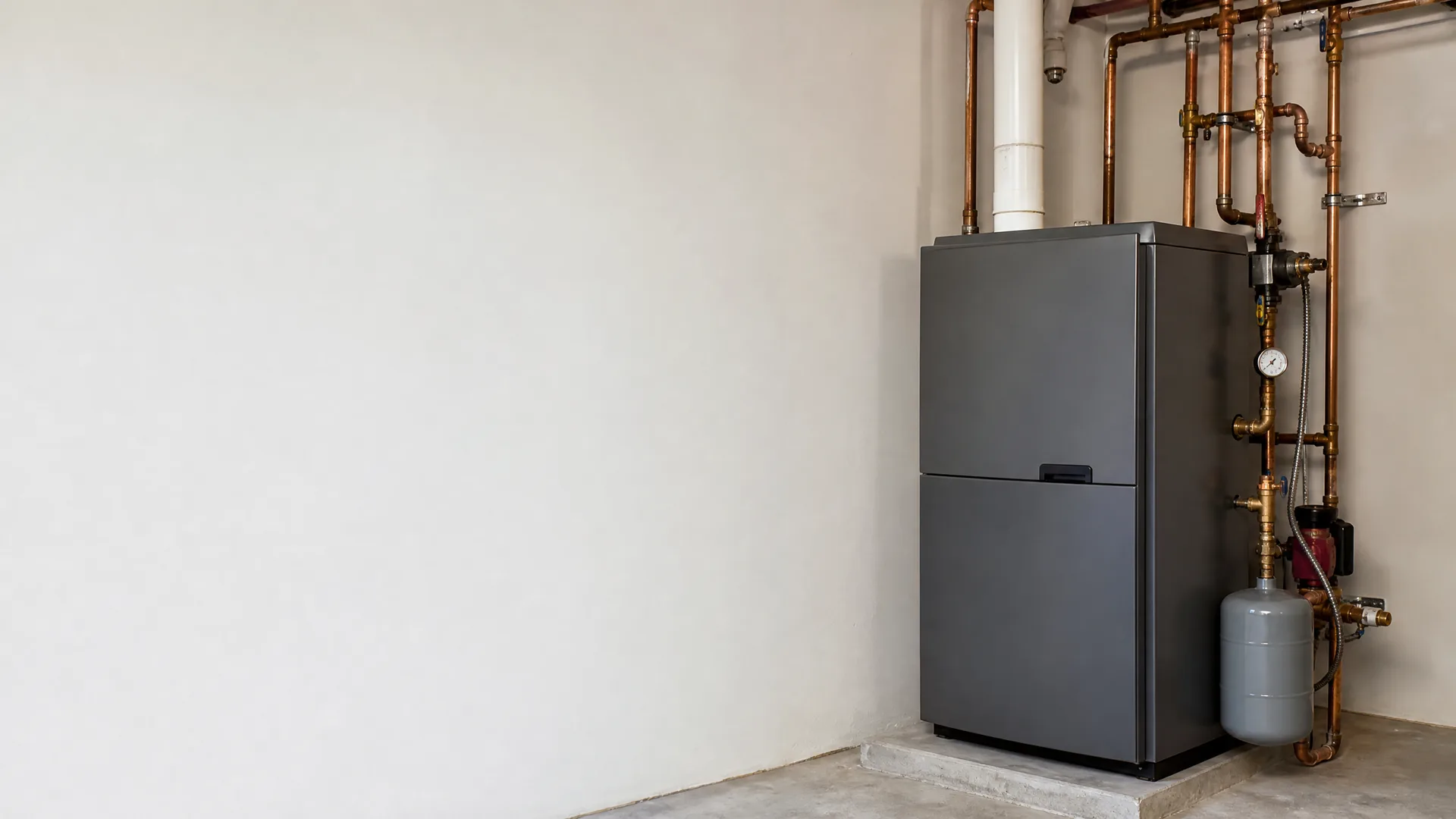
A dark grey boiler unit stands on a concrete pad against a plain light wall, connected to copper pipes, a pressure gauge, a pump and a grey expansion tank.

What the expansion tank does

Water expands as it heats, and the expansion tank gives it somewhere to go so pressure doesn't spike. Inside is a rubber bladder holding air on one side and system water on the other. If that bladder fails, water fills the whole tank and has nowhere left to absorb the expansion, so pressure climbs and pushes water out through the relief valve. A tank that feels full and heavy instead of mostly empty on top is a sign the bladder has gone.

What part inside the boiler actually fails first and causes the leak

You want to know what actually breaks before you call someone, not just where the water shows up. Knowing the part that usually goes first tells you whether this is a quick fix or something that's been building for a while. In a house that runs its boiler hard all winter, certain parts take more punishment than others, and one of them tends to fail before the rest.

The circulator pump seal is usually the first thing to go

The circulator pump moves hot water through the system every time the boiler fires, and the seal around its shaft takes that motion thousands of times over a winter. Once it wears, water seeps out slowly around the pump housing rather than spraying. The other common early failure is the gasket on the boiler's cast iron sections, which can weep after enough heating and cooling cycles. Both are wear parts, not defects, and both get worse the longer the system runs without attention. A contractor who works on boilers through the winter here can usually tell which one it is by where the water collects and how warm it is when they find it.

  1. Water pressure climbs as the boiler heats and the water expands.

  2. The expansion tank should absorb that extra pressure and volume.

  3. A waterlogged tank or failed bladder sends the pressure higher instead.

  4. The pressure relief valve opens to release water once it's reached a dangerous psi.

A bearded man in a plaid flannel shirt stands in a kitchen looking out a window toward snow-covered shrubs, with a steaming mug on the windowsill and potted plants on a shelf behind him.
A smiling man with dark curly hair in a navy t-shirt sits on a gray couch indoors, with a large-leafed plant and a window in the background.
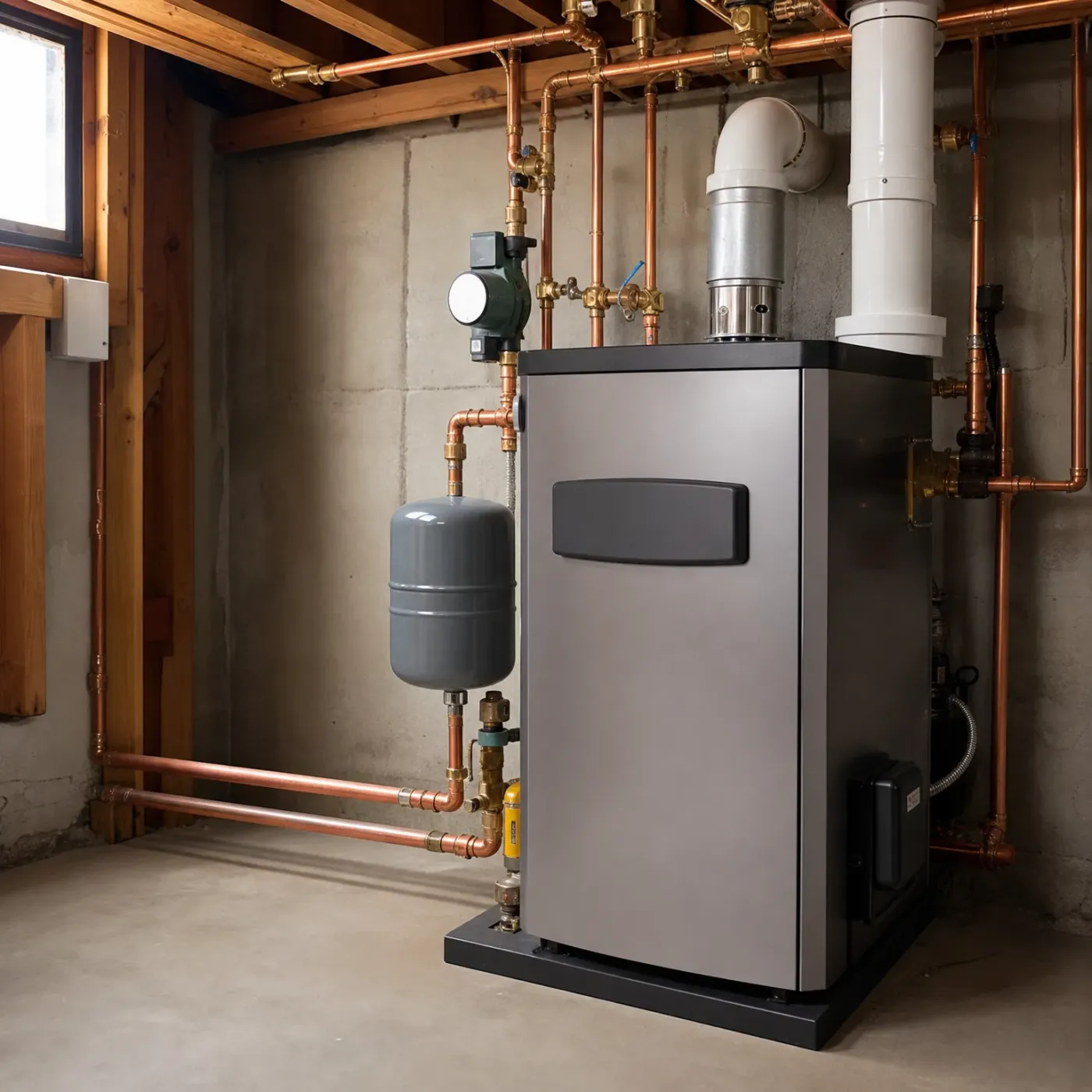
A gray boiler on a black base in a basement with concrete walls, connected to copper piping, a circulator pump, a gray expansion tank, and white and metal flue vent pipes.

Get the right pro for your boiler

Your request stays with one local pro.

Describe your boiler job, and a local pro who handles it gets in touch.

Reach a local pro

Sending the form costs nothing.

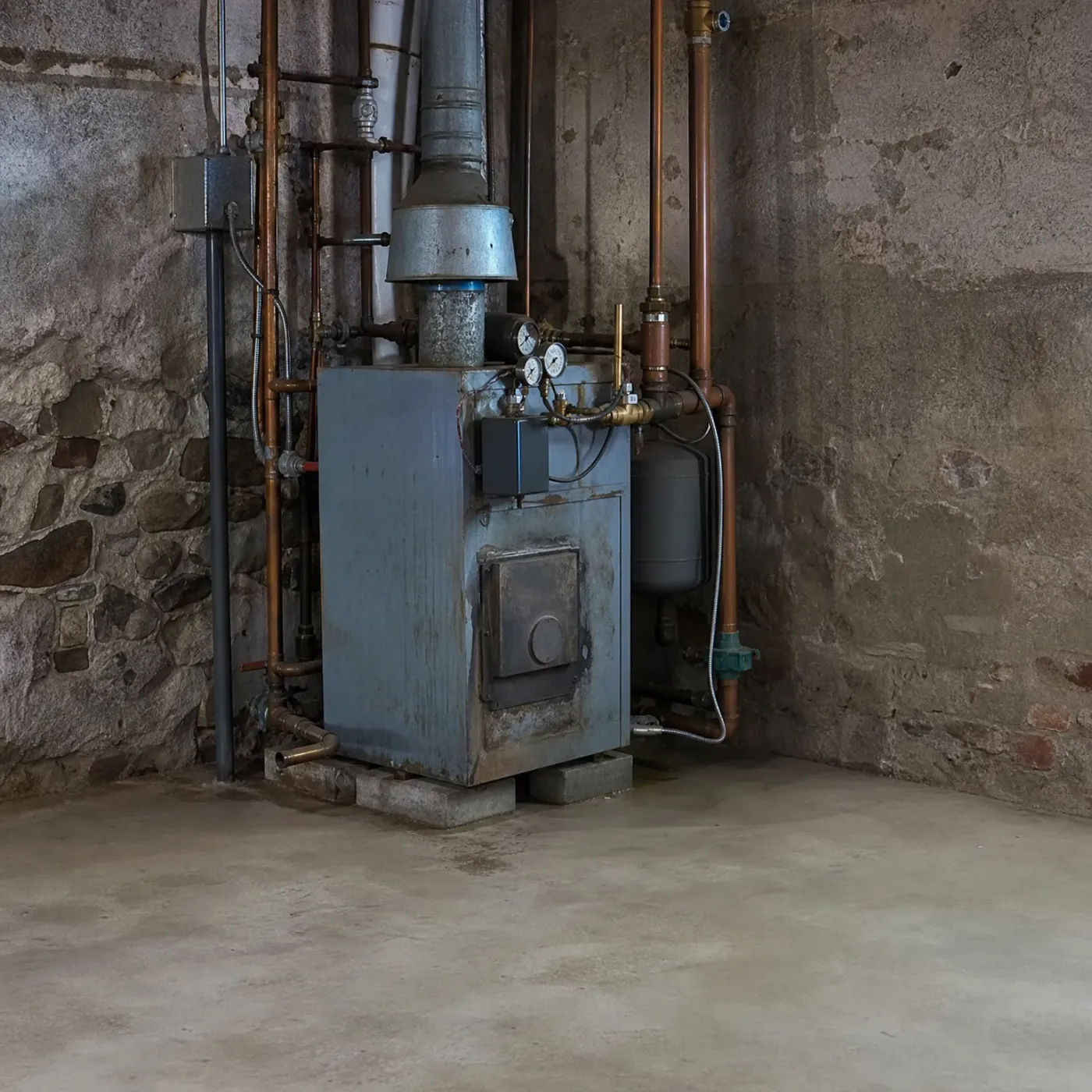
An older gray boiler with a metal flue, copper piping, pressure gauges and an expansion tank sits on concrete blocks in a basement corner with stone and concrete walls.
Before you get your boiler repair
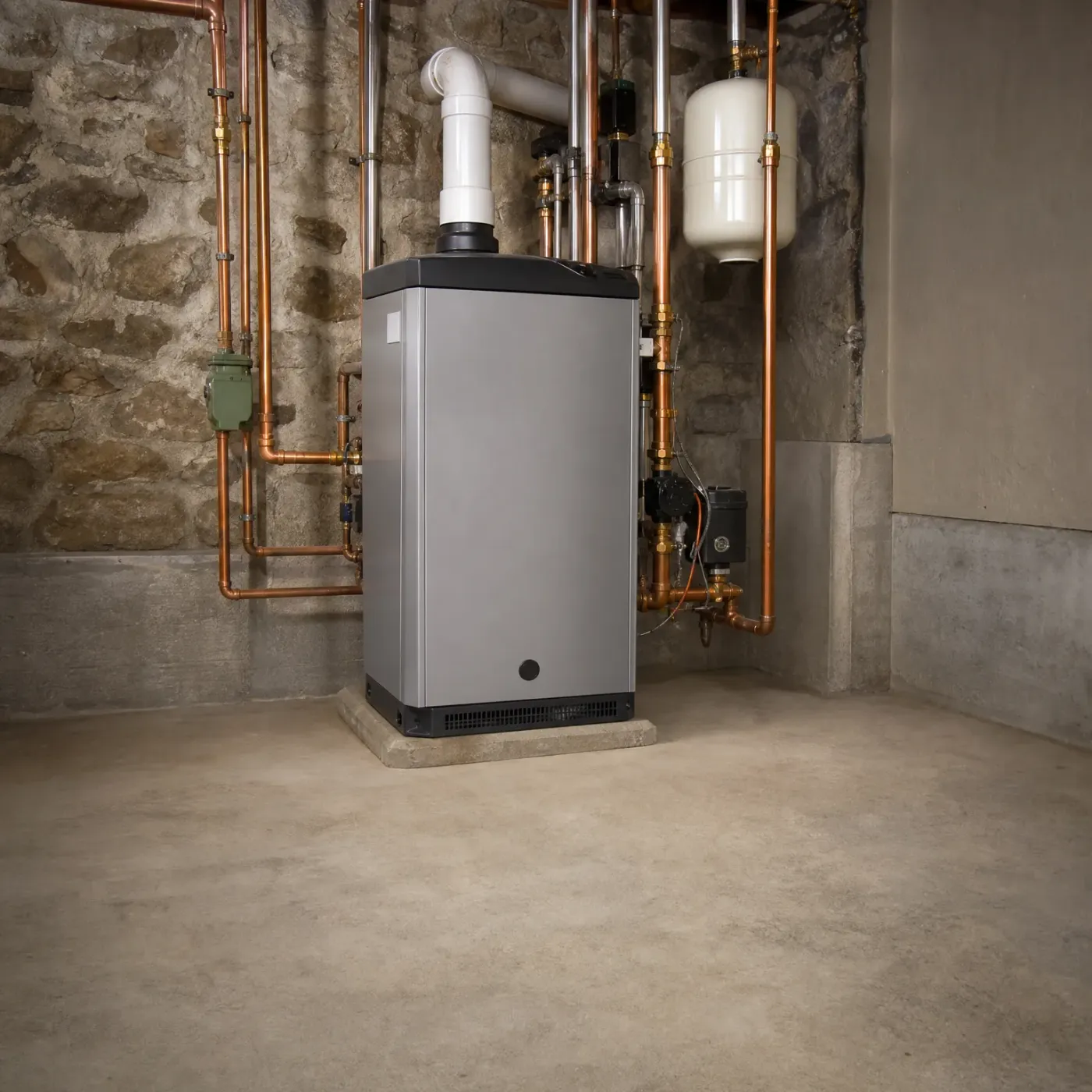
A gray floor-standing boiler on a concrete pad in a basement, connected to copper pipes, a white expansion tank, and a white PVC vent against a stone and concrete wall.
After you get your boiler repair
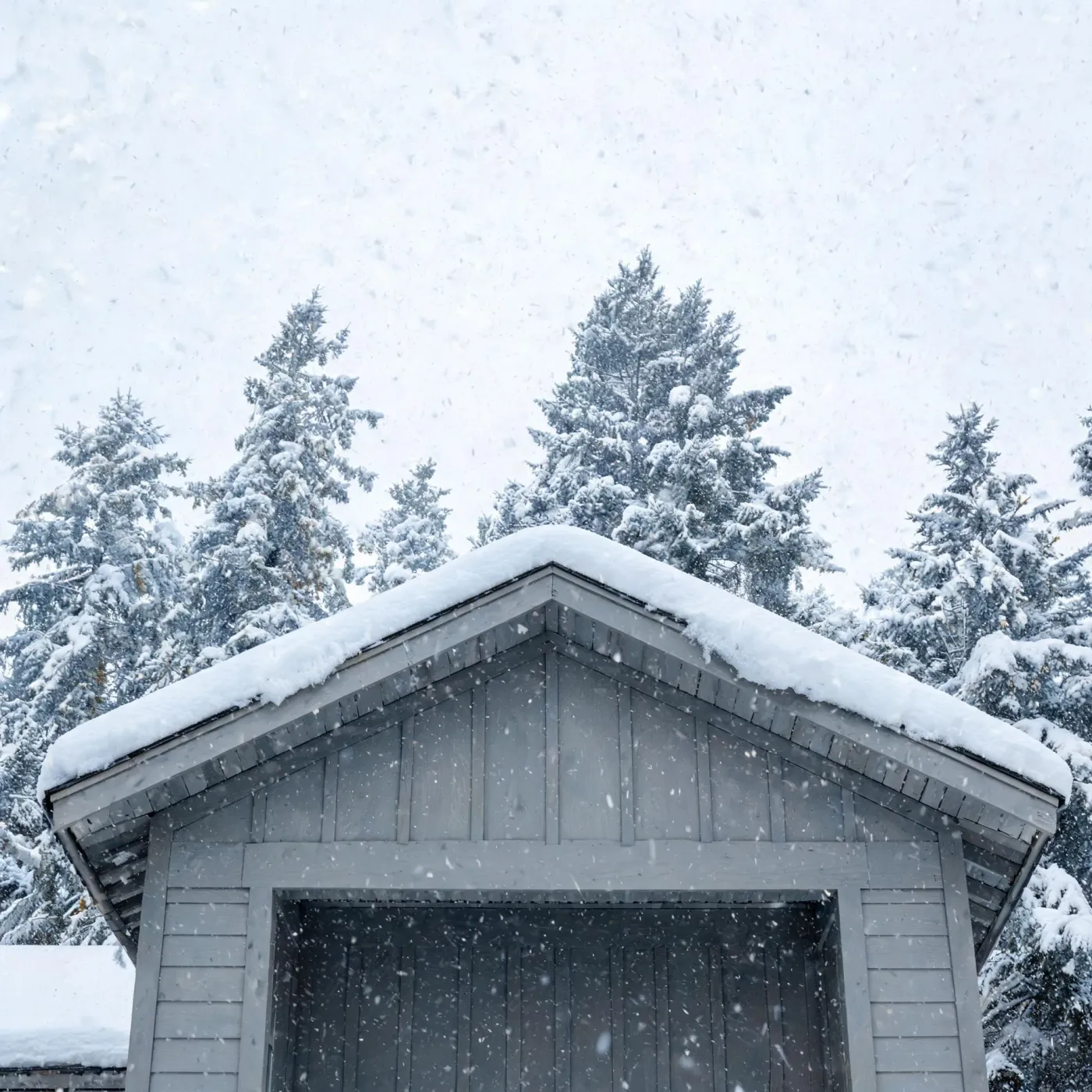
Gable end of a gray wood-clad building with a snow-covered roof and open doorway, backed by snow-laden conifers during falling snow.

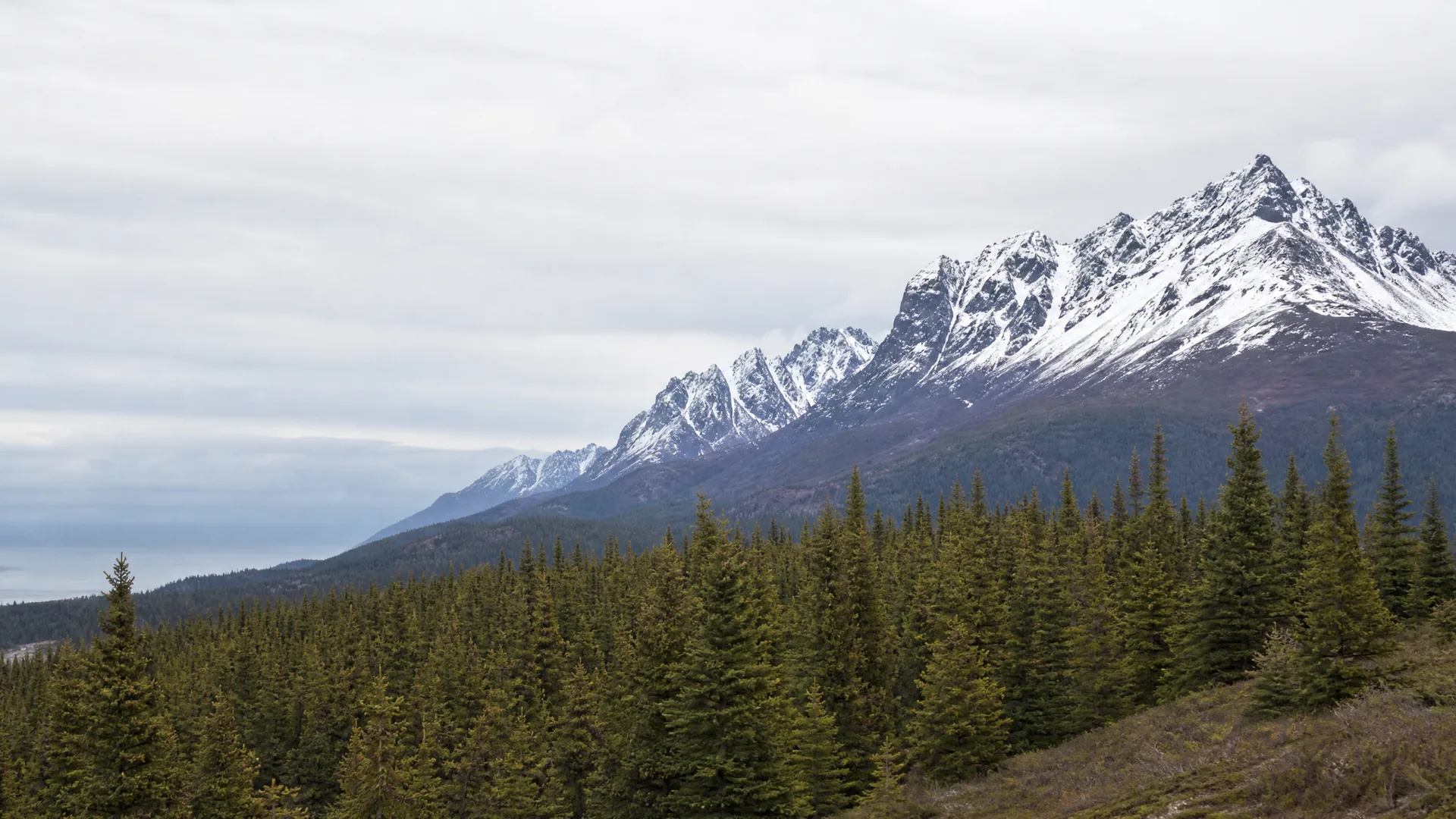
Statewide, winter nights average 9°F. At that temperature, your boiler isn't cycling on and off a few times a day, it's running long stretches just to keep the house livable, and the water inside stays under pressure for hours at a stretch instead of easing off between cycles. A seal or gasket that could hold at a lower, steadier pressure gets worn down faster. If you've got a small drip or a damp spot you've been watching, cold nights like these are when it tends to turn into a steady leak, since the system is working harder and longer to keep up. Source: National Weather Service.

NOAA nClimDiv 1991-2020 county normals weighted by homes

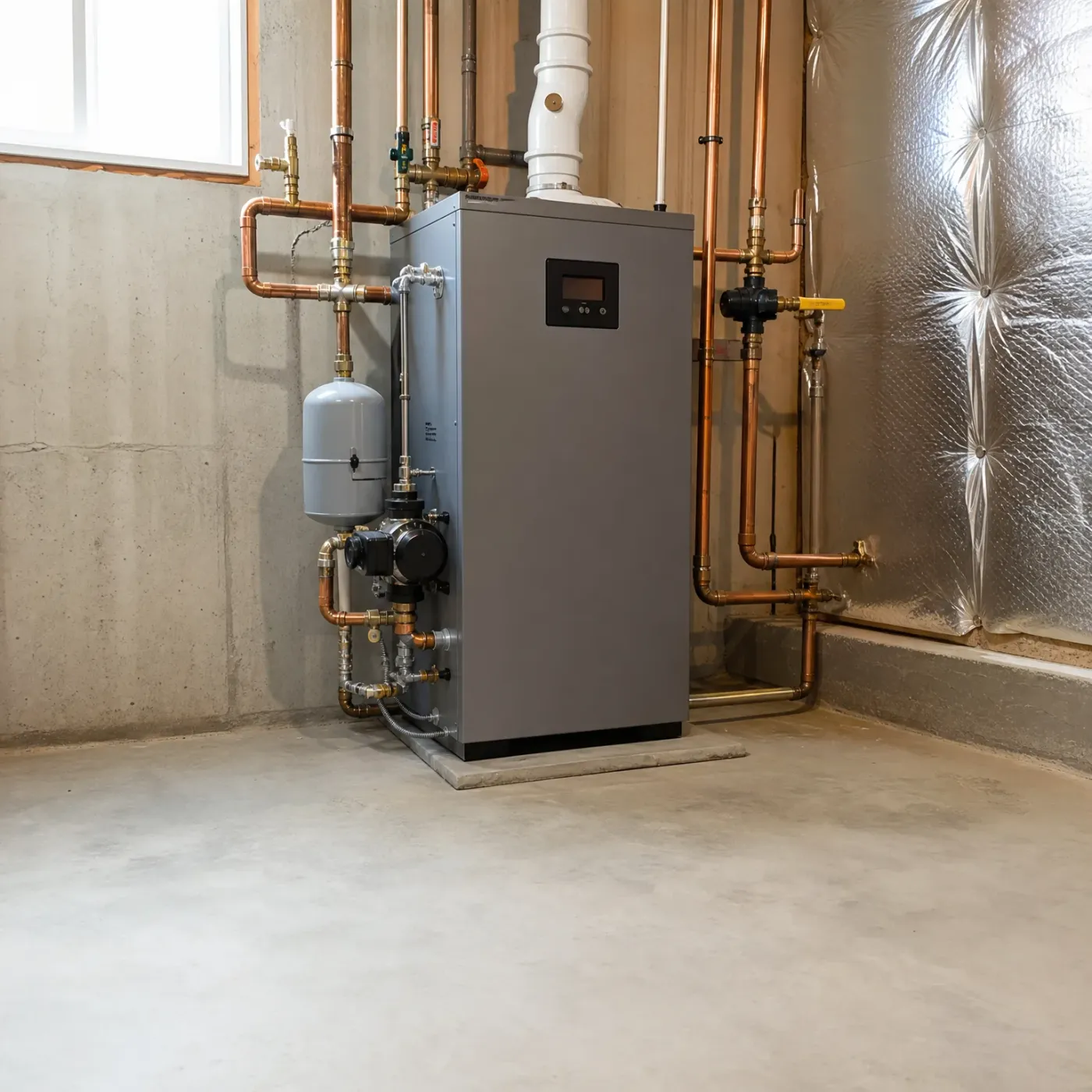
A gray boiler unit with a digital display stands on a concrete basement floor, connected to copper piping, a gas valve, a circulator pump and an expansion tank, beside a concrete wall and foil-faced insulation.
A sealed system like this holds steady pressure winter after winter when the expansion tank and relief valve are doing their job.
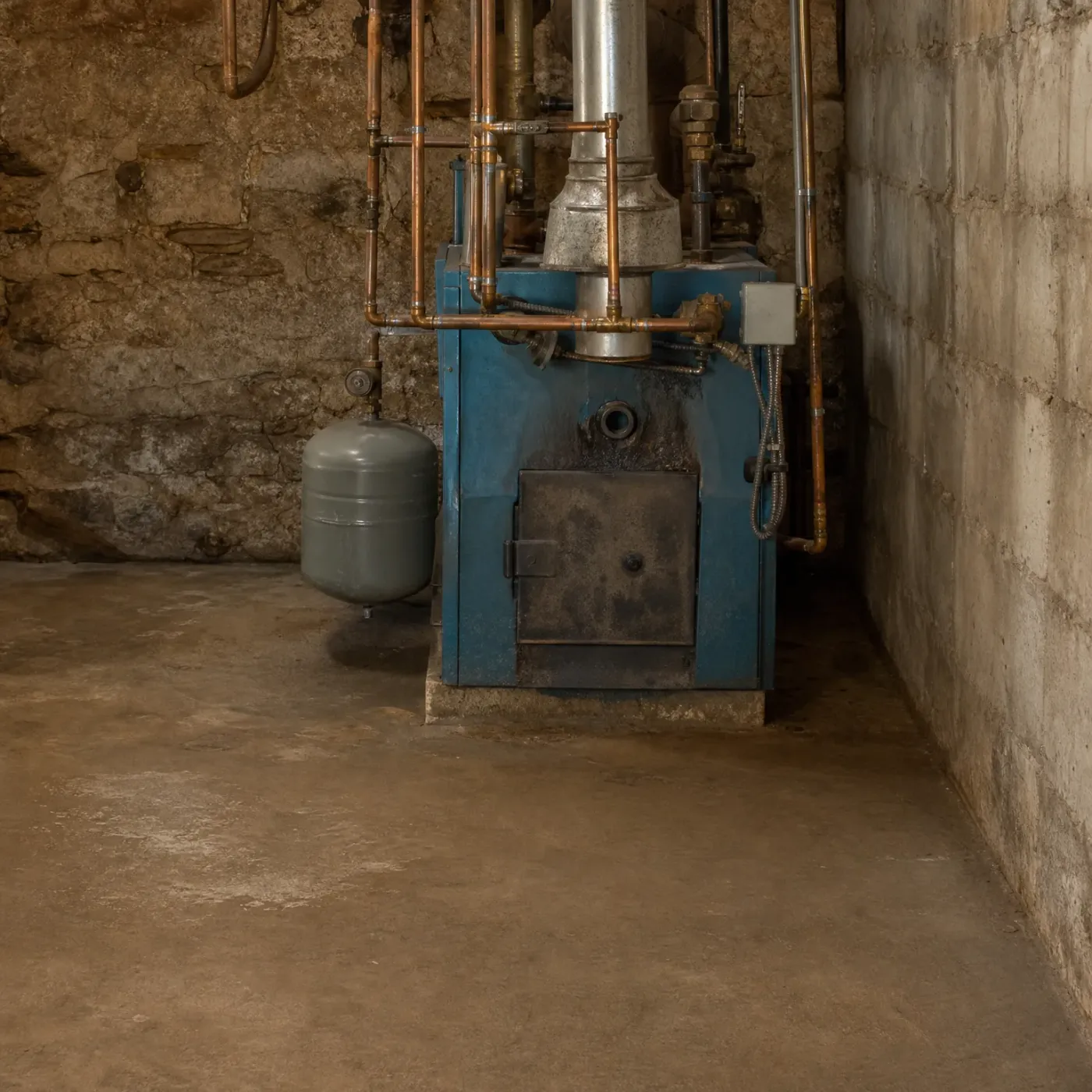
A blue cast-iron boiler with a metal flue pipe and copper piping stands against a stone and concrete block basement wall beside a gray expansion tank on a bare concrete floor.
A cast iron boiler this worn often leaks at the access door or a fitting that's given out after years of hard runs.

Where the water actually starts

  • Mineral and sediment buildup inside the boiler block can crack a fitting slowly before any drip shows up outside.
  • A circulator pump leaks at the seal first, usually around the bolts or the flange where it bolts to the boiler.
  • Corrosion inside a cast iron section starts on the inside and only shows up once it's eaten through to the outside.
  • Gaskets at the access door or the heat exchanger shrink and harden over years of heating and cooling, then start weeping.
  • Soldered joints on copper pipe fail where the solder itself has thinned, not usually along the pipe wall.
  • A leak at the low water cutoff often means the float or probe inside has fouled, not that the part itself cracked.

Most leaks don't start where you find the water. By the time you see a drip, something upstream has already been failing for a while. A circulator pump is a good example. The seal around the shaft wears first, so water shows up at the bolts or the flange long before the pump itself quits running. Cast iron sections do the same thing in reverse: corrosion eats from the inside out, so the metal looks fine right up until it isn't. Gaskets at the access door or around the heat exchanger go through a heat and cool cycle every time your boiler fires, all winter long, and that's what dries them out and shrinks them until they start weeping instead of sealing. Copper pipe is usually fine; it's the solder joining it that goes first, thinning out at the joint while the pipe on either side stays sound. Even sediment plays a part here. Minerals building up inside the boiler block put stress on a fitting long before that fitting ever shows a drop of water outside the casing. A low water cutoff is the odd one out. When that leaks, it's rarely the part itself that's broken. More often the float or probe inside has fouled with buildup, which throws off the reading and the seal both. Knowing which of these you're dealing with changes what gets fixed and what gets replaced, and a contractor who works on these all winter can usually tell which one it is by where the water shows up first.

Winter nights average 9°F statewide

At 9°F, your boiler holds a long, steady run instead of short bursts, so the water inside stays under pressure for hours at a time. That steady strain is what pushes a weak seal or an already-stressed relief valve toward failing where it sits.

NOAA nClimDiv 1991-2020 county normals weighted by homes

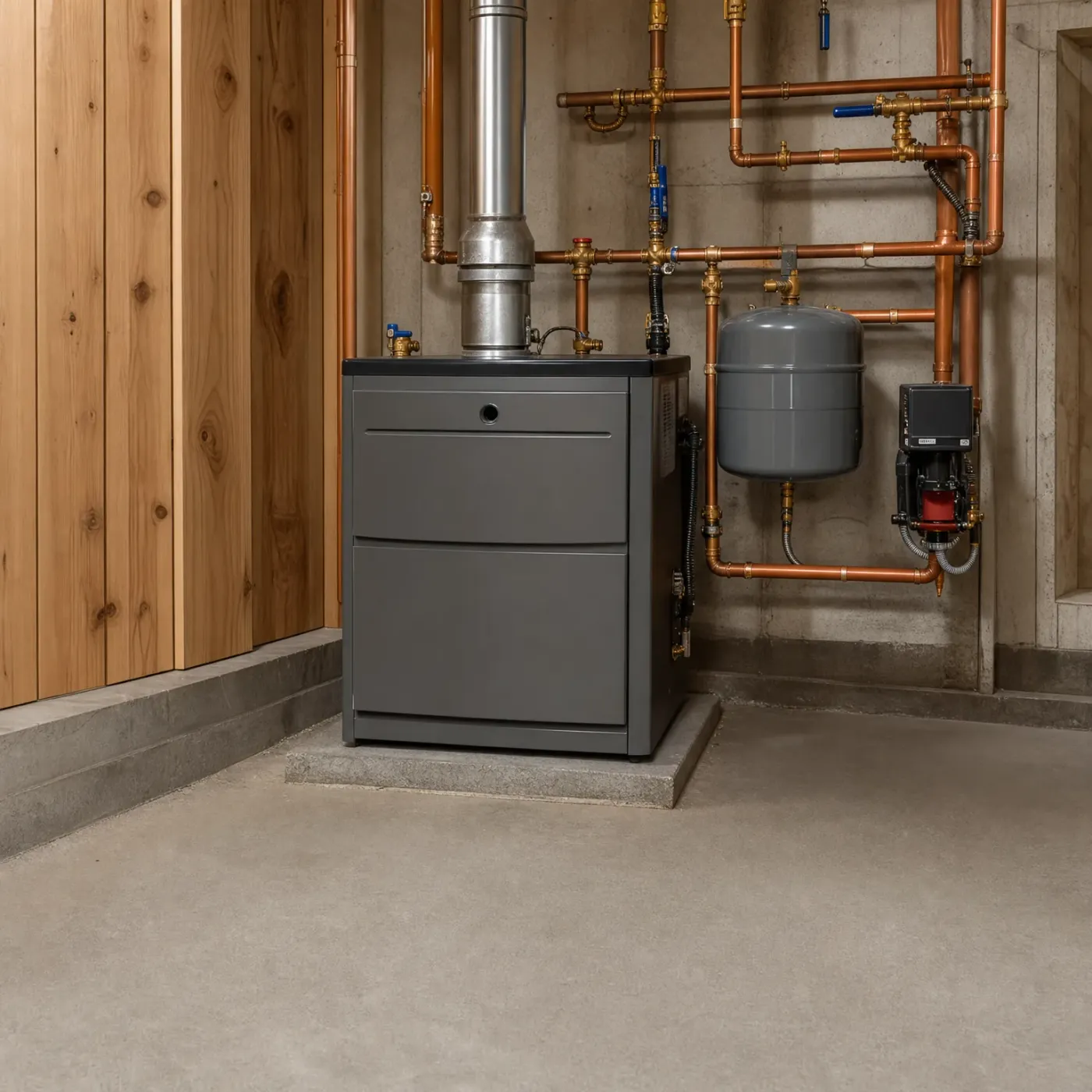
A gray boiler on a concrete pad in a basement, with a metal flue pipe and copper piping, brass valves, a gray expansion tank and a circulator pump mounted on the concrete wall beside wood paneling.

Running normal

The flue draws steady, the pump moves water through the pipes without a sound, and the gauge holds where it should. No drips at the floor, no rust forming at the fittings. This is a boiler doing exactly what it was built to do, all winter long.

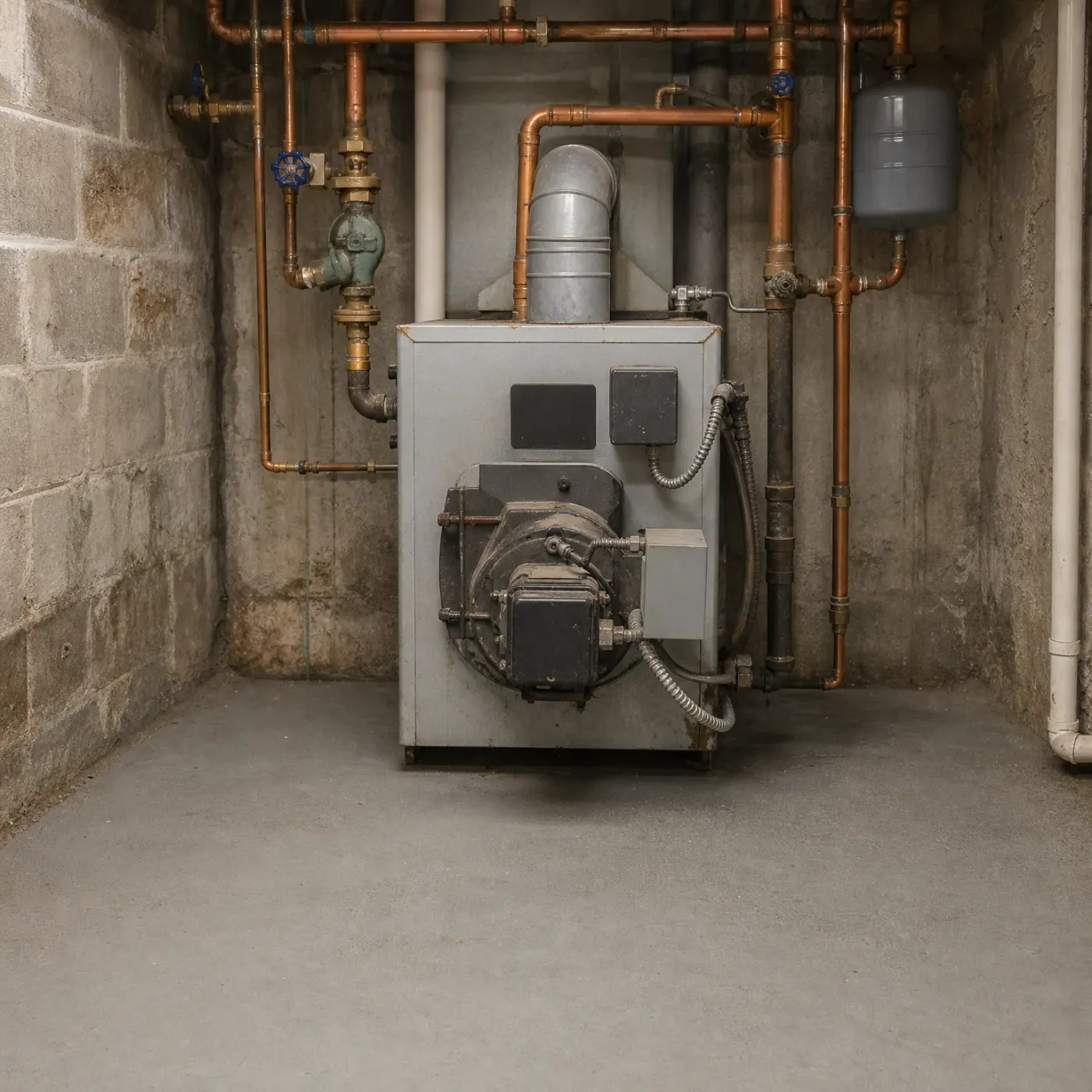
A gray boiler with a flue pipe and burner unit stands against a concrete block basement wall, surrounded by copper and steel piping, valves, and a gray expansion tank, on a bare concrete floor.

Losing water

Water sits at the base, a fitting shows rust starting to bloom, and the valves above have been doing more work than they should. Left alone through a long Alaska winter, a small weep at a brass fitting turns into a fitting that lets go.

A woman in a cream sweater and jeans stands in the open doorway of a white stucco house, holding the dark door, while a man in a dark quilted jacket seen from behind walks toward the entry past potted plants.

A leak now is cheaper than a leak in January

Most leaks start small. A slow drip at the relief valve, a little rust at a fitting, a few drops where the circulator pump bolts on. None of that fixes itself, and a boiler that keeps running long stretches at 9°F outside won't let a weak spot heal on its own.

You already know not to let a small problem sit. Getting matched with a contractor means one licensed company local to Alaska reaches out to you, not a handful of them competing for your callback. Someone who works on boilers all winter here knows which part tends to go first in a system like yours, and can tell you, once they've seen it, whether you're looking at a quick fix or something more.

Interior corner with a beige sofa holding a dark green and a light cushion and a textured throw, a potted small-leaved tree beside a white-framed window, and a dark shallow bowl on a wooden coffee table in the foreground.
Interior room corner with sunlight from a window, showing peeling paint and damaged plaster on the wall above a white baseboard, a wooden cabinet with a pale bowl on top, hardwood floor and a patterned rug.
Interior corner of a room with tan walls, white profiled baseboard and window trim, a wood-plank floor in sunlight, and green foliage visible through the window.
An empty room corner with cream walls, white baseboard, two windows with deep sills showing green foliage outside, and a wood plank floor lit by sunlight.
Empty room corner with beige walls, white beadboard wainscoting, chair rail and baseboard, a window with green foliage outside, and sunlight casting leaf shadows on the wall above a wood floor.
Sunlit room corner with a multi-pane window, beige walls, white baseboard, wood floor with a woven rug, and a dark wooden cabinet holding a ceramic table lamp below a framed picture.

A pro who works on boilers

Your request goes to one pro, not a list of companies.

Find a licensed boiler pro

You're not committing to anything by asking.