Why your boiler is losing pressure in Alaska

Step 1 of 3: Equipment

Why does my boiler keep losing pressure in Alaska?

Your boiler keeps dropping below the pressure it needs, and you've probably topped it off more than once already. In Alaska, a boiler that loses pressure usually isn't a one-time fluke. It's running long, hard stretches to keep up with the cold months, and that kind of steady demand puts more strain on the system than a short mild winter would. The question is where the water is actually going, or what's letting air take its place.

A slow leak or a failing valve is letting water or pressure escape

Most pressure loss comes from one of two places: water is leaking out somewhere in the system, or a valve meant to hold pressure in is letting it bleed off. The leak can be small enough that you never see a puddle, a fitting weeping slowly, a pinhole in a pipe, or a relief valve that opens more than it should. With gas heat running for months at a stretch here, a boiler cycles on and off far more than it would somewhere with a short, mild winter, and every cycle stresses the same seals and joints. A system that might hold steady for a season elsewhere shows a slow leak here much sooner, because it's rarely given a break.

A gray-haired man in a dark sweater sits on a light gray sofa in a living room, looking toward a sunlit window with trees outside.
A gray-haired man in a dark blue sweater sits on a light gray sofa in a sunlit living room, looking off to the side, with a potted plant, shelving unit, and large glass doors behind him.
A bearded man with graying hair in a dark green sweater sits on a sofa in a living room, looking off to the side, with a sliding glass door and a dim kitchen doorway behind him.
A gray-haired man in a dark knit sweater sits on a light gray sofa in a living room, looking toward a sunlit window, with houseplants, a lamp, and framed art in the background.

A pinhole leak can drain a system slowly enough that you won't see water anywhere

Pressure can drop without a puddle in sight. A leak in a baseboard pipe or a buried fitting lets water out slowly, and the gauge is often the only sign something's wrong.

Get one local pro

Find out what's actually failing before you keep adding water

A local boiler tech who works on these systems all winter can tell you fast whether it's a leak, a bad valve, or the expansion tank, instead of you guessing and refilling.

Get one local pro

Top It Off or Find the Cause

Bleed it yourself

  • Topping off the pressure through the filling loop buys you heat for the night, nothing more.
  • If the drop is a pinhole leak or a failing expansion vessel, the gauge will fall again in a day or a week.
  • Alaska's electric rates make it costly to run a boiler that's cycling harder to make up for low pressure.
  • You can watch the gauge and refill it, but you can't see inside the pipes or check the expansion vessel's charge.
  • Doing this repeatedly without finding the cause can let a small leak keep wetting insulation or framing out of sight.

Have it diagnosed

  • A contractor who works on boilers all winter in Alaska has likely seen this exact pattern of repeat pressure loss before.
  • Finding the match means skipping the search for who's licensed, who's local, and who actually answers the phone.
  • One contractor means one visit and one explanation of what's wrong, not three separate quotes to compare and sort through.
  • A pressure test or dye check can find a leak in a joint or baseboard pipe that's never shown a drop of water.
  • Catching a failing expansion vessel or a slow leak early usually means less damage than letting it run through another cold snap.
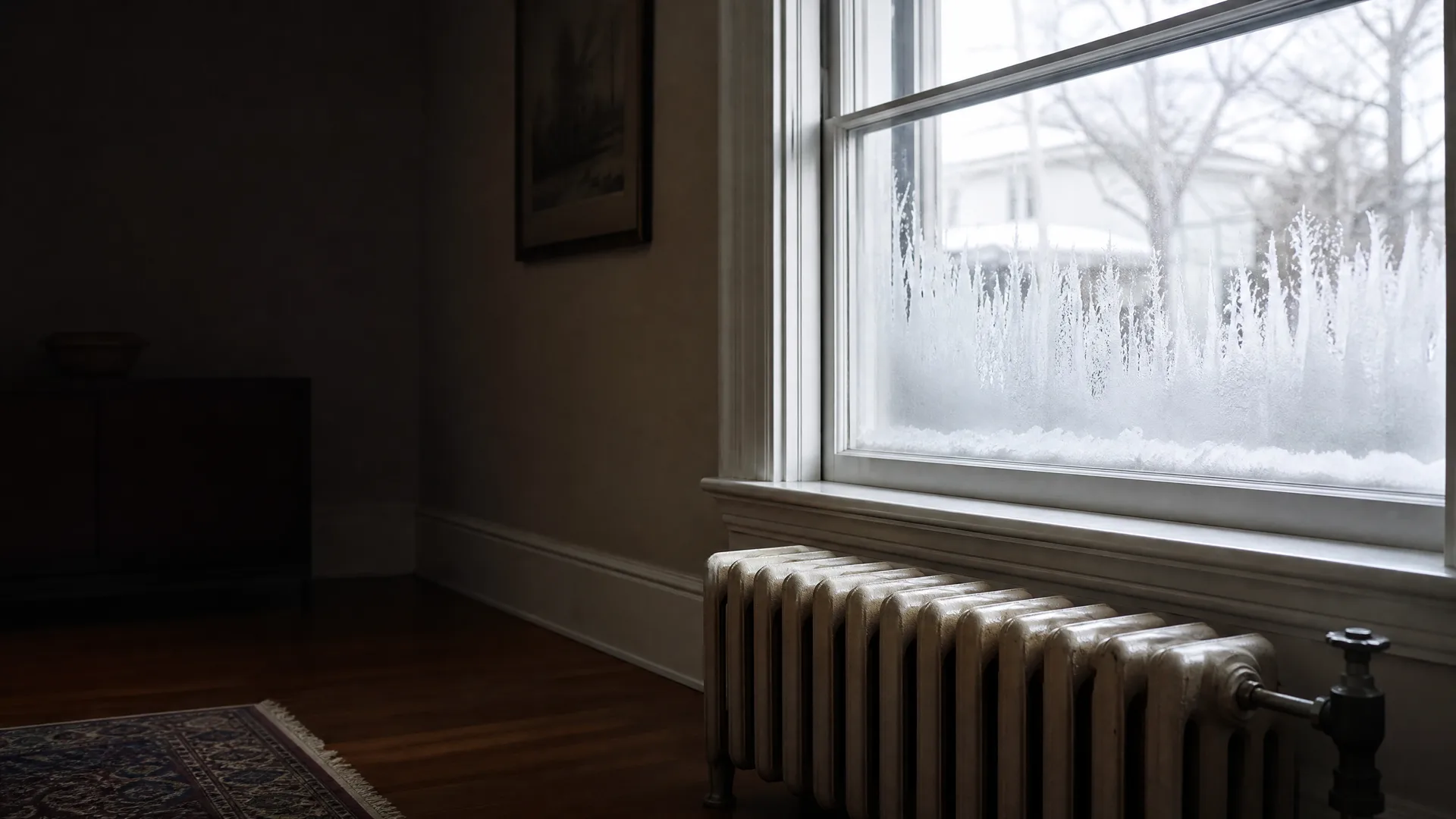
A cast-iron radiator with a valve sits beneath a frost-covered window in a dim room with dark wood floor, a patterned rug, a framed picture, and a low cabinet.

You're up before the sun, because in January it doesn't come up until almost ten. The living room is cold enough that you can see your breath near the window. The cast-iron radiator under it is quiet, and the glass above it has ice on the inside, a thin film you scrape with a fingernail without thinking. You check the boiler gauge on your way to the kitchen, out of habit now. The needle sits under where it should be, again, the third morning this week. You already know topping it off will get you through today. You're just not sure anymore how many more mornings like this one you have left before it doesn't.


One form, no calling around

Chasing down why a boiler keeps losing pressure usually means calling a few plumbing outfits, describing the same gauge reading each time, waiting to see who calls back, then weighing quotes against each other while the house stays cold. That's hours you don't have when it's dark at four in the afternoon and the radiators are running lukewarm. Finding someone here who actually works on boilers, not just furnaces, narrows the list fast, since gas furnaces are what most of Alaska heats with. This request goes to one local contractor who services boilers through winters like this one, who's seen what a slow pinhole leak or a tired expansion vessel does to a system's pressure over a season. You won't field calls from five different companies trying to win the job. You'll hear from the one who already knows what's likely behind the drop, so you can stop refilling the loop and find out what's actually wrong.

Keep bleeding the system yourself and the gauge keeps the problem hidden. You'll top it off every few days through the dark months and never know if it's a bad vessel or a leak behind a wall.

Have someone pressure test the system once and you'll know which it is. A boiler running on the wrong pressure works harder to heat the same rooms, and at Alaska's electric rates that's not a cost worth carrying all winter.

A middle-aged woman with shoulder-length dark hair, wearing a gray cardigan over a cream top, sits in an upholstered armchair and looks toward a sunlit window, with a shelf holding framed pictures and a plant behind her.
A woman and a child wrapped together in a thick knitted blanket on a sofa, both with eyes closed, with a lit table lamp and houseplant in the dim background.
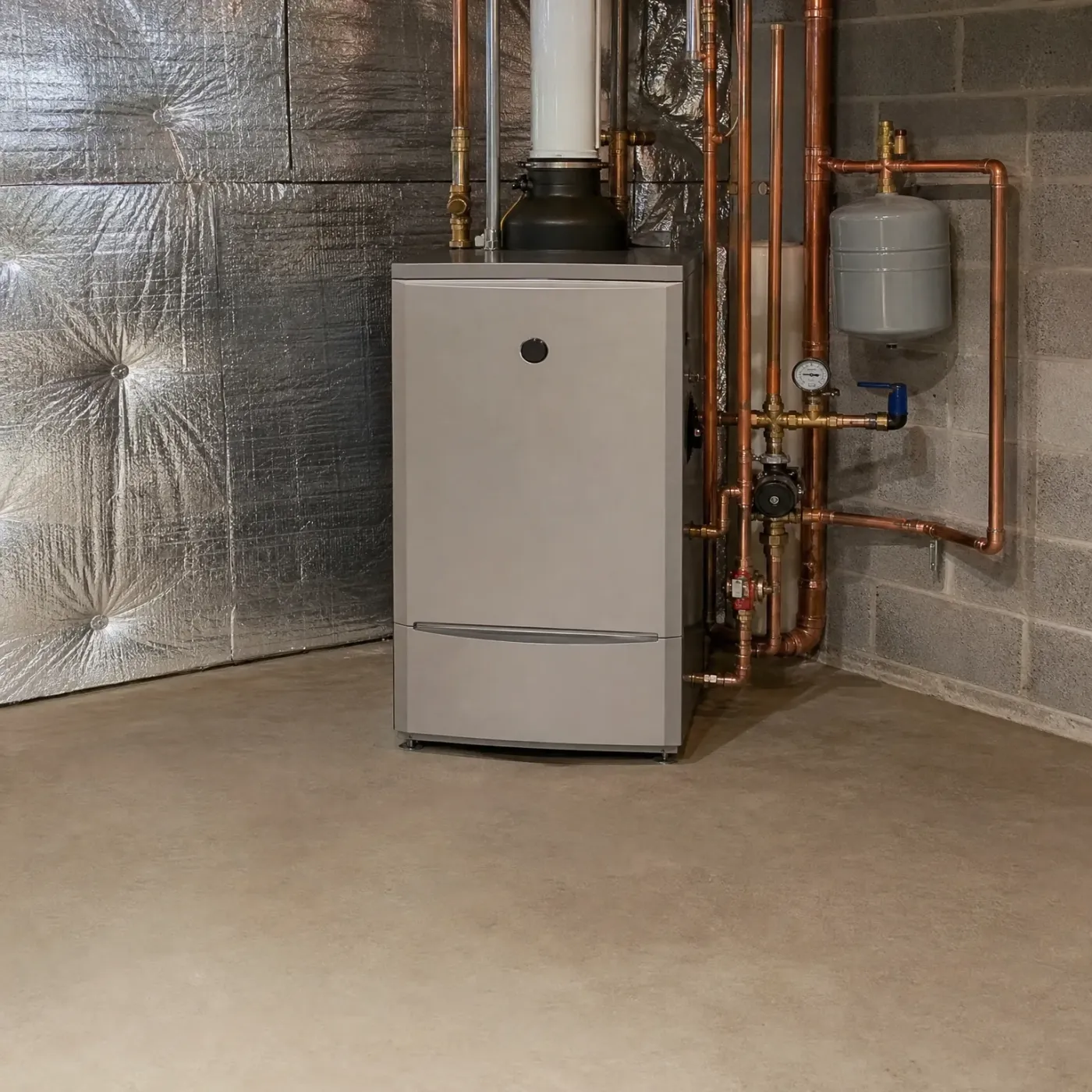
A gray residential boiler in a basement corner with copper piping, a circulator pump, pressure gauge, blue-handled valve and gray expansion tank against a concrete block wall, next to a foil-insulated wall.

Running at the right pressure

The gauge sits where it should, the circulator runs quiet, and the expansion tank is doing its job of absorbing the water as it heats. Copper lines stay dry at every fitting. Nothing to top off, nothing to watch.

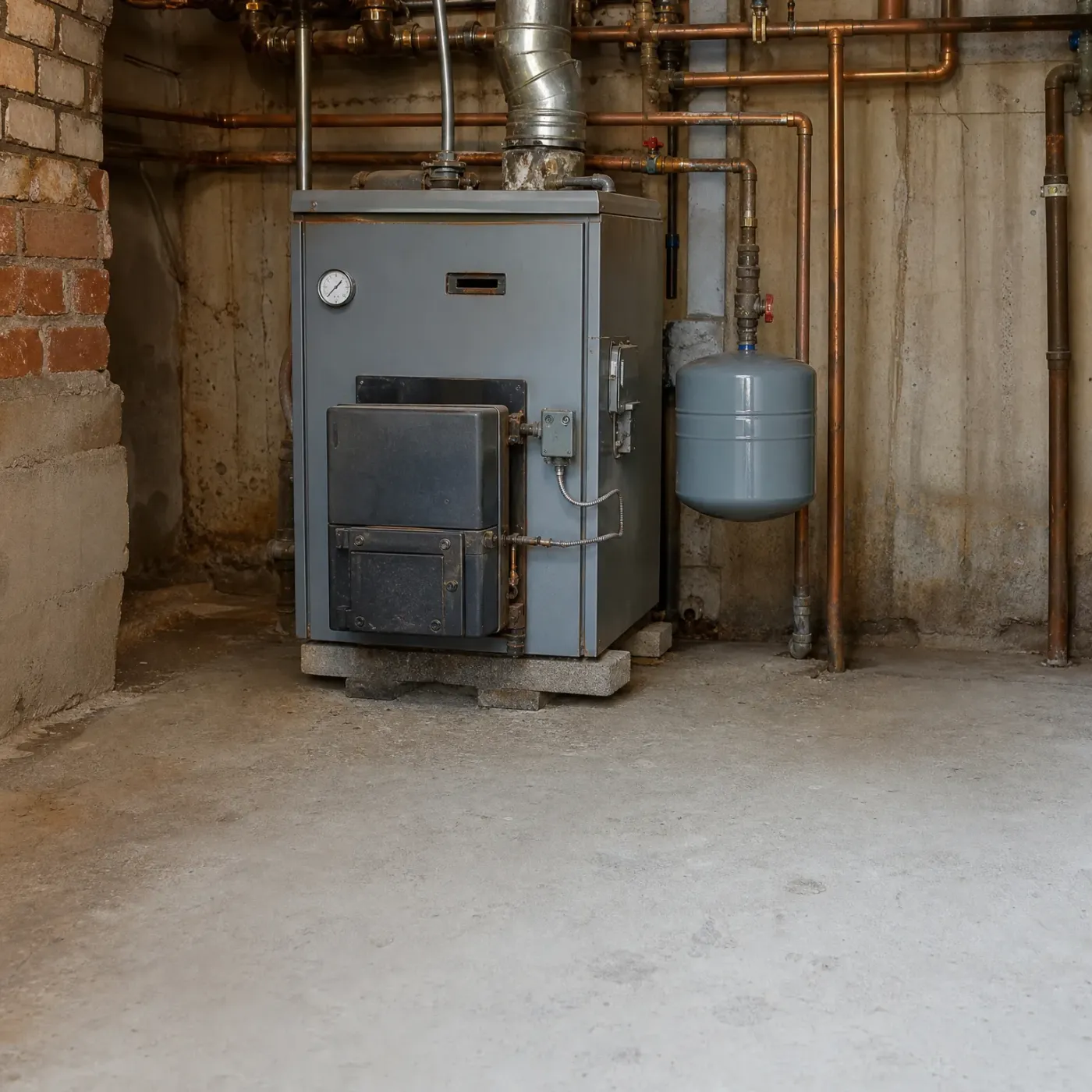
A gray boiler on a concrete block base in a basement, with copper piping, a metal flue, and a gray expansion tank mounted beside it against a concrete wall.

Losing pressure again

The gauge needle keeps sliding down between fill-ups. Check the valves and fittings along the pipe run for a weep that never quite puddles, and look at the expansion tank. A tank that's waterlogged instead of holding air can't absorb pressure the way it's supposed to.

What am I actually seeing when the pressure drops?

Check the gauge on a cold morning and it's sitting below where it should. You add water through the filling loop, it holds for a day or two, then it's low again. The boiler might lock out and refuse to fire until you've topped it off, so you come downstairs to a cold house instead of a warm one. Some radiators heat unevenly or stay cool at the top, a sign air or low water is moving through the system instead of enough hot water. If this keeps happening through the winter, you're relying on the boiler less and running space heaters more, which costs you at Alaska's electric rates. Left alone long enough, a system that keeps losing pressure can start pulling in air, which corrodes pipes and radiators from the inside.

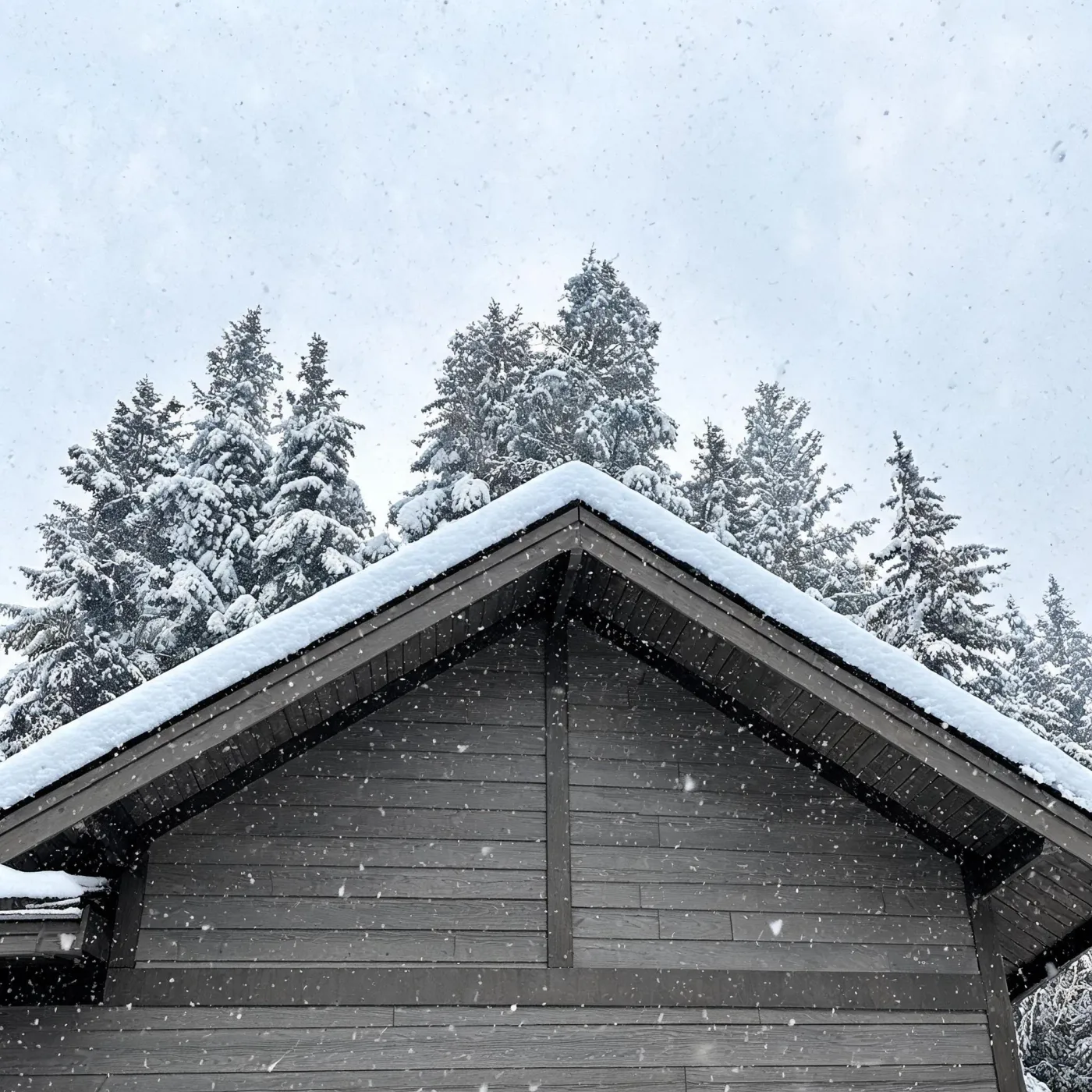
Snow-covered gable roof and dark wood-clad upper wall of a building, with snow-laden conifers and falling snowflakes against a pale overcast sky.

Winter nights average 9°F statewide, according to NOAA. At that temperature your boiler isn't cycling on and off through the night, it's running close to constant, and every part under pressure stays under pressure longer. A system that's borderline on a worn expansion vessel or a weak fitting gets no break to recover. That's why the gauge drop shows up fastest on the coldest nights, right when you need the heat most. If you're topping off the loop more in January than you were in October, the cold isn't causing the leak, but it's pushing a weak spot to show itself.

NOAA nClimDiv 1991-2020 county normals weighted by homes

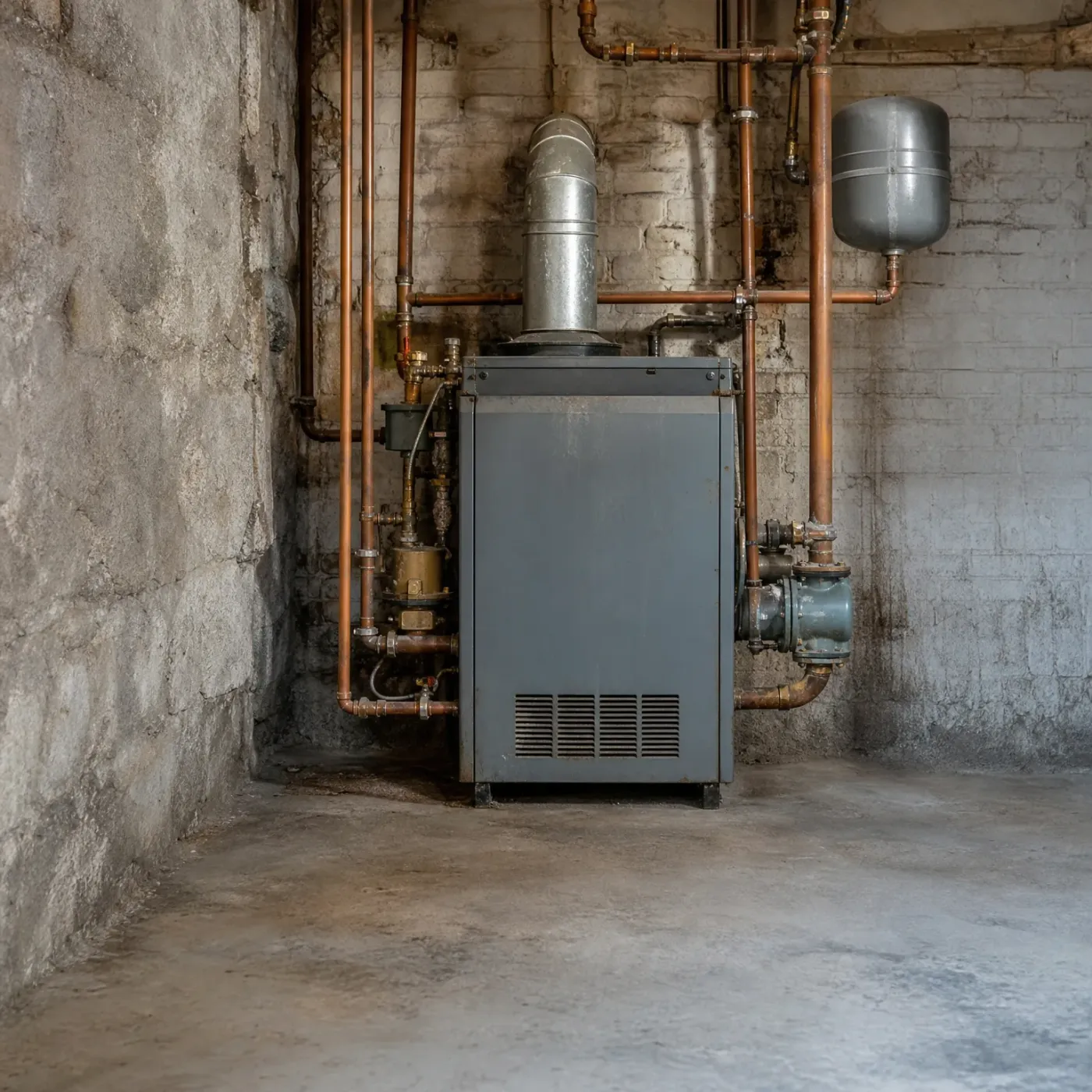
A gray boiler with a metal flue pipe and copper piping stands against a weathered painted brick basement wall, with an expansion tank mounted overhead and a bare concrete floor in front.
Before you get your boiler repair
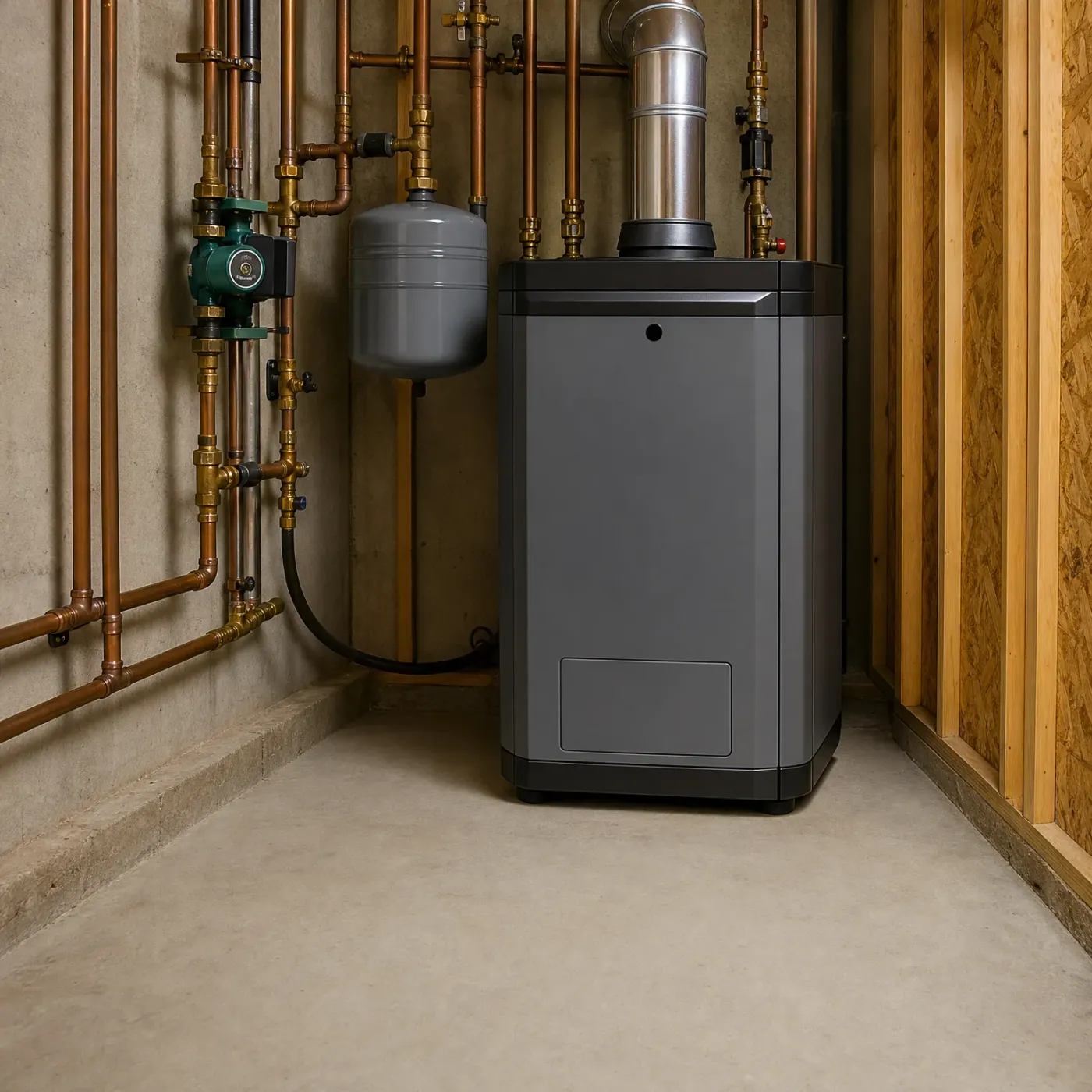
A gray floor-standing boiler with a metal flue pipe stands in a basement corner beside copper piping, brass valves, a green circulator pump, and a gray expansion tank on a concrete wall, with exposed wood framing and sheathing at right.
After you get your boiler repair

Winter nights average 9°F statewide

At 9 below zero overnight, your boiler isn't cycling, it's running. Hours of steady run time put steady strain on the same seals and fittings, so a weak spot that held fine in October can start weeping water by January.

NOAA nClimDiv 1991-2020 county normals weighted by homes

A boiler that keeps losing pressure has a reason, and the reason is findable. Most of the time it's a weak expansion tank, a slow pinhole leak, or a valve that's letting water past it, and once someone's hands are on the system it usually doesn't take long to see which one you've got. What you want is someone who works on boilers all winter in a place where they run close to constant for months, because that person has already seen the valve that fails after years of hard cycling and the fitting that weeps once the house gets cold enough. A local, licensed contractor who does this kind of work regularly knows what tends to fail first in a system run the way yours is run. And it's one contractor looking at your boiler, not three or four companies working the phones for the same job. The gauge will tell you something's wrong. Someone who knows the equipment can tell you what and fix it.

Kitchen corner with cream upper cabinets, oak lower cabinets, white marble-look countertop, beige tile backsplash, a ceramic vase of greenery, a wooden cutting board and bowl, and a black-framed window at right.
Interior corner of a room with a white-framed window and wide sill, beige walls with panel molding, a wooden cabinet holding a ceramic vase with a green leafy plant, and blurred shrubs and trees outside.
A wood-framed armchair with beige cushions and a woven lumbar pillow sits in a corner beside a large window overlooking green trees, with a tall ceramic vase holding leafy branches on the left and plaster walls and wood flooring.
Interior corner with a white-framed window above a sill, beige walls with baseboard molding, a greige shaker-style cabinet with brass knobs and a potted plant on top, light wood flooring and a woven jute rug.
A dark-framed six-pane window with white trim and sill set in gray horizontal lap siding, with hydrangea shrubs below and a white column and shingled roof section at left.

Skip the search

Your request goes to one pro, not a list of companies.

Describe it once

Sending the form costs nothing.